Published
29 September 2002
Ministers

29/9/02
The State Government today announced its strategy to enhance public confidence on Perth beaches over the peak summer months.
The strategy will involve aerial patrols along the metropolitan coastline, beach patrols by surf lifesavers and vessels placed on stand-by in the event of a shark incident.
A shark incident hotline will be established and an incident response protocol will use the combined marine capabilities of the Department of Fisheries, Conservation and Land Management, the Department for Planning and Infrastructure and Water Police.
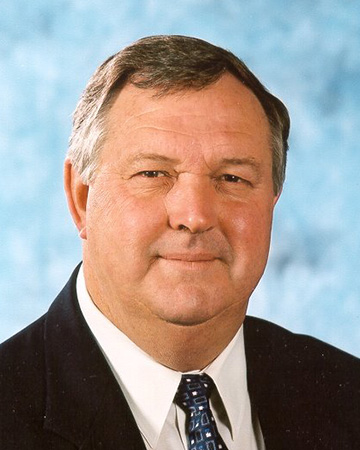
Fisheries Minister Kim Chance, who made the announcement at Cottesloe Beach this morning, said the government was acutely aware of the public's concerns after the tragedy two years ago and hoped these measures would go some way towards addressing those.
"However, we need to stress that people must be responsible for their own safety and the government cannot guarantee an individual's safety when in the water," Mr Chance said.
The aerial patrols will operate from Secret Harbour to Two Rocks from 6am to 11am, seven days a week from November 1 until the end of the summer school holidays on February 3.
Department of Fisheries scientists have designed a shark sighting aerial report sheet, which will be used by spotters this year. They will be briefed by the department prior to the start of aerial patrols.
The information will be used to help build a database on shark activity along the patrolled beaches.
Surf Life Saving WA will again be running beach patrols along most metropolitan beaches and on several country beaches on Saturdays, Sundays and public holidays until the end of March.
Members of the public will be encouraged to call the Shark Hotline on 9347 1788 to report sightings or incidents as this will give them immediate and direct access to the organisations that can decide the appropriate response.
"The hotline will also offer details on beach closures and information to help people better understand sharks, which are a highly diverse group of fish and play an essential role in maintaining the health of the marine environment," Mr Chance said.
The Minister also announced a great white shark tagging program would be established shortly in Western Australia.
He said it would be a collaborative project between relevant agencies including the CSIRO, AQWA and the Department of Fisheries.
"Despite their significance sharks, especially the Great White, are still a poorly understood group which urgently require further scientific study to ensure these species survive into the future," Mr Chance said.
He said the risk of a fatal shark attack while swimming at a Perth beach was remote.
"There have been 11 fatal shark attacks recorded in WA since 1803 and only two of those have been in the metropolitan area," Mr Chance said.
"In contrast, 17 people drowned along the WA coast between July 2001 and June of this year."
Mr Chance said the best form of preventing an attack was for members of the public to take a few simple precautionary steps: