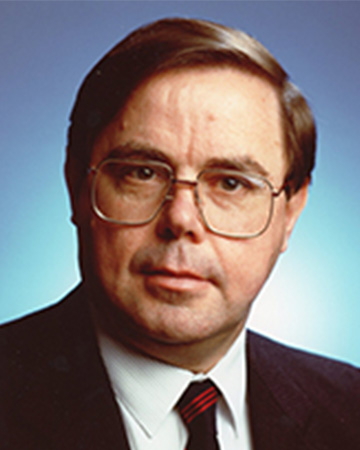
Figures show SW leads State in population growth
The latest population figures from the Australian Bureau of Statistics show the South West is leading the rate of population growth in the State, South West Minister David Smith said today.
The latest population figures from the Australian Bureau of Statistics show the South West is leading the rate of population growth in the State, South West Minister David Smith said today.
Mr Smith said the rate of growth in the South West was 17.9 per cent, compared with 17.2 per cent in the Kimberley and 15 per cent in Perth.
He said the statistics were a slap in the face for the Opposition, who last week criticised the Government's future planning for population growth in Perth and the South West.
Growth of 17.9 per cent over the last five years made the South West region the fastest growing area in Australia.
"The South West now has 8.486 per cent of the State population, compared with 8.114 per cent in 1986.
"These figures show we are on track to realise a population of around 45,000 for Greater Bunbury by the year 2000.
"The Liberal Party made a great deal of noise recently about boosting Greater Bunbury to 40,000, but I believe they have seriously underestimated the growth potential of the city and the region.
"The target of 40,000 requires no additional attempts or efforts to promote Bunbury.
"Indeed it suggests the Liberals intend to cut back expenditure in Bunbury and the South West region.
"The Liberals simply do not have an active and coherent decentralisation policy and, in any event, it will be further watered down by the Nationals if and when a coalition opposition policy is announced.
"The Government's target is 60,000 for the Greater Bunbury area, which includes Eaton, Australind, Clifton Park, Gelorup and Bunbury."
Mr Smith said the census statistics were based strictly on the local government boundaries which could result in some misleading impressions for the Greater Bunbury area.
"The Greater Bunbury area is affected by the growth of Australind in the Shire of Harvey, Eaton in the Shire of Dardanup, Gelorup in the Shire of Capel and of course Bunbury city itself," he said.
"All the new residents in these areas are really part of the same country urban population and reliable estimates put this at over 35,500.
"Recent comments by Liberal MPs that Bunbury is not growing fast enough are nonsense. Bunbury is growing strongly but not at such a rate as to overwhelm the local community.
"It is balanced and sensible growth," Mr Smith said.
Areas of the South West region to post strong growth over the five-year census period were:
1992 | 1986 | % CHANGE | |
Harvey (inc Australind) | 12,394 | 9,609 | 28.96 |
Dardanup (inc Eaton) | 5,037 | 4,159 | 21.11 |
Capel (inc Gelorup) | 4,931 | 3,740 | 31.85 |
Bridgetown-Greenbushes | 3,712 | 3,293 | 12.72 |
Manjimup | 9,764 | 9,073 | 7.62 |
Donnybrook-Balingup | 3,844 | 3,491 | 10.1 |
Mandurah | 26,841 | 18,872 | 42.2 |
Murray | 8,173 | 6,634 | 23.2 |
Waroona | 3,040 | 2,488 | 22.19 |
Augusta-Margaret River | 5,889 | 5,333 | 10.4 |
Busselton | 13,531 | 12,411 | 9.0 |
Mr Smith said there were areas of concern for him in the census figures.
"Collie has lost 27 people over the census period, Boyup Brook 82 and Nannup 121," he said.
"Future growth in Collie is assured over the next five years because of the Government's decision to construct a new power station there, but we need to do more for Boyup Brook and Nannup."
Mr Smith said an increasing proportion of Perth's future population growth must be diverted to WA's regional centres such as Bunbury, Albany, Geraldton, Kalgoorlie and major centres in the Pilbara and Kimberley.
He said the regional centres were important if urban blight and serious social and environmental problems in Perth were to be avoided.
"In WA, we need to plan for a projected population growth of between 800,000 and 1,200,000 over the next 30 years.
"The Government is actively planning ahead to manage this growth so the quality of life of all Western Australians can be improved."
Mr Smith said there was further encouragement from the release of building approval figures this week.
"There were 146 housing approvals in the South West during January this year, compared with 110 in January, 1991," he said.
"This one month of residential building activity is worth $9.667 million."