


Current status
The LGIRS released the consultation paper The next chapter of WA’s liquor laws for public comment from 17 November 2022 to 31 January 2023, and almost 200 submissions were received. The paper sought feedback to:
- identify what is working well with the current regulatory framework
- identify issues the industry, government and community may have with the current framework
- explore reform ideas from our stakeholders to improve the current regulatory framework.
LGIRS thanks all respondents for their input, which is informing the reform process.
Read more about the liquor reforms
Executive summary
Introduction
Western Australia (WA) is home to thriving hospitality, tourism and liquor industries. Those industries consist of hundreds of businesses which employ thousands of people across the State. Many of these businesses hold liquor licences.
Effective regulation supports industry development and plays an important role in minimising the harmful effects of alcohol in our community.
The State Government, through the Department of Local Government, Industry Regulation and Safety (LGIRS) is reviewing the Liquor Control Act 1988 (the Act) and the broader liquor regulatory framework in Western Australia (WA).
Liquor in Western Australia is regulated under the following:
- Liquor Control Act 1988 (the Act)
- Liquor Control Regulations 1989 (the Regulations)
- 27 sets of Liquor Control (Restricted Area) Regulations
- Liquor Commission Rules 2007
- 53 liquor policies.
The Act and Regulations regulate the sale, supply and consumption of alcohol, and aims to minimise harm or ill-health caused to people due to the use of alcohol. The legislation is supported by liquor policies, which provide additional guidance on the Act and Regulations
Liquor licensing decisions and disciplinary matters are determined by the licensing authority — the Director of Liquor Licensing (DLL) and the Liquor Commission.
The DLL is a statutory position held by the chief executive officer of LGIRS that assists with administration of the Act. The DLL, who has powers of delegation, makes most decisions about liquor licensing applications and other matters.
The Liquor Commission determines, or reviews complex liquor licensing matters, including complaints, awarding of costs, and provides policy advice relating to liquor control. The Liquor Commission Rules regulate the practice and procedure of the Liquor Commission and matters that are related and subject to the Regulations.
LGIRS inspectors (under delegation from the DLL) and officers from the Western Australian Police Force manage the compliance and enforcement of liquor laws across Western Australia.
Reform commitment
The Act and Regulations were developed over 30 years ago and have been amended many times over the years. Significant reforms to WA’s liquor laws have been made in the last 15 years.
In 2006, the small bar liquor licence category was introduced and has played a significant role in transforming underutilised pockets of business districts and fostering a more sophisticated drinking culture.
Further reforms to liquor laws were introduced in 2018, to reduce red tape and enable consideration of the cultural and tourism value of venues when assessing liquor licence applications.
During the 2021 election campaign, the Premier made a commitment to:
continue this program of reform by undertaking consultation with the hospitality industry and other stakeholders to inform further amendments to the Liquor Control Act.
A range of potential improvements will be considered, including a simpler licensing system to reflect changing business models and community expectations, as well as a more rapid and cheaper approvals process.
This review is broad and looks to modernise the Act, Regulations and policies, as well as the supporting online systems and information. Through this review, the State Government is seeking to:
- identify what is working well with the current regulatory framework
- identify any issues the industry, government and community have with the current framework
- explore reform ideas from our stakeholders to improve the current regulatory framework.
Reform themes and objectives
To guide the consultations, potential reforms are grouped under the following themes:
- Improved licensing framework — reduce red tape and maximise opportunities for industry
- Modernised legislation and structural reform
- Enhanced harm minimisation, enforcement and compliance, including rewarding compliant operators
- Simpler systems — digital solutions to create efficiencies for industry and the regulator
- Stronger industry education and information — to enhance industry understanding and knowledge.
Summary of reform proposals
Some reform proposals are considered below under each of the reform themes. The State Government is seeking your feedback on these proposals, as well as your ideas and suggestions for further reform.
1. Improved licensing framework — reduce red tape and maximise opportunities for industry
This review will examine the liquor licensing framework to identify unnecessary red tape and seek feedback on potential solutions to address the associated issues. It will explore potential improvements in the licensing framework to better cater for the diverse needs of liquor businesses. Key reform proposals include:
The application processes
- Streamline the licence application and approval process by identifying system and process efficiencies.
- Explore ways to improve the applicant’s interaction with LGIRS (as the regulator) and the licensing system.
Liquor licence category model
- Explore the current licence category model used in WA to determine if it is fit for purpose and, if not, where it may be improved.
- Consider alternative liquor licence category models.
Application of the Act
- Review the current exemptions to the Act, for example an exemption from needing a liquor licence to sell or supply liquor.
- Explore whether new exemptions should be considered.
Policy and process review
- Review the Director of Liquor Licensing’s (DLL) policies.
- Review how the policies are communicated and applied.
- Explore efficiencies for licensees who need to adjust their licence and/or conditions during its tenure.
2. Modernised legislation and structural reform
Proposals under this theme relate to a range of provisions including the role and functions of the DLL and Liquor Commission. Consideration will also be given to proposals which modernise the legislative framework, such as modernising the structure of the Act and Regulations, removing redundant provisions and miscellaneous administrative amendments. Key reform proposals include:
Modernising the legislative framework
- Explore options to modernise the structure of, and language in, the Act.
- Consider whether provisions in the Act are better dealt with in the Regulations.
- Identify and remove redundant provisions from the Act.
- Undertake administrative amendments to improve the licensing system.
- Introduce the use of digital forms of identification and electronic document lodgement to meet modern standards and align with the State Government’s digital platform.
- Improve the current Regulations.
Structural reform
- Review the role of the DLL.
- Review the role of the Liquor Commission.
3. Enhanced harm minimisation, enforcement and compliance, including rewarding compliant operators
This review will consider the tools available to the licensing authority and the WA Police and whether they can be enhanced to support greater compliance by licensees and support harm minimisation. Ideas to encourage and reward licensees who comply with their licence conditions will also be considered. Key reform proposals include:
Incentive and demerit system
- Review incentive and demerit systems used in other jurisdictions.
- Consider introducing an incentive and demerit system in WA.
Compliance and enforcement
- Review penalties and administrative sanctions in consultation with the Department of Justice, to ensure they are relevant and modern.
- Provide inspectors with power to impose lower-level penalties and sanctions, to address complaints and non-compliance more rapidly.
Separate to this review, the State Government is currently developing proposals to strengthen the trial of the Banned Drinkers Register.
4. Simpler systems — digital solutions to create efficiencies for industry and the regulator
Feedback will be sought on user experience with LGIRS’s current liquor licensing system and business processes, to identify areas where improvements can be made to address user issues. Key reform proposals include:
Replace the licensing and compliance system
- Replace the current ‘Navigate’ system with a more user-friendly and efficient system.
- Explore business processes that could be improved concurrently to the introduction of a new system.
One-stop-shop approval portal
- Consider whether a ‘one-stop-shop’ approval portal can be incorporated into the new online licensing system, to provide all the information required to progress liquor licensing applications in one place.
- Explore what information about the liquor licensing process could be included on the portal.
Stronger industry education and information — to enhance industry understanding and knowledge
Under this theme, the review will focus on how LGIRS can strengthen industry understanding and improve the information it provides to applicants and licensees. This includes looking at what, where and how information is presented. Key reform proposals include:
Website review
- Review the content and structure of the LGIRS website to improve its accessibility.
- Explore the introduction of an online chat function on the website to enable applicants to chat with LGIRS officers in real time.
- Explore the inclusion of an online booking system to facilitate face-to-face or virtual meetings between applicants and LGIRS officers.
Education and information
- Create interactive ‘user-friendly’ guidance material.
- Create digital flow charts of processes, associated costs and timelines.
- Include interactive online lodgement guide and checklist.
- Develop a decision tree process to assist licensees find the correct licence for their business model, similar to the Small Business Development Corporation’s Business Licence Finder.
- Incorporate information videos on the liquor licence application process.
Consultation
As part of this review, a broad range of stakeholders will be consulted, to ensure all views are represented.
This document is the start of that process.
There will be more opportunities to have your say, including stakeholder surveys and forums. Information on the project will be regularly updated on our reform webpage.
We want your ideas!
This paper presents some reform ideas. Feedback on these ideas and new ideas for reform will be used to inform the development of reform options for State Government. These options will be presented for further consultation in early 2023.
How to provide feedback
To make sure everyone can provide their feedback, LGIRS is using a range of consultation methods:
- Surveys designed for specific stakeholder groups:
- Industry groups, government agencies and not-for-profit groups survey.
- Licensees, prospective licensees and liquor business owners survey.
- Community survey.
- Formal consultation documents
- This document: seeking feedback on reform proposals and seeking new ideas
- Consultation Regulatory Impact Statement: presenting formal reform options
- Decision Regulatory Impact Statement: presenting finalised reforms
- Stakeholder workshops and meetings
- Informal feedback via email: liquorreform@lgirs.wa.gov.au
The consultation process
Figure 1 sets out our consultation timeline and the opportunities to provide feedback and reform ideas.
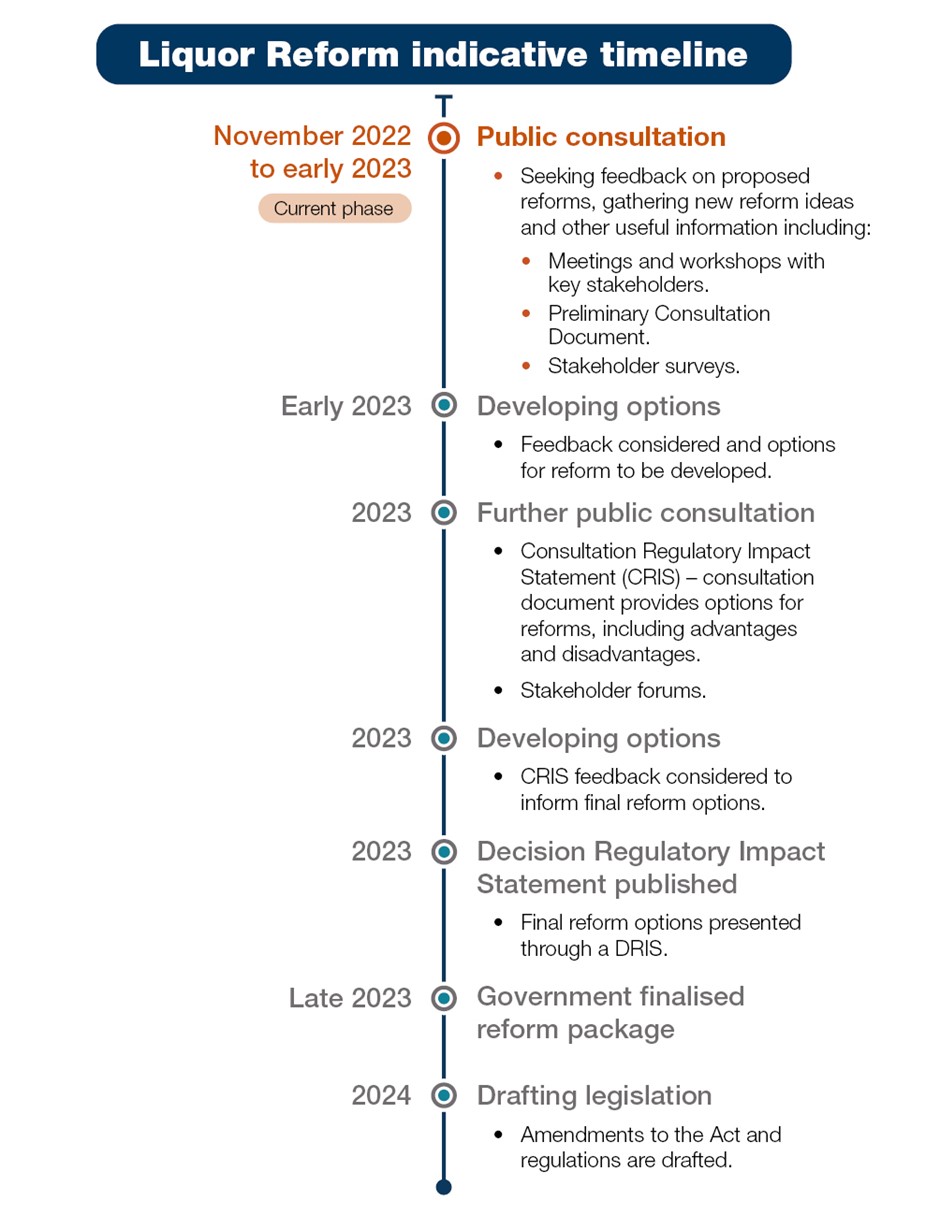
Figure 1: Liquor Reform indicative timeline
- November 2022 to early 2023 (current phase) Public consultation
- Seeking feedback on proposed reforms, gathering new reform ideas and other useful information including:
- meetings and workshops with key stakeholders
- Preliminary Consultation Document
- stakeholder surveys.
- Seeking feedback on proposed reforms, gathering new reform ideas and other useful information including:
- Early 2023 Developing options
- Feedback considered and options for reform to be developed.
- 2023 Further public consultation
- Consultation Regulatory Impact Statement (CRIS) — consultation document provides options for reforms, including advantages and disadvantages.
- stakeholder forums.
- 2023 Developing options
- CRIS feedback considered to inform final reform options.
- 2023 Decision Regulatory Impact Statement published
- Final reform options presented through a DRIS.
- Late 2023 Government finalised reform package
- 2024 Drafting legislation
- Amendments to the Act and Regulations are drafted.
