


Science Industry Fellowships support PhD candidates to collaborate with industry partners, encouraging linkages between researchers and industry, add value to the PhD experience and strengthen collaboration and research impact in economic high growth areas.
We have showcased the studies of four Science Industry PhD Fellowship recipients, Najmeh Fayyazifar, Saleh Kaji Esfahani, Sasha Somashakaran and Bona Lim.
"I anticipate that the current project (distinguishing VT and SVT) has potentials for commercialization as it can assist clinicians in making more accurate and confident diagnostic decisions" ~ Najmeh Fayyazifar
"One of the main benefits of the Science-Industry fellowship provided by JTSI is arranging a series of training courses that improves our communication, entrepreneurship and presenting skills" ~ Saleh Kaji Esfahani
"This program has taught me the value of bridging the gap between academia and industry, as together, we can solve both environmentally- and economically-threatening problems." ~ Sasha Anne Somashakaran
"In-depth research on nickel slag from BHP and process development will be able to provide a new business model for the company." ~ Bona Lim
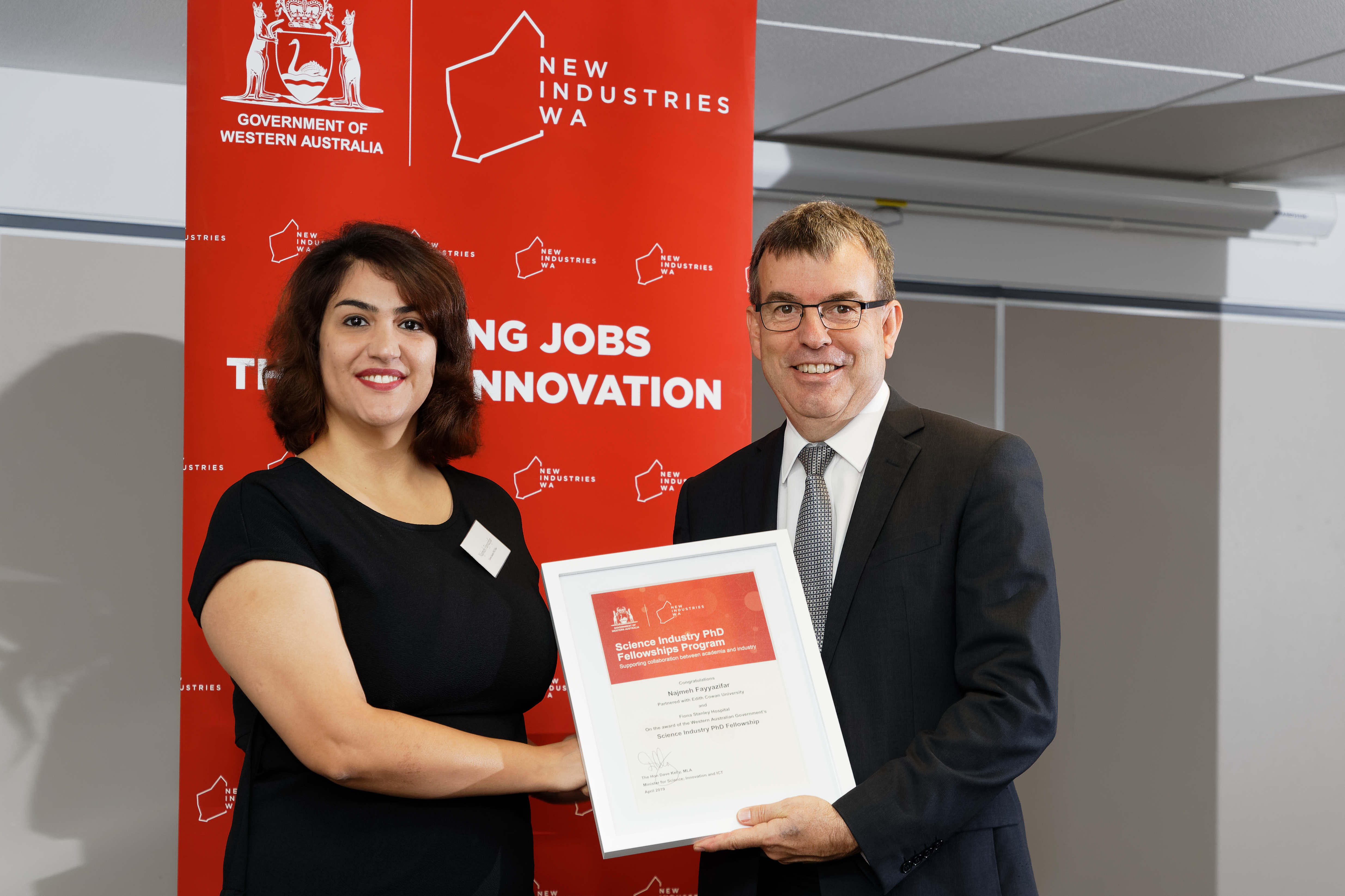
Najmeh Fayyazifar, Edith Cowan University
Show moreAim
The aim of the project is to develop an intelligent system that can detect different types of cardiac abnormalities accurately.
The project has a significant impact on the Australian public’s health, as early detection of cardiovascular disease and cardiac abnormalities can considerably increase the chance of successful treatment, reduce the treatment costs, and decrease the death rate.
According to the Australian Bureau of Statistics, Cardiovascular disease is the leading cause of death in Australia, which accounts for 25% of annual death1.
Cardiovascular disease and its associated expenditures are a large burden on Australia’s economy, reported as $10.4 billion (8.9% of total disease expenditure) in 2015-20162.
1. Australian Bureau of Statistics 2019, Causes of Death 2018, cat. no. 3303.0, September
2. Disease expenditure in Australia. Cat no. HWE 76. Canberra: AIHW. Viewed 15 May 2020
Research Outputs
I have already published two papers. In the first paper, I have developed a deep learning model for diagnosis of Atrial Fibrillation (AF), a common heart arrhythmia which often results in serious cardiac disease.
This model outperformed state of the art methods3. In the second paper, I showed how a wider range of different cardiac abnormalities can be diagnosed robustly. To this end, I constructed a convolutional neural network through differentiable architecture search method.
My proposed deep learning architecture is able to diagnose 24 different types of cardiac abnormalities such as Bradycardia, Atrial Fibrillation, Ventricular Premature Beats, Supraventricular Premature Beats, etc4. This model has been ranked 9th place5 among 217 teams who participated in the international PhysioNet 2020 challenge6.
Through my industry collaboration with the head of Physiology at Fiona Stanley Hospital, Dr. Andrew Maiorana, a research partnership has been established with the University of Ottawa’s Heart Institute.
This partnership provided us with access to a database of patients with two types of arrhythmias, Ventricular Tachycardia (VT) and Supraventricular Tachycardia (SVT), that are currently challenging medical experts to distinguish between. VT is a life-threatening cardiac arrhythmia, its early diagnosis can save a patient’s life, while SVT is not life-threatening.
Thus, accurate early determination of VT has a great impact on patient treatment. I have already developed a deep neural model, which can distinguish these two types of arrhythmias and we are planning to publish the results.
3. An accurate CNN Architecture for Atrial Fibrillation Detection Using Neural Architecture Search ,Fayyazifar Najmeh,28th European Signal Processing Conference (EUSIPCO)
,pp.1135-1139,doi: 9082797054,2021,IEEE
4. Impact of Neural Architecture Design on Cardiac Abnormality Classification Using 12-lead ECG Signals, Fayyazifar Najmeh,Ahderom Selam, Suter David, Maiorana Andrew, Dwivedi Girish, Computing in Cardiology, pp.1-4, doi:1728173825, 2020, IEEE
5. https://github.com/physionetchallenges/evaluation-2020/blob/master/Resu…
6. https://physionetchallenges.org/2020/
Benefits
"I believe the workshops and training courses conducted by JTSI were useful to learn how to communicate more effectively with industries who might have different perspectives and goals. In particular, the workshop on ‘Writing with Impact’ was very helpful to understand the different writing styles required for different audiences. This skill will be very beneficial in writing grant applications, which is one of the most significant steps toward commercialisation of research outcomes."
"In addition to the contacts that have been made in the first year of this program (a professor of cardiology from FSH, the technical team - IT support- of FSH, and the representative of industry equipment manufacturer - Philips Corporation), I have made very worthwhile contacts with a professor of medicine (cardiology and nuclear medicine) at the University of Ottawa Heart Institute. This contact has facilitated the progress of my PhD project by providing a valuable source of medical data (ECG images) that have been collected and annotated by experts over the course of several years. I anticipate that this collaboration can continue in the future, with the view of developing automated systems for medical applications beyond the scope of my PhD project.."
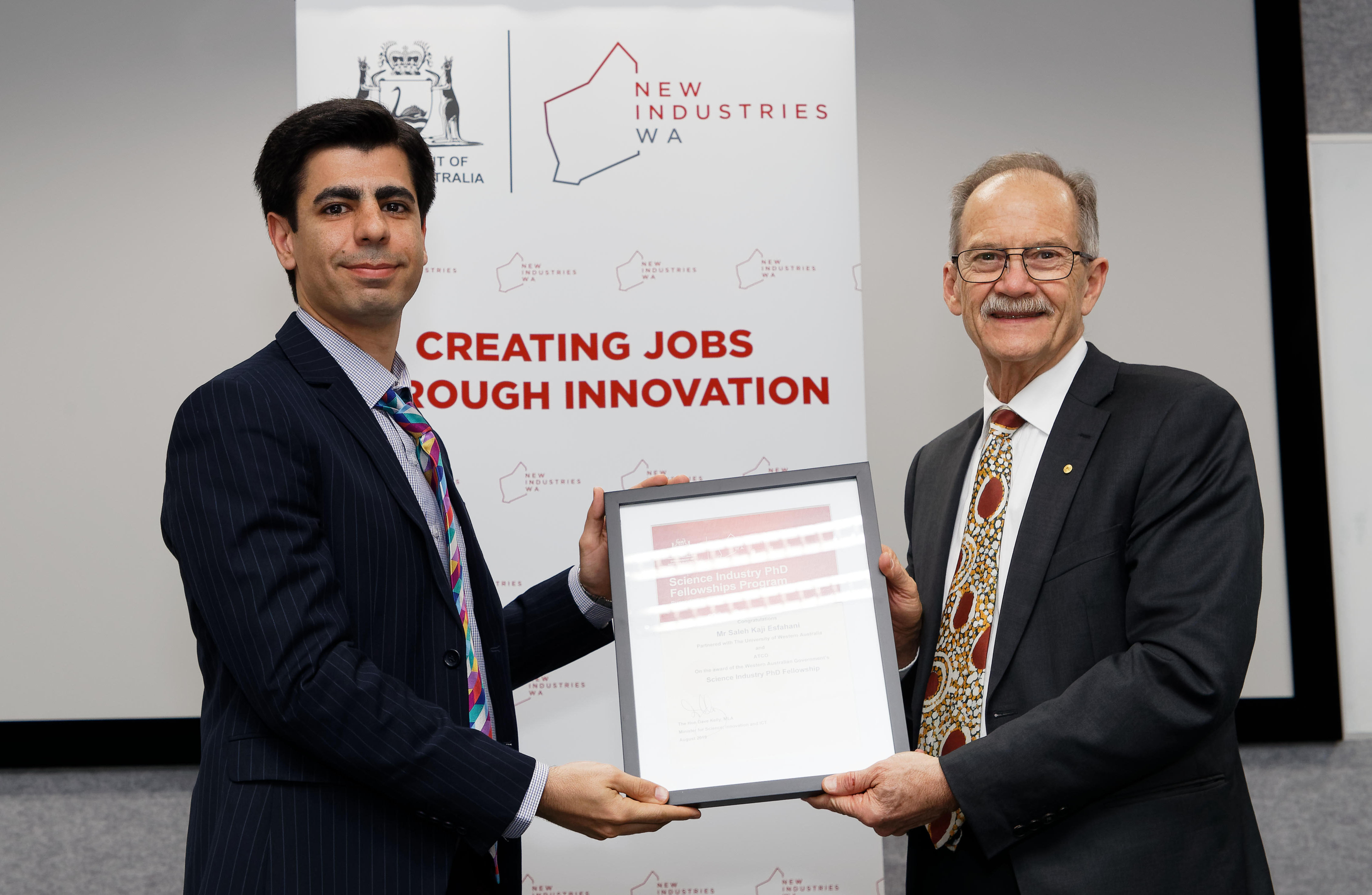
Saleh Kaji Esfahani, University of Western Australia
Show moreAim
Currently, one-third of homes in Western Australia (WA) are fitted with a solar collector PV (Photovoltaics) that can produce 1,000 megawatts of energy per annum but due to unmatched period of consumption and production sides, households still need to rely on the grid.
Perth’s local electricity grid is not connected to the National Electricity Market (NEM), which means it has limited capability to trade the supply/demand sides with another market.
Abundant solar power during the day, when there is lack of demand, creates pressure on the grid and makes the price of buying solar power low, in comparison with consuming grid power.
In order to lessen grid pressure and help WA households to use the maximum benefits from their solar power, this study aims to enhance the self-sufficiency of solar residential buildings.
Working with ATCO we are looking to optimise solar PV panel energy production, based on consumption period and develop innovative stationary hybrid storage systems (battery and hydrogen storage) to store the extra produced power for daily and seasonal changes.
Combined production of hydrogen energy from recycled water to supplement solar storage will lead to economic and sustainable outcomes.
Research Outputs
Two journal paper were published in high ranked journals.
Esfahani, Saleh Kaji, et al. "Optimizing the solar energy capture of residential roof design in the southern hemisphere through Evolutionary Algorithm." Energy and Built Environment 2.4 (2021): 406-424.
Esfahani, Saleh Kaji, et al. "Analysing the role of roof mounted BIPV system optimization on decreasing the effect of duck curve in Perth, Western Australia: An experimental case study." Sustainable Energy Technologies and Assessments 47 (2021): 101328.
In the first step, the essential primary knowledge of rooftop solar production in Perth’s climate condition has been collected. Experimental data analysis about the solar production and consumption in a real case study were needed in the next stage, which has been provided by ATCO.
Time sensitive energy production and consumption in the scale of a single residential building, thereafter, has been analysed by considering the role of the recently announced feed-in tariff pricing range. Finding optimum storage capacities (battery + Hydrogen) to maximize self- sufficiency has been completed recently. The remaining stages are to analyse the economic benefits of the suggested systems and its potential role in CO2 emission reduction.
Benefits
The most effective skills that have been learned, include, but are not limited to:
- Using some advanced software to find the accurate measurement of solar production and energy consumption;
- Collaborating with a highly advanced technical team at ATCO to find the possible applicability of this study’s outcomes, in real problem solving;
- Learning coding language (Python) to personalise the software packages;
- Utilising optimisation techniques (such as Genetic Algorithm) to explore the most beneficial solution;
- Data analysis and consolidating it into applicable knowledge;
- Establishing a link between architectural design and energy aspects of buildings;
- Presenting the research outputs at both UWA and Curtin University;
- Writing professional reports and publications in high impact journals.
Since being involved in the program CERI has offered me a scholarship to attend their course on improving essential knowledge for creating a start-up. Having the technical support of ATCO, the outcome of this study will hopefully turn into practical knowledge soon.
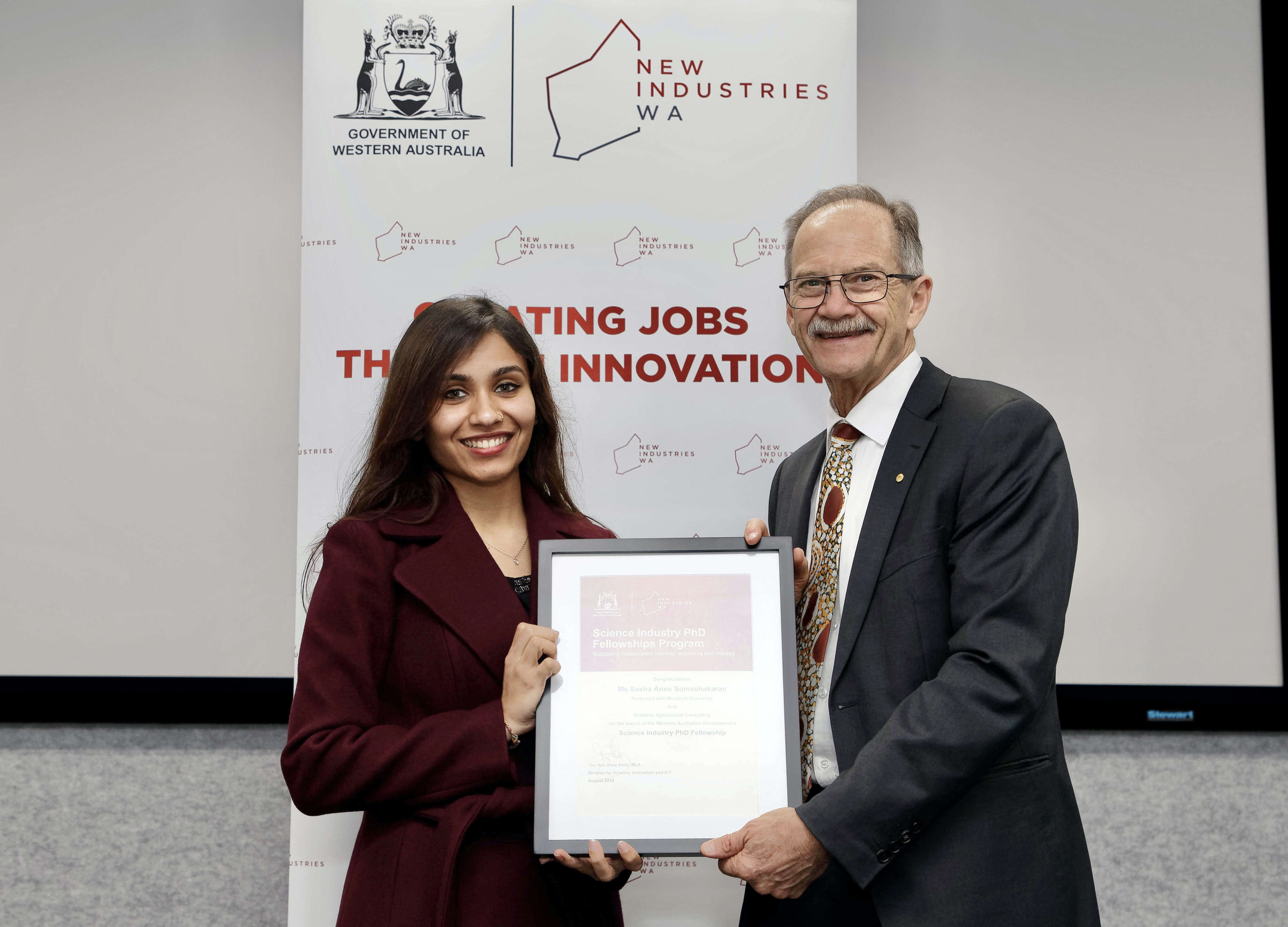
Sasha Anne Somashakaran, Murdoch University
Show moreAim
Food production needs to increase to feed the global population, which is heading towards 9.5 billion people. However, losses from crop pests reduce food production, and control of these pests costs billions of dollars per annum worldwide.
As a food exporting state, the WA Government’s aim is to double agricultural production and food exports by 2025 (from $8.5 billion in 2017). To achieve this, we must apply the best innovations in science and technology, which includes studying the potential to reduce reliance on existing methods of chemical pest control.
In my project, I aim to develop a novel, environmentally-friendly and effective biopesticide, with the potential of broad-spectrum applications to reduce crop losses from plant pests.
The technology underpinning this development is ‘gene silencing’, an inherent mechanism present in both plants and pests. I am keen to see the translation of this technology to practice, to benefit the farming community.
Research Outputs
At the end of this project, I expect to have at least two research papers published, a review is currently in progress and an experimental paper. At present, I am working towards the final research objective, that of testing the efficiency of the biopesticide against two classes of plant pests; the data obtained will be presented in experimental paper/s, since it involves a novel concept to control nematode pests. I will also test the concept for potential to control aphid pests.
I plan to attend at least one conference during my candidature to increase exposure to my project, build a network and connect with other researchers. Because of travel restrictions posed by the current pandemic of COVID-19, I have not been able to attend any conferences in person, however, I am scanning conference opportunities available online and for in-person attendance towards the end of this year or early in 2022.
Benefits
The JTSI program has provided a range of new opportunities, such as project exposure, skill development and networking. It has helped participants to develop an entrepreneurial mindset, while helping our industry partners realise the practical value of academic research.
One of the highlights of my networking journey throughout this fellowship has been when I had the honour of officially being presented the award by Chief Scientist Professor Peter Klinken.
Since meeting at a networking event in 2017, Prof Klinken has been a strong role model and mentor to me, and he played a significant role in my decision to enrol in the PhD program. The program has given us the opportunity to reconnect again, and it was an overwhelmingly joyful and gratuitous experience, which I will treasure for years.
Globally, pests and their associated control and lost production cost billions of dollars worldwide. In WA, aphids and nematodes costs an estimated $25M and $82M p.a., respectively.
Putting even a dent in these figures through development of new biopesticides will help improve crop production, and improve the sustainability of crop farming in WA, and as a result contribute to the economy.
My interactions with Mr Bill Crabtree from Crabtree Agricultural Consulting has helped me gain better insight into the challenges of farming at the edge of the wheatbelt in WA, and given me personal motivation and a better incentive to work towards the final goal.
Before this fellowship, I was solely focused on working towards a career in academia. However, this program has taught me the value of bridging the gap between academia and industry, as together, we can solve both environmentally and economically threatening problems.
I believe this program will boost my employment opportunities because it has helped me develop a range of entrepreneurial and project management skills, taught me the value of networking and effective communication, and offered me a different perspective to research. It has opened a new avenue of opportunities and interested me in industry-based research.
I would sincerely like to thank the JTSI team for this opportunity, as well as Tash Teakle for imparting her wisdom and knowledge on us through the workshops.
Bona Lim, Curtin University
Show moreAim
Critical and strategic metals are vital for the nation’s economy and defence in various high technology and clean-energy applications. Yet, primary sources are projecting shortfalls, and alternatives of critical and strategic metals are limited in response to the increasing demand. Thus, securing valuable elements from secondary sources is necessary.
Metallurgical by-products, also called mine wastes, contain a significant amount of critical and strategic metals, and a remarkable amount of stock is stored, due to a long history of mining. Utilising the mine wastes as a secondary source has strong environmental and economic advantages.
The extraction of valuable resources from technospheric stocks, such as mine wastes, is categorised under technospheric mining. In this project, the recovery of nickel and cobalt from nickel slag, a by-product of the pyrometallurgical process, using environmentally friendly reagents is being studied.
Nickel and cobalt are both critical and strategic for various applications such as batteries, automobile, superalloys and catalysts. Therefore, developing an extraction process of nickel and cobalt from slag would benefit the company, industry and society.
Research Outputs
A publication ‘Technospheric Mining of Mine wastes; Concepts, Applications and Challenges’ is ready to be submitted.
A publication ‘Technospheric Mining of Nickel and Cobalt from Nickel slag – Complexation Leaching with Organic Acids’ is in the writing phase.
A series of experiments have shown that leaching with organic acids can extract valuable elements from slag, which will be published in the above publication.
The next phase of the experiment with solvent extraction will be conducted to develop the process flowsheet.
More publications are in the planning phase, to be published within the timeframe of the study.
Benefits
The workshops provided by the program have been beneficial for understanding our position as a bridge between the industry and academia. Not to mention, a valuable relationship with my industry mentor and partner enabled me to visit the BHP smelter in Kalgoorlie and our discussions improved the quality of my work. In-depth research on nickel slag from BHP and process development will be able to provide a new business model for the company.
 Print this page
