


About the Polyphagous shot-hole borer
The shot-hole borers are tree-boring beetles that have a symbiotic relationship with a Fusarium fungus, which it cultivates inside the tree as a food source for themselves and their larvae.
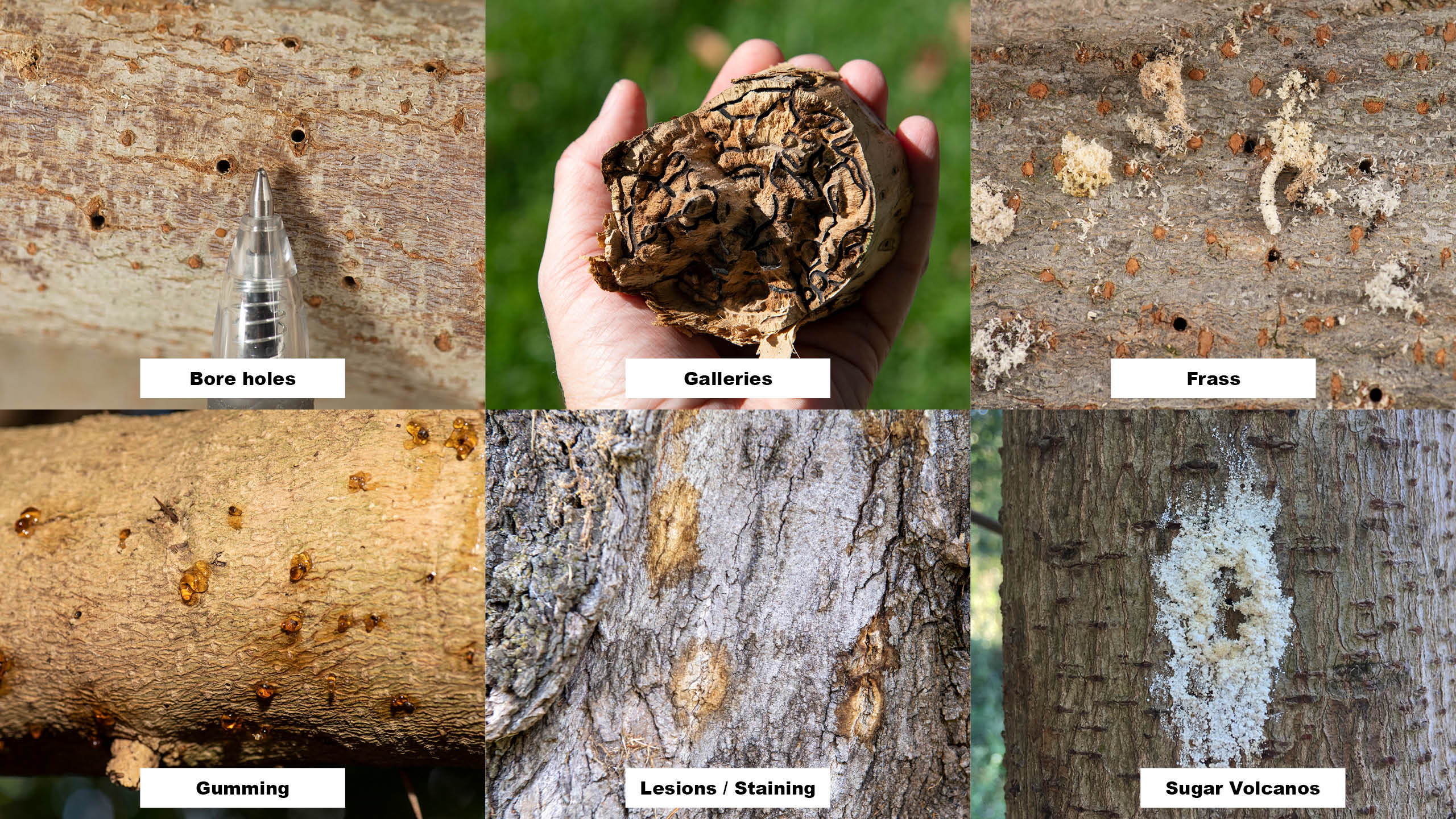
In susceptible trees, the fungus kills the tree by restricting or preventing the movement of water and nutrients within the tree. This causes symptoms such as Fusarium dieback and eventually tree death. The beetle also causes structural damage in the tree.
Establishment of this pest in WA would have a significant impact on our urban canopy and possibly threaten our agricultural industry. Underway since 2021, the Polyphagous shot-hole borer (PSHB) response is a nationally coordinated and funded eradication response led by DPIRD.
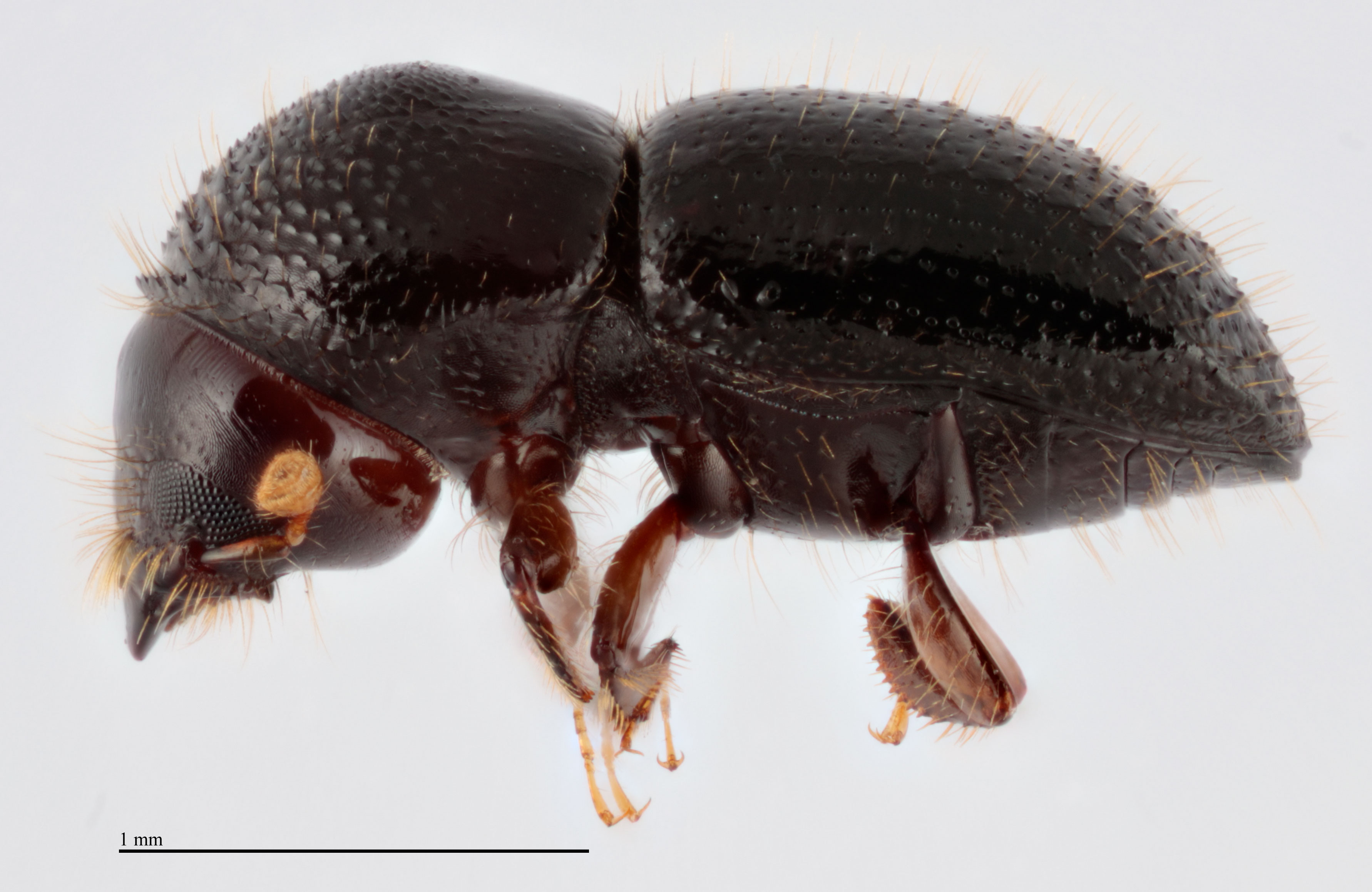
Female PSHB are approximately 2 mm in length and range from brown to black in colour. Only the females can fly and disperse to other nearby trees. Males are smaller at approximately 1.6 mm in length and have no wings. Mature larvae are approximately 3.5 mm long and 1.1 mm wide. They are white, ‘C’ shaped and legless with a reddish head.
How does the pest and its symbiotic fungus survive and spread?
Native to Southeast Asia, PSHB has spread to countries including Israel, the USA, South Africa and Argentina. The pest is now here in WA.
It is possible PSHB 'hitchhiked' its way to Australia on untreated wooden articles and packaging materials. Subsequent spread can be aided by the movement of infested wood (such as pruned trees and firewood) or wooden products such as furniture.
Report a suspected Polyphagous shot-hole borer infestation
Please include a ballpoint pen or ruler in photos of bore holes. This assists us in assessing the size of the bore holes.
DPIRD Pest and Disease Information Service
MyPestGuide®
 Print this page
