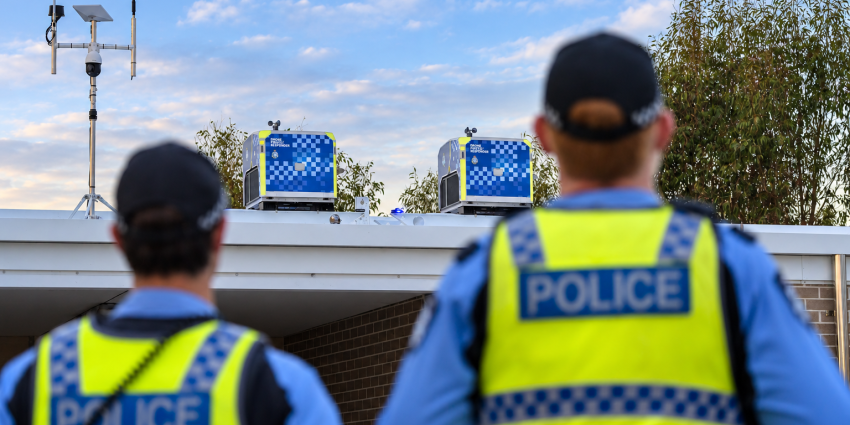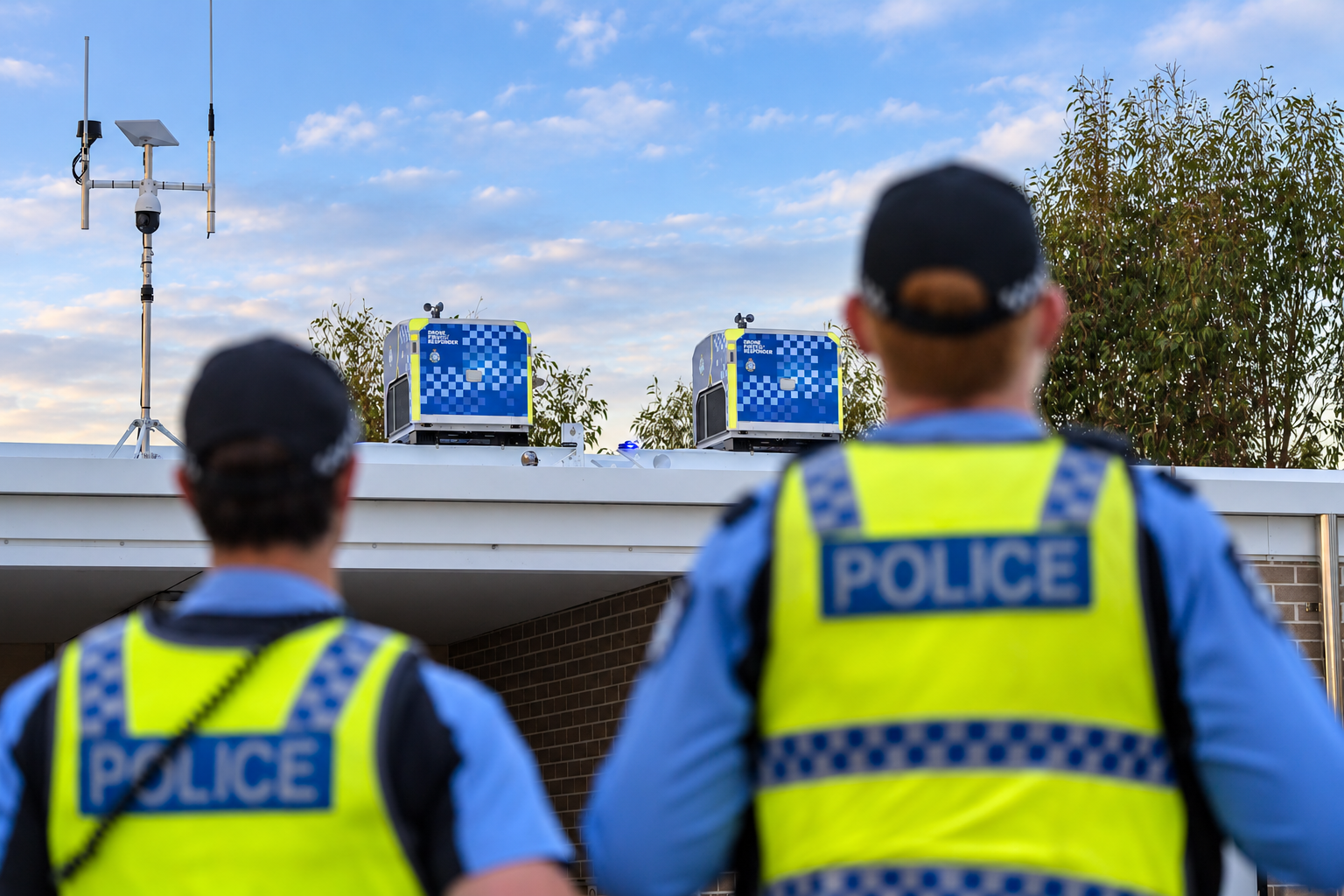
About the capability
The Western Australia Police Force is introducing Drone as First Responder, or DFR, as a permanent, staged remotely piloted aircraft capability.
DFR aircraft can provide live aerial information before, or in support of, frontline police attendance. This information can help police assess risks, allocate resources and make better-informed operational decisions.
Aircraft are deployed in response to calls for police assistance, emergency incidents or defined operational requirements. Human decision-making remains central to the deployment and operation of the capability.
How Drone as First Responder works
- A call for police assistance, emergency incident or defined operational requirement is identified.
- An authorised remote pilot may deploy an aircraft from a fixed or mobile DFR hub.
- Live aerial information may be provided to authorised operational command and frontline personnel.
- Police use the information to assess risk and determine the appropriate response.
Benefits for police and the community
| Earlier information | Safer decisions | Proportionate response |
|---|---|---|
| Provides situational awareness before, or in support of, frontline attendance. | Supports risk assessment and better-informed operational decision-making. | Helps police determine the resources and capabilities appropriate to an incident. |
The capability may also support major events and state security operations.
Operating locations
The program uses a combination of fixed and mobile DFR hubs at selected metropolitan locations, including Baldivis, Rockingham, Kwinana, Fremantle, Cottesloe and Yanchep.
Locations are assessed against a range of factors, including safety, aviation requirements, available infrastructure, the operational environment and policing demand.
Privacy, footage and data
The aircraft are used to support police responding to incidents where assistance is required. They are not used for routine patrols, random monitoring or passive surveillance of the community.
Access to operational and evidentiary material is controlled and auditable. Material is handled under established WA Police Force evidence and information-management processes.
Safety and oversight
DFR operations are conducted under applicable Civil Aviation Safety Authority requirements and WA Police Force aviation governance arrangements.
The capability is supported by trained and authorised personnel, documented practices and procedures, operational governance and aircraft safety systems. The program also includes engagement with aviation stakeholders to support safe integration with other airspace users.
The assurance approach covers aviation safety, privacy, lawful and proportionate use, cyber security, information assurance, operational readiness and community transparency.
A staged approach
Stage 1 of the program establishes and operationalises the initial DFR capability, including workforce readiness, fixed and mobile platforms, governance, operating procedures, assurance and early benefits evaluation.
Any wider or state-wide expansion is subject to separate planning, funding, governance and approval arrangements.
Questions and feedback
Questions and feedback will help inform ongoing review of public information about the capability.
Submit your question or feedback
Frequently asked questions
Is Drone as First Responder a surveillance program?
Show moreNo. DFR aircraft are deployed for calls for assistance, emergency incidents or defined operational requirements. They are not used for routine patrols, random monitoring or passive surveillance.
Will a person decide when a drone is deployed?
Show moreYes. Human decision-making remains central. Each deployment must have a defined operational purpose and is subject to governance and accountability.
Will drones replace police officers?
Show moreNo. DFR supports frontline policing by providing information that can help police understand an incident, assess risks and decide what response is required.
DFR flights initially have experienced police officers as pilots.
Who can see live video?
Show moreLive information may be provided to authorised operational command and frontline police personnel to support an incident response.
Will footage be recorded?
Show moreFootage may become operational or evidentiary material. Where this occurs, it is handled under established WA Police Force evidence and information-management processes.
What happens if an aircraft has a technical problem?
Show moreSafety is supported through aviation requirements, trained personnel, documented procedures, operational oversight and aircraft safety systems. Safety incidents are managed through established aviation and Police Air Wing processes.
How far can the aircraft travel?
Show moreThe capability allows aircraft to be remotely deployed across a broader operational area than traditional drone operations. Specific operations remain subject to aviation approvals, safety requirements and operational need.