


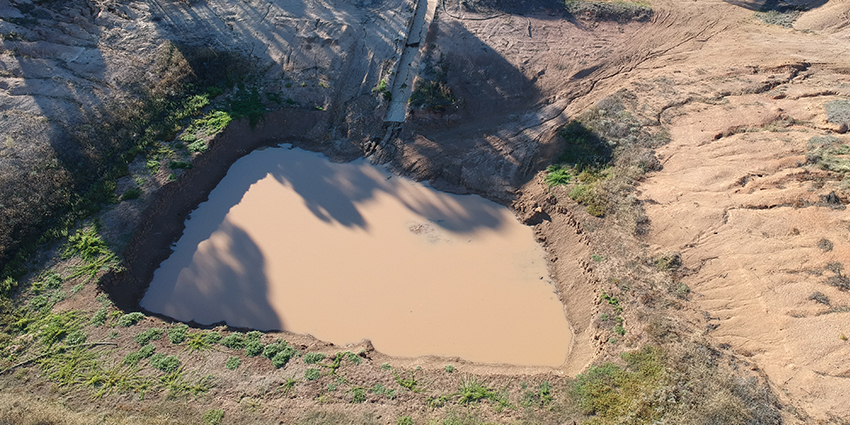
AA Dam No190 James, Lake Grace was originally constructed in 1914 and, following improvements in 1949, became the first experimental roaded catchment dam in the State.
This dam was originally part of a State Government program to provide an adequate water supply to regions of the Wheatbelt during the early twentieth-century that were not part of the Goldfields Water Supply Scheme.
In 1949 the dam was expanded and improved using new technologies and materials to develop a more efficient method of water collection and storage for agricultural areas.
One of the innovations was a "roaded catchment" which is a sloped area with a corrugated surface that collects rainwater and channels water into a dam.
This technology was considered one of the greatest single advances in water conservation for the State.
Other works on the dam in 1949 increased its capacity from 1.4 million litres to 9.1 million litres.
As the population in the Lake Grace district continued to grow over the years, so did the need for more water and by 1975 the town became connected to the Comprehensive Water Supply Scheme providing a more reliable water supply for all residents.
Read full media statement: Lake Grace dam recognised for its historical and scientific values
 Print this page
