


May 17-24 is National Road Safety Week which is a time to come together under a common goal. To save lives on WA roads.
And that endeavour takes more than a village, it takes a state-wide effort.
We need government, community organisations and drivers and other road users making conscious steps towards improving attitudes and making our roads safer.
In honour of our united efforts, the Road Safety Commission is relaunching two highly influential road safety media campaigns.
These campaigns shine a spotlight on two lifesaving initiatives, from the point-of-view of the emergency responders first on the scene of a crash, WA Police, Department of Fire and Emergency Services and St John WA.
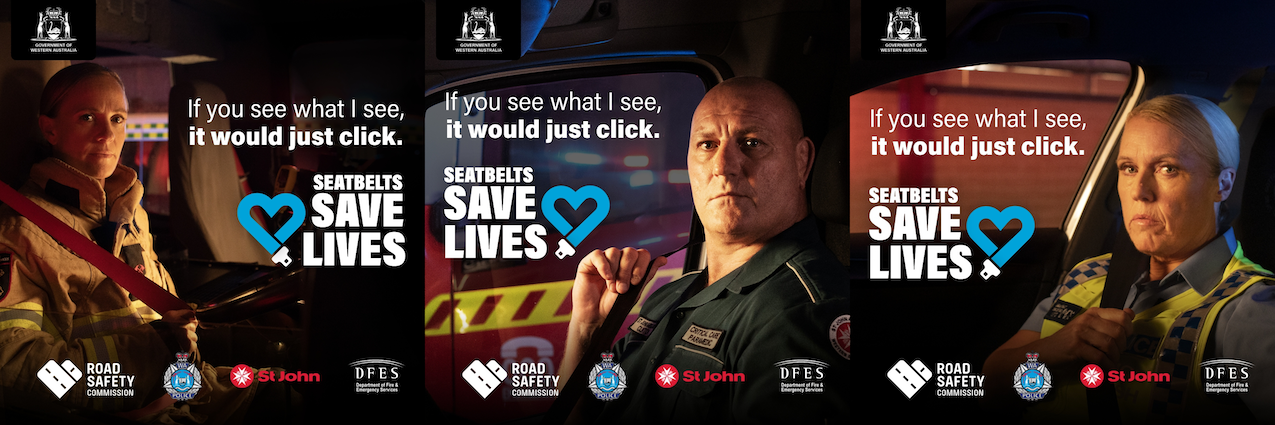
First launched in 2024, the Seatbelts Save Lives campaign offers a candid insight into the true impact of not wearing a seatbelt when a crash occurs. To reinforce the message on seatbelts, the campaign employs a powerful tagline – “If you see what we see, it would just click”.
The second campaign, Lights, sirens, action, educates on the State’s Slow Down, Move Over, also known as SLOMO, law that applies to all emergency service vehicles and first responder vehicles including WA Police, Department of Fire and Emergency Services, St John ambulances, roadside assistance and Main Roads incident response vehicles as well as and tow trucks.
These two campaigns highlight the simple changes drivers and road users can make to save lives.
Seatbelts Save Lives and Lights, Sirens Action! will go live across television, social media, video on demand, streaming services and YouTube from May 17.
To view the campaigns, visit Road Safety Commission campaigns page.
Behaviour change mechanisms are working
Along with campaigns and education, enforcement plays a key role in influencing behaviour change to save lives.
Since the introduction of safety cameras in February 2025 to today, detected seatbelt offences have dropped 84 per cent.
This is an encouraging sign given that in the ten years between 2014 and 2024, on average, 23 per cent of motor vehicle occupant deaths in WA were people not wearing a seatbelt – a preventable cause of road fatalities.
But encouragingly, in 2025, after the introduction of cameras, there has been a 9.2 per cent reduction in fatalities of people in motor vehicle crashes not wearing a seatbelt.
Road Safety Commissioner Adrian Warner said lives were saved in 2025 simply by changing people’s attitudes to seatbelt wearing through education, and enforcement.
“The science on seatbelt safety was settled in the 60s—and now new evidence is giving us a modern insight on the irrefutable fact that seatbelts save lives,” he said.
“What we’re seeing is a powerful behaviour shift.
“Very few people were ever not wearing a seatbelt — but even small changes matter.
“It shows how a simple, everyday decision — something that takes a second — can have a major impact on survival.
“But it also highlights a hard truth: the small number of people still not wearing a seatbelt are taking a huge risk.”
Lighting up for road safety
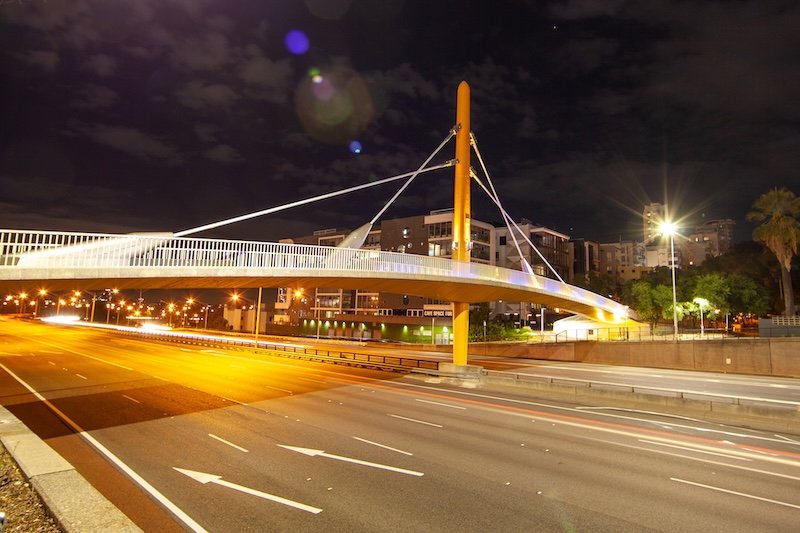
Further activities are also planned in recognition of National Road Safety Week. This includes having more than 30 WA landmarks across Western Australia will light up in yellow to shine a light on road safety including Elizabeth Quay, Frasier Avenue Kings Park, the Northbridge Tunnel, Mandurah traffic bridge, Karratha arts precinct, Bunbury foreshore and more.
National Road Safety Week banners will be displayed in the CBD on Kings Park Road, Mounts Bay Road and St George’s Terrace.
National Road Safety Week is an annual initiative from the Safer Australian Roads and Highways (SARAH) group, partnering road safety organisations and Government.
 Print this page
