


Make the right connection
In 2021, the LCC27 (LCC) connection was phased in from the current Type 21 POL (POL) design to minimise the risk of fires and accidental gas leakage from LPG cylinders.
LCC valves include a check valve and thermal shut off, reducing leaks and fire risks.
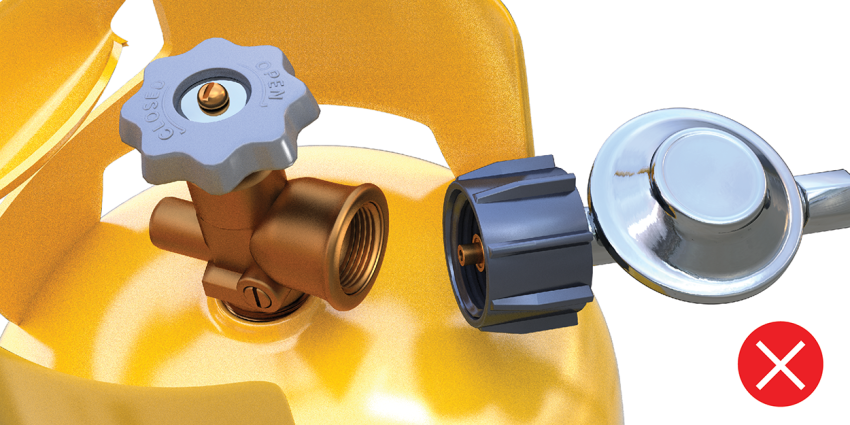
- Never connect a POL cylinder valve with an LCC appliance connection.
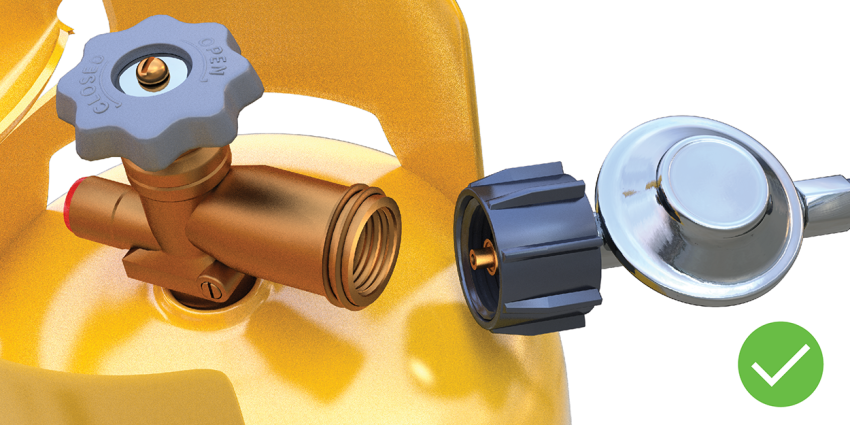
Incompatible connections have caused serious burns. - New LCC appliance connections are only compatible with new cylinder valves.
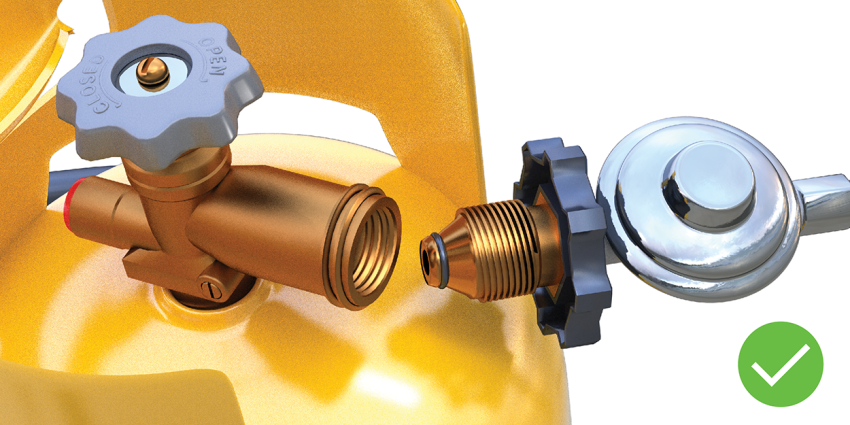
- The old POL appliance connection is cross-compatible and can be used with both the old and new cylinder valves.
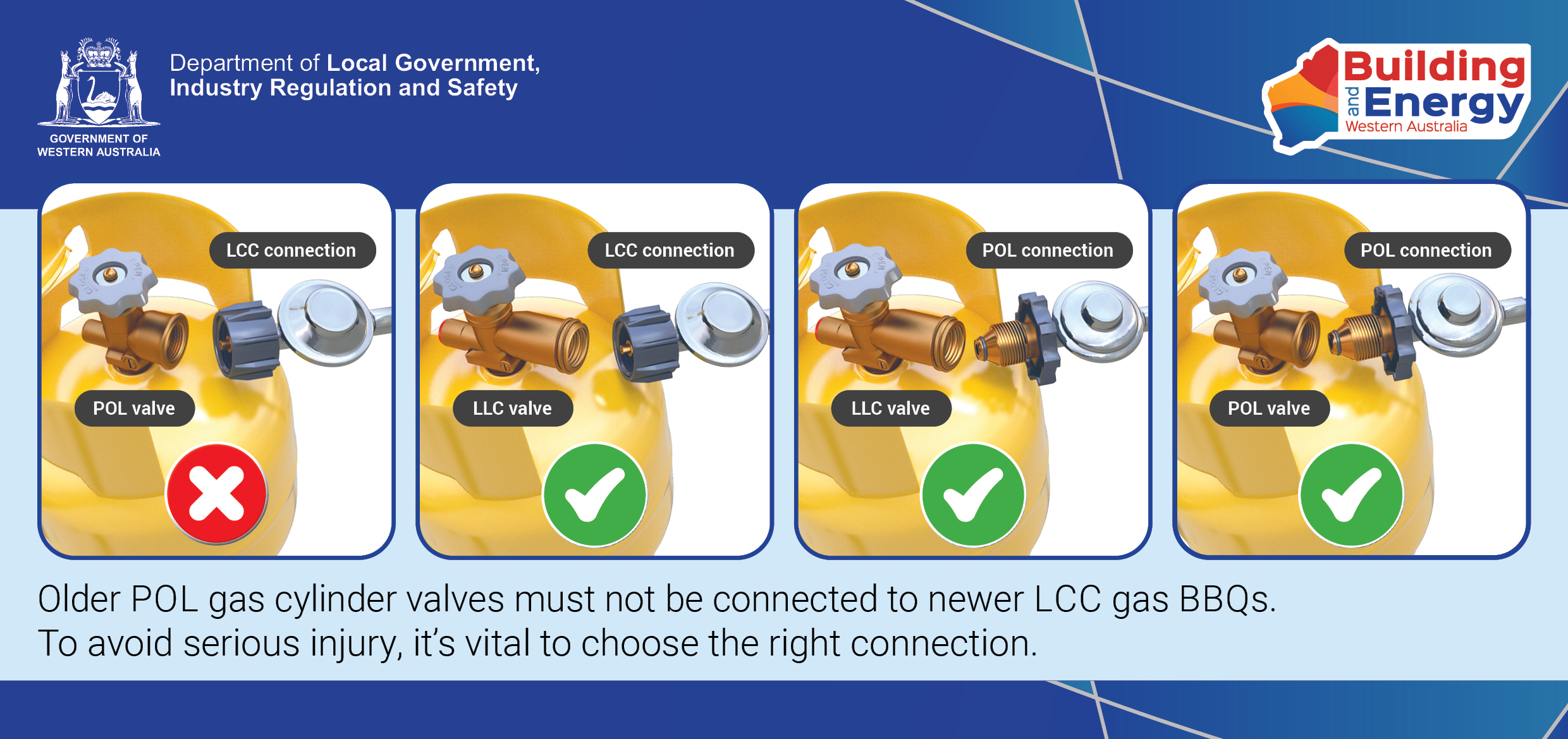
Download a printable version of the connection types.
Incompatible LPG cylinder valve and appliance connection
POL cylinder valve and LCC appliance connection
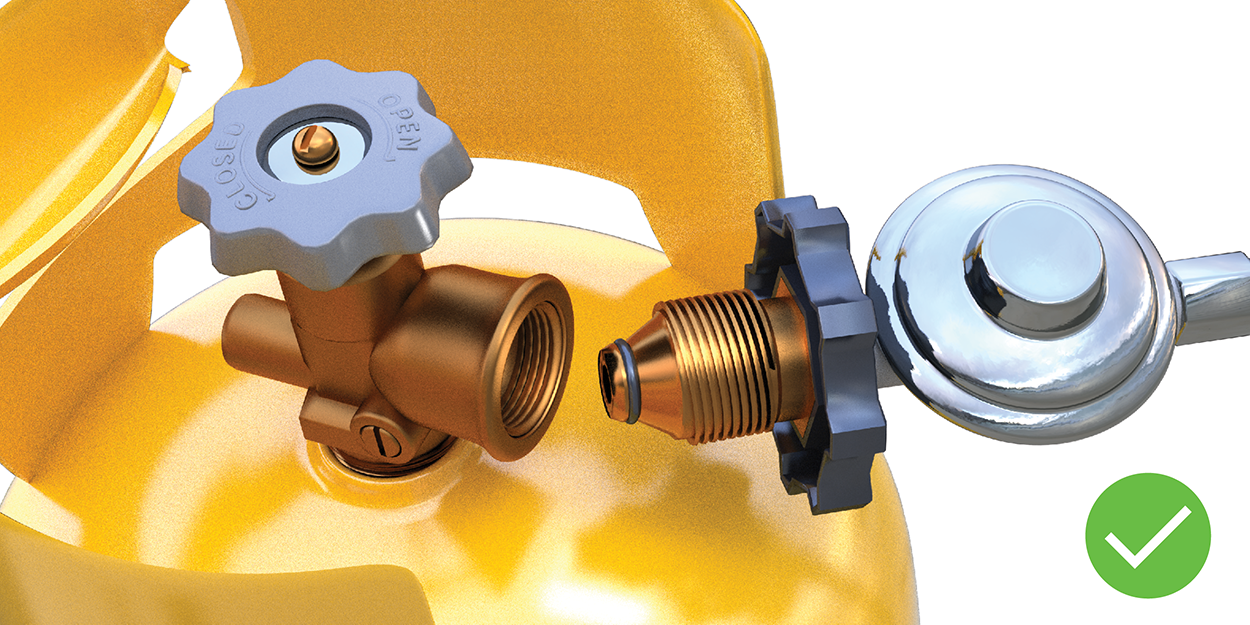
Compatible LPG cylinder valves and appliance connections
LCC cylinder valve and LCC appliance connection
LCC cylinder valve and POL appliance connection
POL cylinder valve and POL appliance connection
Banned LPG cylinder adaptors
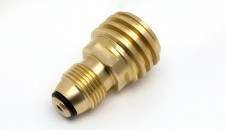
What is an LPG cylinder adaptor?
It is a fitting that is used to convert an old POL cylinder valve outlet to the new LCC connection, allowing the older POL cylinders to be used with the new LCC appliance connector.
The valve connection adaptors override the improved safety feature of the LCC that provides a positive isolation of gas supply preventing the gas to flow unless a gastight seal or connection is formed between the valve and barbecue hose connector.
These safety hazards contribute to the risk of explosion and injury when operating LPG appliances, such as a gas-powered barbecue.
As a result the Director of Energy Safety issued
What to do
- Use a gas cylinder with the new LCC cylinder valve with a new LCC gas appliance connector; and
- Do not use an adaptor to connect your old POL gas cylinder with the new LCC gas appliance connector.
- The old POL appliance connection is cross-compatible and can be used with both the old and new cylinder valves.
Safe use of LPG cylinders
Following these tips can’t ensure your LPG cylinder will be used and stored safely.
- Cylinders must never be laid down. Always keep cylinders upright even during transportation, when they must be well secured.
- Ensure that gas appliances are only operated in adequately ventilated spaces.
- Never tamper with a cylinder or valve. If excess force is needed to open or close the cylinder valve, or if the valve is damaged in any way, notify the supplier.
- Ensure that cylinders are always kept away from sources of ignition or heat.
- When any leakage from the cylinder valve is detected, move the cylinder to a safe location at least 20 metres from any sources of ignition and when empty, return to the supplier with a tag attached explaining the fault.
- Only use appliances designed for LP Gas which will be marked with a badge or label.
- Ensure that all gas fitting work is performed by a person authorised to do so.
- Dry chemical fire extinguishers are suitable for LP Gas fires.
Test for leaks
Check connections are done up tightly and use the soapy water test to check for leaks.
Perform the soapy water test for safely detecting leaks:
- Apply soapy water to the cylinder, hose, and appliance connections.
- Open the cylinder valve, but do not turn on the appliance.
- If you see bubbles or smell gas, you have a leak.
- Turn the cylinder valve off immediately and do not use until the leak is fixed.
- If no leak is found, rinse off the soapy water with clean water and let it dry.
Only use outdoors with ventilation
Portable outdoor gas appliances, such as barbecues and other outdoor gas appliances present a danger of carbon monoxide poisoning if used in areas with insufficient ventilation.
Portable outdoor gas appliances must never be used inside a tent, semi-enclosed area, caravan, RV or indoors.
View the outdoor gas appliances in alfresco areas fact sheet.
What is LP Gas?
When compressed, LP Gas (LPG) becomes a liquid. When the liquid is released, the pressure drops, the liquid will turn to vapour which can be stored and used as a gas.
When it’s released from a cylinder and reverts to gas one volume of liquid expands to 270 times its volume. It’s about 1.5 times heavier than air which means that leaking LPG will fall to the ground. It has a distinct smell to assist you detect a leak.
Report gas incidents
All fuel gas accidents or incidents that occur in Western Australia must be reported to:
- the relevant gas supplier; and
- the Director of Energy Safety (Building and Energy).
This includes near misses, injuries or property damage relating to fuel gas (Natural Gas, LP Gas, CNG, LNG).
Building and Energy
Freecall 1800 678 198 (all hours, from anywhere in Western Australia)
During business hours, the calls are diverted to Building and Energy's Cannington Office (08) 6251 1900. Outside of business hours, the calls are diverted to an after-hours answering service. This freecall number only applies to incidents and accidents that occur within Western Australia.
Local gas suppliers
Supagas Tel: 1800 093 336
Origin Energy Tel: 1800 808 526
Elgas Tel: 1800 819 783
In the event of fire, an LP Gas cylinder should be removed from the heat source. If this is not possible, keep the cylinder cool by spraying water on to it. However, if flames are threatening to engulf the cylinder, the area should be evacuated and emergency services notified immediately.
Emergency services
Police Dial 000
Fire Brigade Dial 000

