


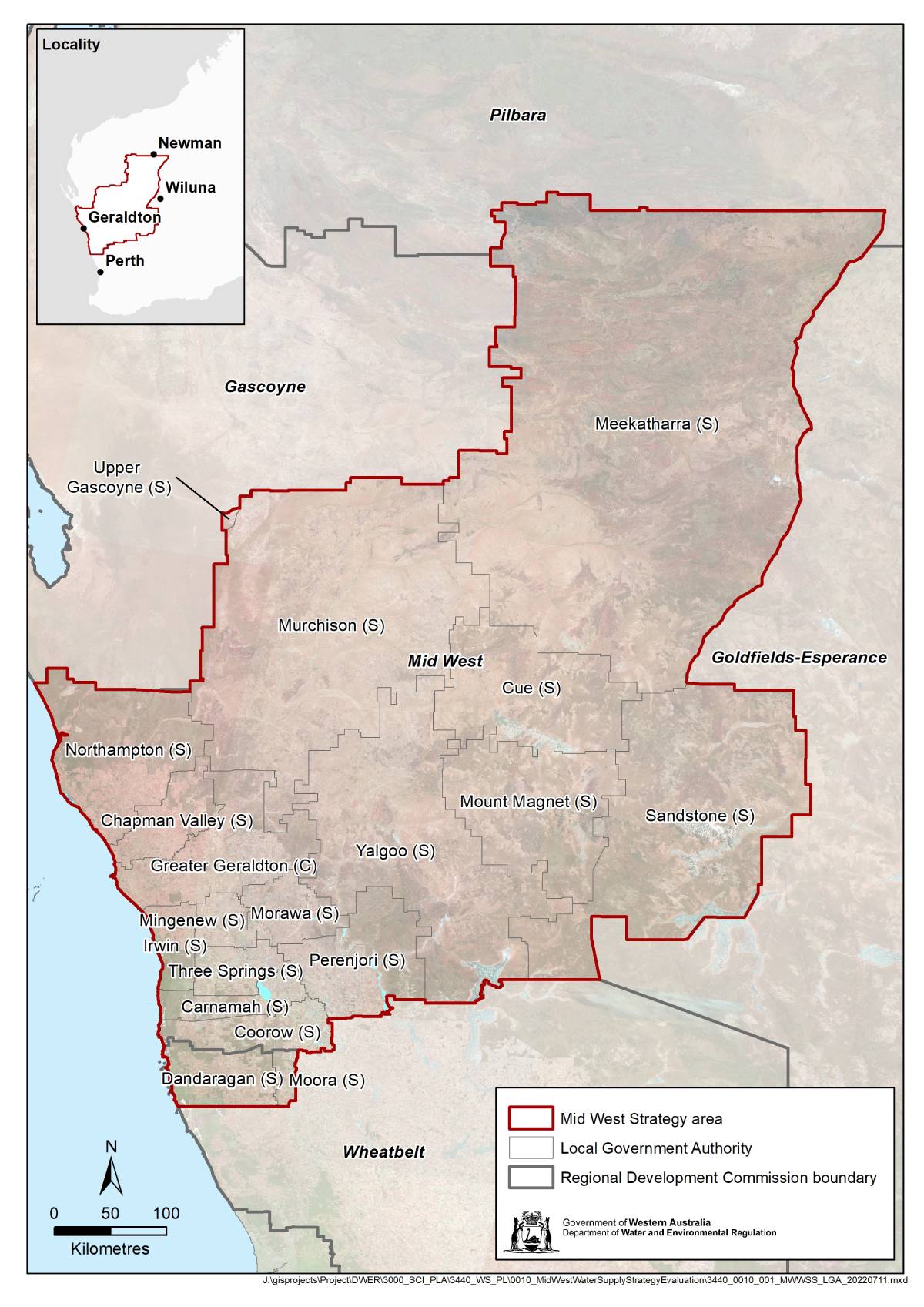
In 2023, the Department of Water and Environmental Regulation completed an evaluation of the 2015 Mid West regional water supply strategy.
The strategy provided a long-term outlook of water demand for mining, industrial, agricultural and urban purposes in the Mid West region and identified potential water source options to meet that demand.
Our evaluation showed that
- Not enough good-quality groundwater is available in the Mid West region to meet projected demand, particularly for large-scale industry development and the Geraldton-Dongara Regional Water Supply Scheme.
- The drying climate means that less water will be available to sustainably take in the future.
- Development of climate-resilient water sources, such as recycled wastewater or desalination should be coordinated to secure the water needed for strategic regional development.
Water use in the Mid West region
Groundwater continues to be the primary water source for towns and industry in the Mid West. Annual groundwater abstraction increased by more than 35 per cent since 2014, mainly due to mine dewatering in the East Murchison. Town water use grew in line with the strategy’s medium-growth scenario, while water demand for agriculture and heavy industry was less than the low-growth scenario.
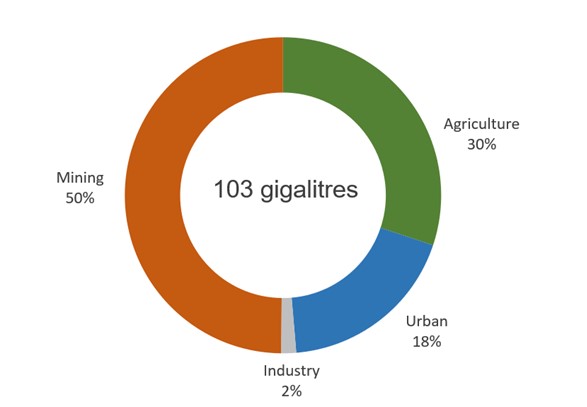
Water demand outlook for the Mid West Region
Since 2015, water availability in the Mid West has decreased and water use has increased. Demand already exceeds available water volumes for most of the Mid West region’s best quality and most accessible groundwater and surface water resources. In addition, the impact of climate change will reduce the availability of these lowest-cost water supplies in the future.
Updated water demand projections indicate an increase to around 150 GL of water used per year by 2050 under a medium-growth scenario. This would be significantly higher if all currently proposed industrial projects were developed, as shown in the trend-breaking growth scenario below.
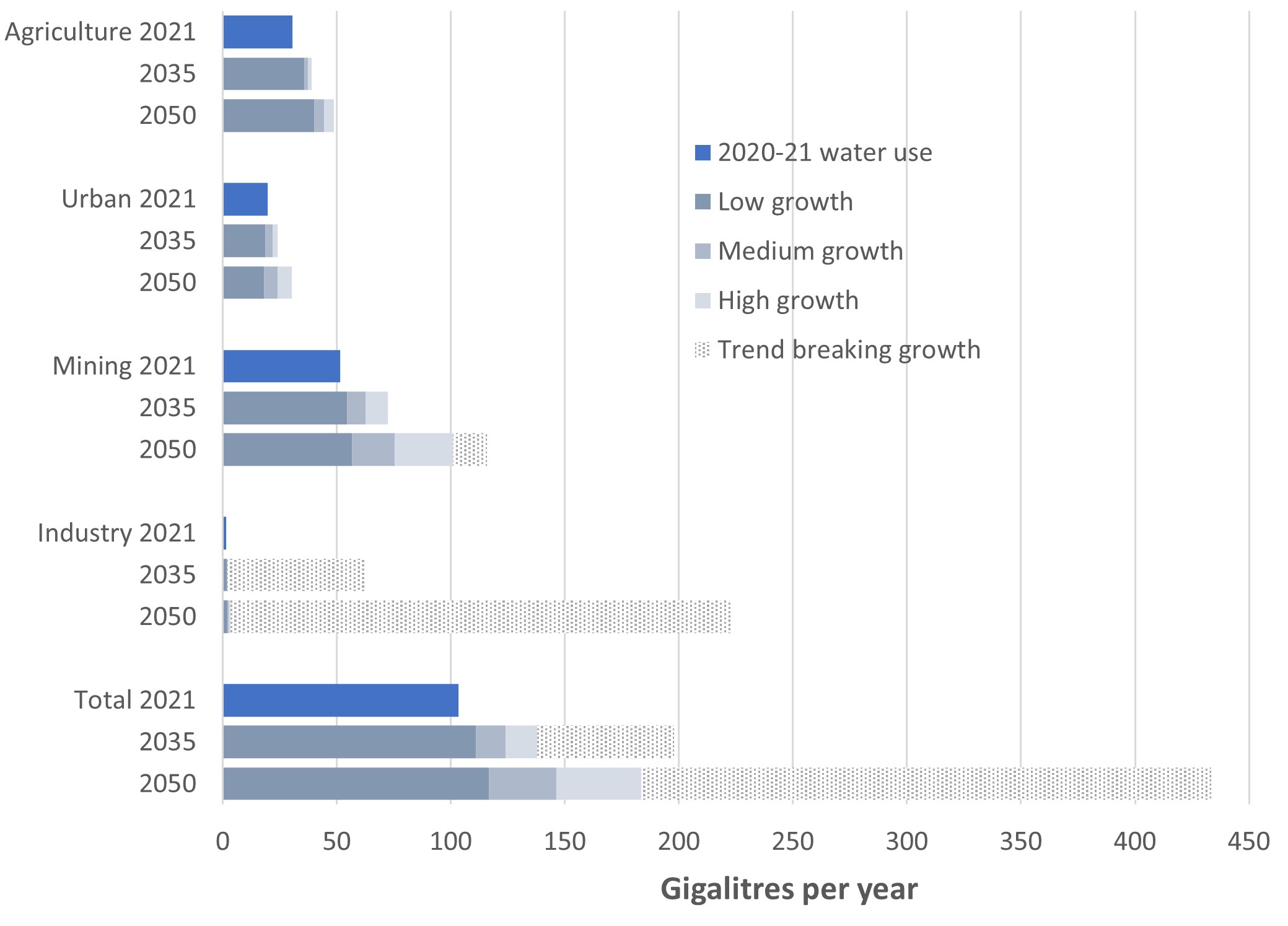
Water supply outlook for the Mid West Region
Rainfall continues to decline in line with the dry climate modelling scenario. This means that less water will be recharged to aquifers, resulting in falling groundwater levels. Higher temperatures mean increased evaporation, which puts water resources under further stress. These climate change effects are expected to continue and become more pronounced in the future.
We will continue to monitor and assess the Mid West’s water resources to ensure their long-term sustainability. We may adapt our management in response to climate and water resource risks, for example by reducing water allocation limits.
We are working with the Water Corporation to plan for future source options for the Geraldton-Dongara regional water supply scheme as increasing abstraction from current groundwater sources is unlikely to be sustainable in the long term. If large industrial water demands need to be accommodated, additional climate-resilient water sources are needed.
To stretch existing water resources further in the Mid West, we must all continue to use water more efficiently. Alternative, climate-resilient water sources will need to be developed to satisfy future water demand. Any significant expansion plans for the region should include the provision of water from alternative sources, such as recycled water and desalination, and water demand reduction strategies.
