


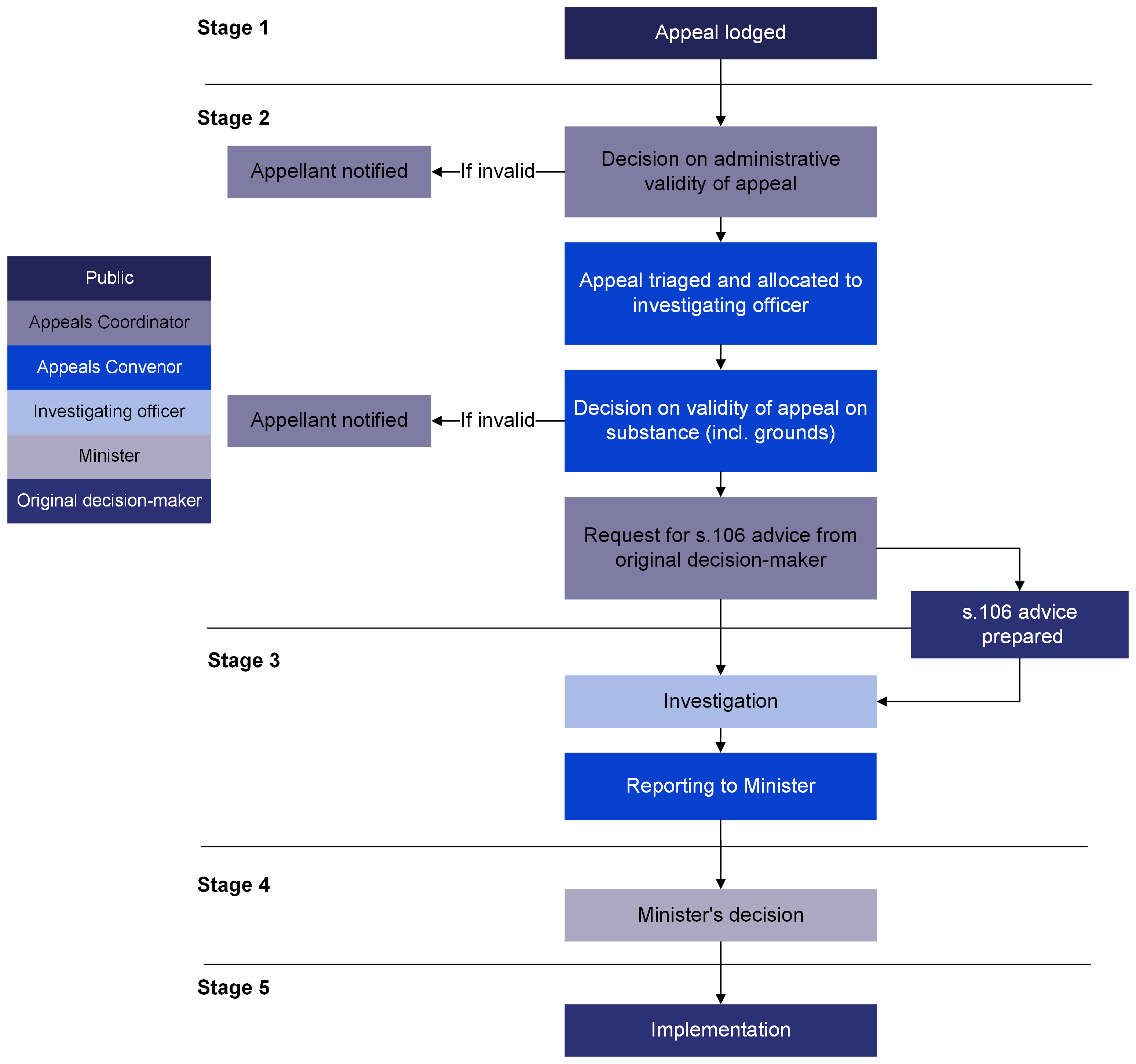
Stage 1: Lodgement
- When: During the appeal period.
- What happens: Appeals may be lodged by eligible parties.
- Ends: When the appeal period closes.
Stage 2: Scoping
- When: Begins after the appeal period ends.
- What happens: Appeals are assessed for validity against legislative requirements.
- Timeframe: Target within 10 business days. Exceptions apply for highly complex appeals.
Stage 3: Investigation and reporting
- When: Starts once an appeal is deemed valid.
- What happens: The Office of the Appeals Convenor assesses the appeal on its merits.
- Ends: When an appeal report is submitted to the Minister.
- Timeframe: Target within 60 calendar days of receiving final responses from the original decision-maker and the proponent or instrument holder. Exceptions apply for highly complex appeals.
Stage 4: Decision-making
- When: Begins when the Minister receives the appeal report.
- What happens: The Minister considers the report and determines the appeal outcome.
- Ends: When the decision is published, you can find it at: Search appeal.
Stage 5: Implementation
- When: Starts once the Minister’s decision is published.
- What happens: The original decision-maker implements the decision.
- Ends: When the decision is fully implemented.
