


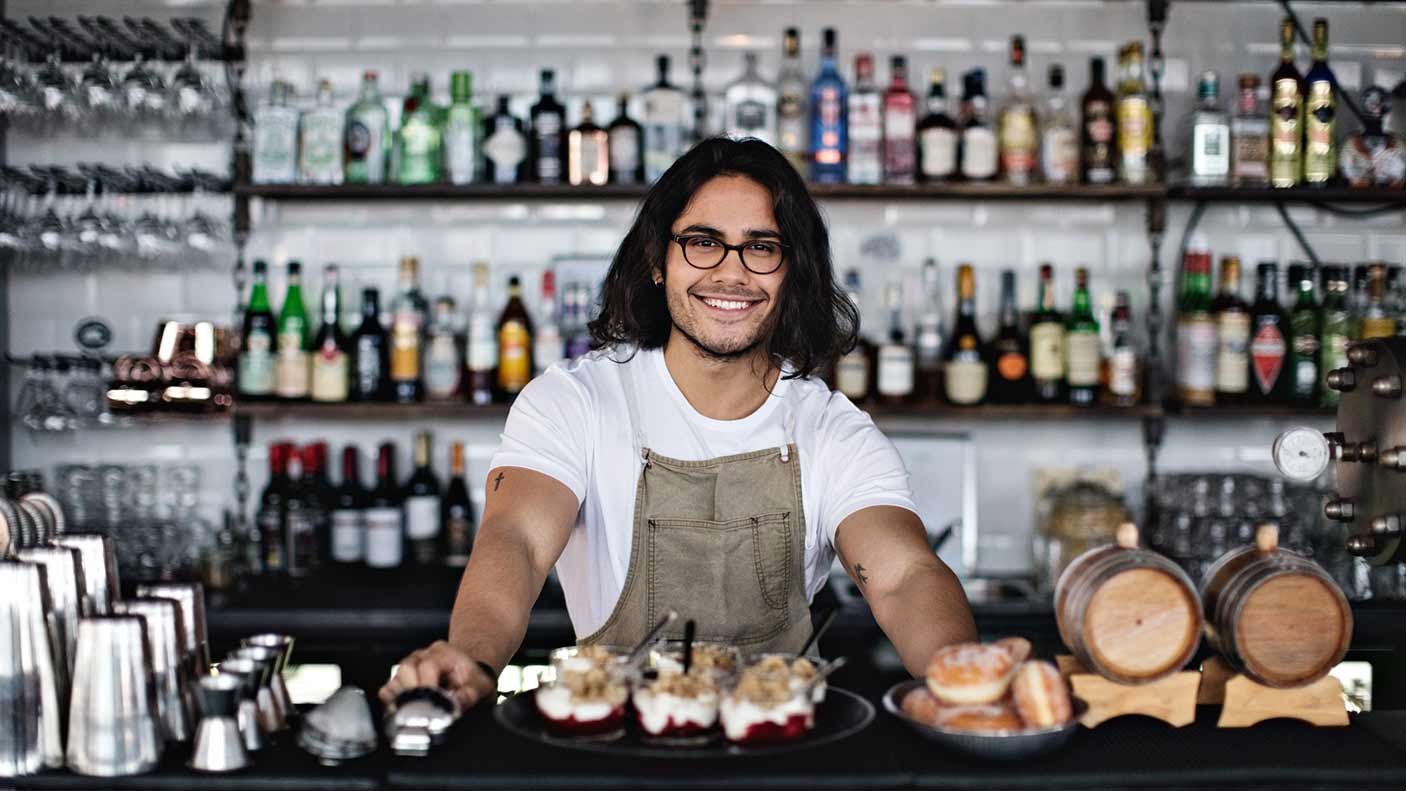
Selling liquor
Show moreSection 3 of the Liquor Control Act 1988 (the Act) defines a sale as:
- agree or attempt to sell; or
- offer or expose for the purpose of selling; or
- send, forward or deliver for sale or on sale; or
- barter or exchange; or
- dispose, by lot or chance or by auction; or
- supply, or offer, agree or attempt to supply —
- in circumstances in which the supplier derives, or would be likely to derive, a direct or indirect pecuniary benefit; or
- gratuitously, but with a view to gaining or maintaining custom or other commercial advantage;
or
- authorise, direct, cause or permit to be done any act referred to in this definition.
If what you propose to do falls within this definition, then you will need to apply for an appropriate licence.
Alternatively, please refer to the bring your own (BYO) and exemptions sections as they provide further information on situations that do not require a licence.
If you would like to discuss whether you need a licence for your situation, contact us on 61 8 6551 4980 or via email to rglindustryservices@lgirs.wa.gov.au
New licences
Show moreThere are 10 permanent licence categories in Western Australia. Each category varies in permitted trading hours and the manner in which liquor can be sold and supplied to the community:
- Casino liquor
- Club and club restricted
- Hotel, hotel restricted, tavern, tavern restricted
- Liquor store
- Nightclub
- Producer
- Restaurant
- Small bar
- Special facility
- Wholesaler.
Takeaway liquor
The following licences are authorised to conduct takeaway liquor (otherwise known as packaged liquor) sales:
- Club — limited to members only
- Hotel
- Tavern
- Liquor store
- Producer
- Special facility — only works canteen, tourism, room service restaurant, vocational education and training course, online wine sales or auction
- Wholesaler — mainly to other permanent licensed premises.
Discuss your liquor licensing options by contacting us on 61 8 6551 4980 or via email to rglindustryservices@lgirs.wa.gov.au
New licence applications lodgement guide
| Who can apply for a licence | Who cannot apply for a licence |
|---|---|
Applications for a permanent liquor licence must be lodged under the name of the proposed licensee. Section 35 of the Act sets out who can make an application for a liquor licence. An application can be made by:
The applicant must also have (or will have) exclusive tenure to the premises to be considered the licensee of a permanent liquor licences. | Section 34 of the Act sets out that applications cannot be granted if the applicant is:
|
How to apply for a licence
Applications can be lodged via our online portal. Follow our step-by-step guide to how to apply for a permanent liquor licence.
Policies
Applicants must refer to the following policies when preparing their application:
- Approved managers at licensed premises
- Mandatory training
- Harm minimisation (except wholesalers)
- Section 40 certificate (local government approval)
- Standards of licensed premises.
Policies you must also refer to depending on the licence category you are applying for:
Hotel, tavern
- Public interest assessment
- Outlet density — packaged liquor premises
- Sale of liquor on the internet
- Website information.
Liquor store
- Public interest assessment
- Outlet density — packaged liquor premises
- Sale of liquor on the internet
- Website information
- Extended trading permits — Sunday trading for non-metropolitan liquor stores.
Hotel restricted, tavern restricted, nightclub
Producer
- Producer’s licence
- Tastings
- Off-site storage of liquor
- Sale of liquor on the internet
- Website information.
Wholesaler
- Off-site storage of liquor
- Residential premises
- Sale of liquor on the internet
- Website information.
Small bar
- Small bar.
Special facility (online wine sales)
- Special facility licences
- Off-site storage of liquor
- Residential premises
- Sale of liquor on the internet
- Website information.
Special facility (foodhall)
Special facility (caterer)
Special facility (works canteen)
All other special facility licences
Issues creating an account
If you have issues creating an account, forgotten your login or require assistance with lodging your application, contact us on 61 8 6551 4999 or via email at e.business@lgirs.wa.gov.au. Not to be contacted about the progress of your application.
Mandatory training requirements
It is the licence holder’s responsibility to ensure that:
- an approved manager is on duty, within the licensed area, at all times.
- every person involved in the sale, supply or service of liquor has completed the responsible service of alcohol (RSA) training.
Mandatory training policies:
- Approved managers at licensed premises policy
- Mandatory training policy.
Occasional licence
Show moreAn occasional liquor licence authorises the licensee, who doesn't have a permanent licence, to sell, supply, or allow the consumption of liquor for a short period of time.
The term 'occasion' refers to a gathering, function or event, including a sporting contest, show, exhibition, trade or other fair or reception at which it is proposed that liquor be sold or supplied and consumed.
Guidance on how to lodge your application, lodgement timeframes and what information we need from you:
Charter boats and temporary bars
If you plan on selling or supplying liquor on a charter boat, or operate a temporary bar in conjunction with an event or function, then read the following policies before lodging your application:
Applying for an occasional licence
You can apply for an occasional licence via our online portal.
If you have issues creating an account, forgotten your login or require help lodging your application, contact us on 61 8 6551 4999 or via email at e.business@lgirs.wa.gov.au
Upon receipt and payment of your application, a licensing officer will be assigned to process your application. Any enquires regarding the progress of your application should be referred to the licensing officer dealing with your application.
Some occasional licence applications can be lodged at your local court
Outside the Perth metropolitan area, an application for an occasional liquor licence can be lodged with your local court house where:
- the anticipated attendance at the function or event is less than 500 people; or
- the duration of the function or event will be less than 7 days.
This option may suit you if you are located in a rural or remote location.
One-off extended trading permits
Show moreA one-off extended trading permit (one-off ETP) application is required where the licensee wishes to temporarily extend their permitted trading hours/area or manner of trade for the purposes of an event, function, or occasion.
Licensees that hold a special facility licence must lodge a one-off add, vary or cancel application instead.
There are 5 types of one-off permits:
- hours and/or area
- cocktail functions (restaurant licences only)
- non-member functions (club and club restricted licences only)
- nightclub functions (nightclub licences only)
- offsite catering.
More information on each type of one-off permit, how to lodge your application, lodgement timeframes, and what information we need from you:
- Extended trading permits/variations — one-off events or functions policy
- One-off extended trading permit lodgement guide
When you are ready, you can apply for a one-off ETP via our online portal.
If you have issues creating an account, forgotten your login or require help with lodging your application, contact us on 61 8 6551 4999 or via email at e.business@lgirs.wa.gov.au.
Upon receipt and payment of your application, a licensing officer will be assigned to process your application. Any enquires regarding the progress of your application should be referred to the licensing officer dealing with your application in the first instance.
Ongoing extended trading permits
Show moreAn ongoing extended trading permit (ongoing ETP) is required when the licensee wishes to sell and supply liquor under the licence, according to the tenor of a permit, in circumstances to which that licence would not otherwise apply.
You can apply for an ongoing extended trading permits at the same time you lodge your application for a permanent liquor licence.
You can apply for:
- cellar door operations (producer’s licences only)
- ongoing hours
- liquor without a meal (restaurant restricted to 120 persons or less)
- liquor without a meal (restaurant not restricted to 120 persons or less)
- alfresco
- area
- dining area
- associations (club licence or special facility licence only)
- lodgers/residential accommodation
- catering
- late delivery (liquor store licences only).
Information on each type of permit, how to lodge your application and lodgement timeframes:
- Extended trading permits — ongoing and indefinite policy
- Ongoing extended trading permit lodgement guide.
Ongoing hours
- Public interest assessment
- Extended trading permits — Sunday trading for non-metropolitan liquor stores — only for regional liquor stores applying for Sunday trading.
Cellar door operations
- Extended trading permits — producers — cellar door operations.
Catering
- Extended trading permits — catering.
Alfresco, area
- Extended trading permits — area.
You can apply for an ongoing ETP at the same time you lodge your application for a permanent liquor licence.
One-off ETP
You can apply for a one-off ETP for the following permits via our online portal.
- ongoing hours
- area
- catering.
If you have issues creating an account, forgotten your login or require help with lodging your application, contact us on 61 8 6551 4999 or via email at e.business@lgirs.wa.gov.au
Upon receipt and payment of your application, a licensing officer will be assigned to process your application. Any enquires regarding the progress of your application should be referred to the licensing officer dealing with your application in the first instance.
If you would like to discuss your licensing options, contact us on 61 8 6551 4980 or via email to rglindustryservices@lgirs.wa.gov.au
Changes to permits or licences
Show moreAn ongoing extended trading permit (ongoing ETP) is required when the licensee wishes to sell and supply liquor under the licence, according to the tenor of a permit, in circumstances to which that licence would not otherwise apply.
You can apply for an ongoing extended trading permits at the same time you lodge your application for a permanent liquor licence.
You can apply for:
- cellar door operations (producer’s licences only)
- ongoing hours
- liquor without a meal (restaurant restricted to 120 persons or less)
- liquor without a meal (restaurant not restricted to 120 persons or less)
- alfresco
- area
- dining area
- associations (club licence or special facility licence only)
- lodgers/residential accommodation
- catering
- late delivery (liquor store licences only).
Information on each type of permit, how to lodge your application and lodgement timeframes:
- Extended trading permits — ongoing and indefinite policy
- Ongoing extended trading permit lodgement guide.
Ongoing hours
- Public interest assessment
- Extended trading permits — Sunday trading for non-metropolitan liquor stores — only for regional liquor stores applying for Sunday trading.
Cellar door operations
- Extended trading permits — producers — cellar door operations.
Catering
- Extended trading permits — catering.
Alfresco, area
- Extended trading permits — area.
You can apply for an ongoing ETP at the same time you lodge your application for a permanent liquor licence.
One-off ETP
You can apply for a one-off ETP for the following permits via our online portal.
- ongoing hours
- area
- catering.
If you have issues creating an account, forgotten your login or require help with lodging your application, contact us on 61 8 6551 4999 or via email at e.business@lgirs.wa.gov.au
Upon receipt and payment of your application, a licensing officer will be assigned to process your application. Any enquires regarding the progress of your application should be referred to the licensing officer dealing with your application in the first instance.
If you would like to discuss your licensing options, contact us on 61 8 6551 4980 or via email to rglindustryservices@lgirs.wa.gov.au
Exemptions
Show moreThere are specific situations where the sale, supply or consumption of liquor does not require a licence or permit. Such situations involve small amounts of liquor supplied in controlled environments and social situations where relatively few people are in attendance.
These situations are only considered to be exempt when the exact conditions of the exemptions, as stated in the Liquor Control Regulations 1989, are met.
Further details on situations that do not require a licence can be found at the Exemptions to the Liquor Control Act 1988 Policy.
If you would like to discuss whether you need a licence for your situation, contact us on 61 8 6551 4980 or via email to rglindustryservices@lgirs.wa.gov.au
If you cannot operate within the exemptions, then you will need to apply for either an occasional liquor licence or a permanent liquor licence.
Bring your own (BYO)
Show moreLicensed premises
If you’re the holder of an occasional liquor licence or a permanent liquor licence, it is up to you whether you allow BYO on your licensed premises or not.
If you do decide to allow BYO, then you must remember that harm minimisation principles apply, and you should include strategies for managing BYO in your harm minimisation plan.
Your licence never stops being subject to regulation in accordance with the Liquor Control Act 1988.
Unlicensed premises
You do not need a licence to offer BYO at an unlicensed premises. Common scenarios where BYO consumption occurs include:
- at unlicensed restaurants
- at live entertainment venues
- in a charter vehicle.
However, people aren’t allowed to consume alcohol on an unlicensed premises unless they have the owner or occupier’s permission.
If you do offer BYO at a live entertainment venue or in a charter vehicle you are operating, that consumption is still subject to conditions found within the Director’s policy on Exemptions to the Liquor Control Act 1988.
Where can BYO consumption occur
Although the consumption of BYO liquor is exempt from the Act in certain circumstances, it’s important to know that it is an offence to allow an unlicensed premises to be used or kept as a place of resort for the consumption of alcohol.
Under section 119(7) of the Act, a place of resort doesn’t need to be a premise used repetitively for liquor consumption and can include a premises used on a single occasion.
The exemptions in section 119(7) relating to BYO consumption at live entertainment venues and in charter vehicles clarify that this is not a breach of the Act.
The consumption of BYO alcohol in unlicensed restaurants is covered under section 51(3) of the Act. This section provides for a customer or guest of that customer to bring liquor to a restaurant, in such a quantity as is reasonable for the circumstances, for consumption ancillary to a meal supplied and eaten there at that restaurant.
Managing BYO at licensed and unlicensed premises
- It is recommended that you contact your local government to see if they have any issues with you offering BYO.
- Only alcohol that was brought to the premises by the patron can be consumed on an unlicensed premises.
- While you can determine what alcohol can be brought on site, you should not allow people to bring along more alcohol than they could reasonably consume over the course of a meal, function, or event.
- It’s recommended you have a policy in place to limit the amount or type of alcohol consumed, for example BYO wine only.
- You should also implement strategies that ensure alcohol is not consumed by juveniles or drunk people.
While completing the nationally accredited Responsible Service of Alcohol is not compulsory, the course helps understand important topics such as:
- duty of care
- harm minimisation
- refusal of service
- effects of alcohol
- juveniles
- identifying intoxication
- conflict resolution.
Consumption of BYO liquor is regulated
Most unlicensed places the public have access to where the consumption of BYO alcohol can occur are considered a ‘regulated premises’.
Under the Act, the consumption and possession of alcohol by juveniles and or the consumption of alcohol by drunk persons on these regulated premises is an offence.
Legislation applicable to BYO consumption
- Liquor Control Act 1988 section 51 — unlicensed restaurants
- Liquor Control Act 1988 section 115 — offences related to people and drunkenness
- Liquor Control Act 1988 section 119 — offences related to unlicensed premises
- Liquor Control Act 1988 section 122 — regulated premises.
