


What’s an eRideable?
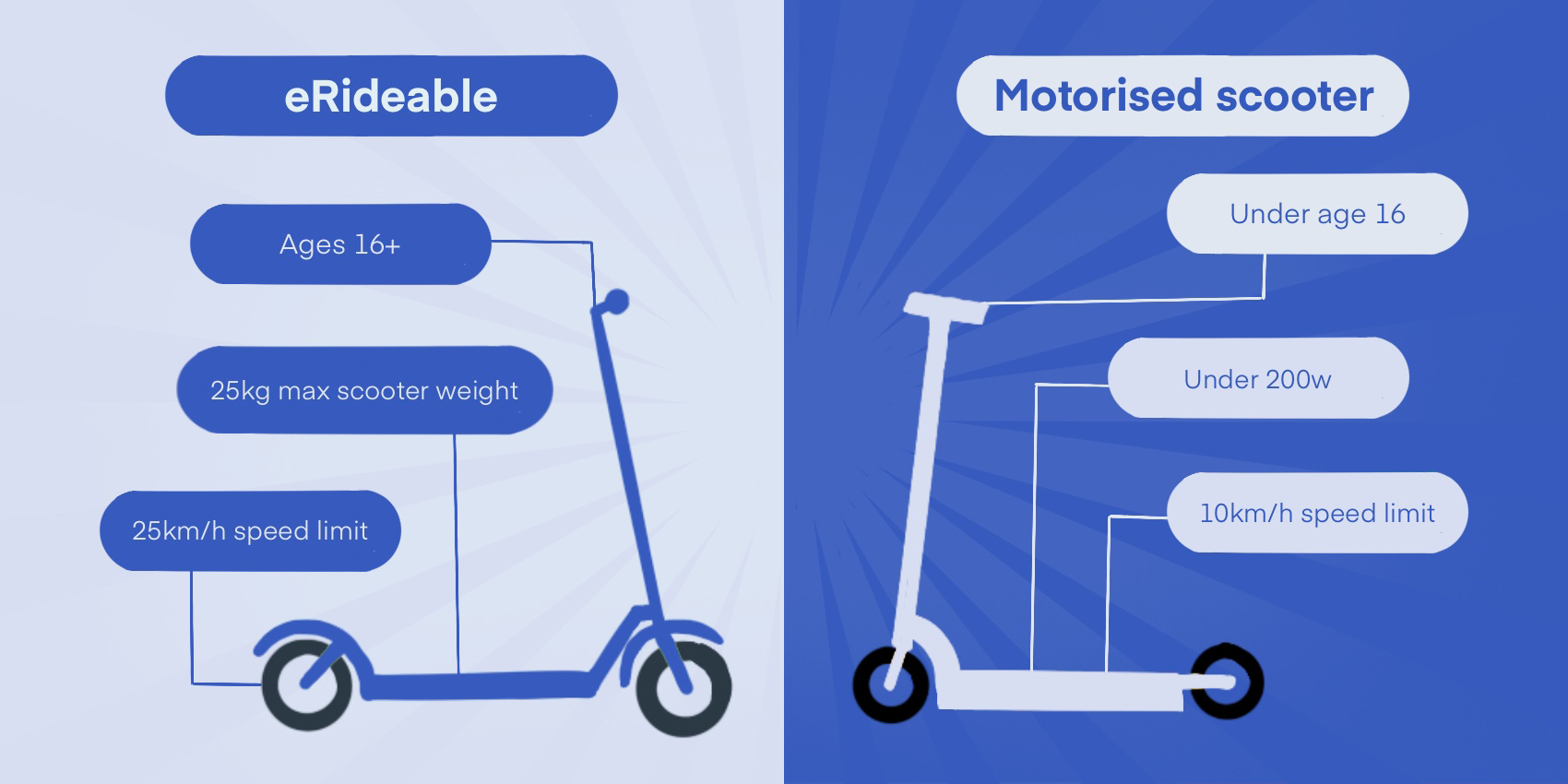
An eRideable is an electric rideable device, such as a scooter or skateboard, that:
- has at least one wheel
- is designed to be used by only one person
- is no more than 125cm long, 70cm wide and 135cm high
- is 25kg or less
- has a speed limit of 25km/h on level ground.
There is no restriction on power output for eRideables as long as it complies with the speed, size and weight limits outlined above.
What if I have a device that doesn't meet the rules?
If your device doesn't meet the rules outlined above, you cannot ride it on WA roads and paths.
Only people aged 16 or over are allowed to use eRideables.
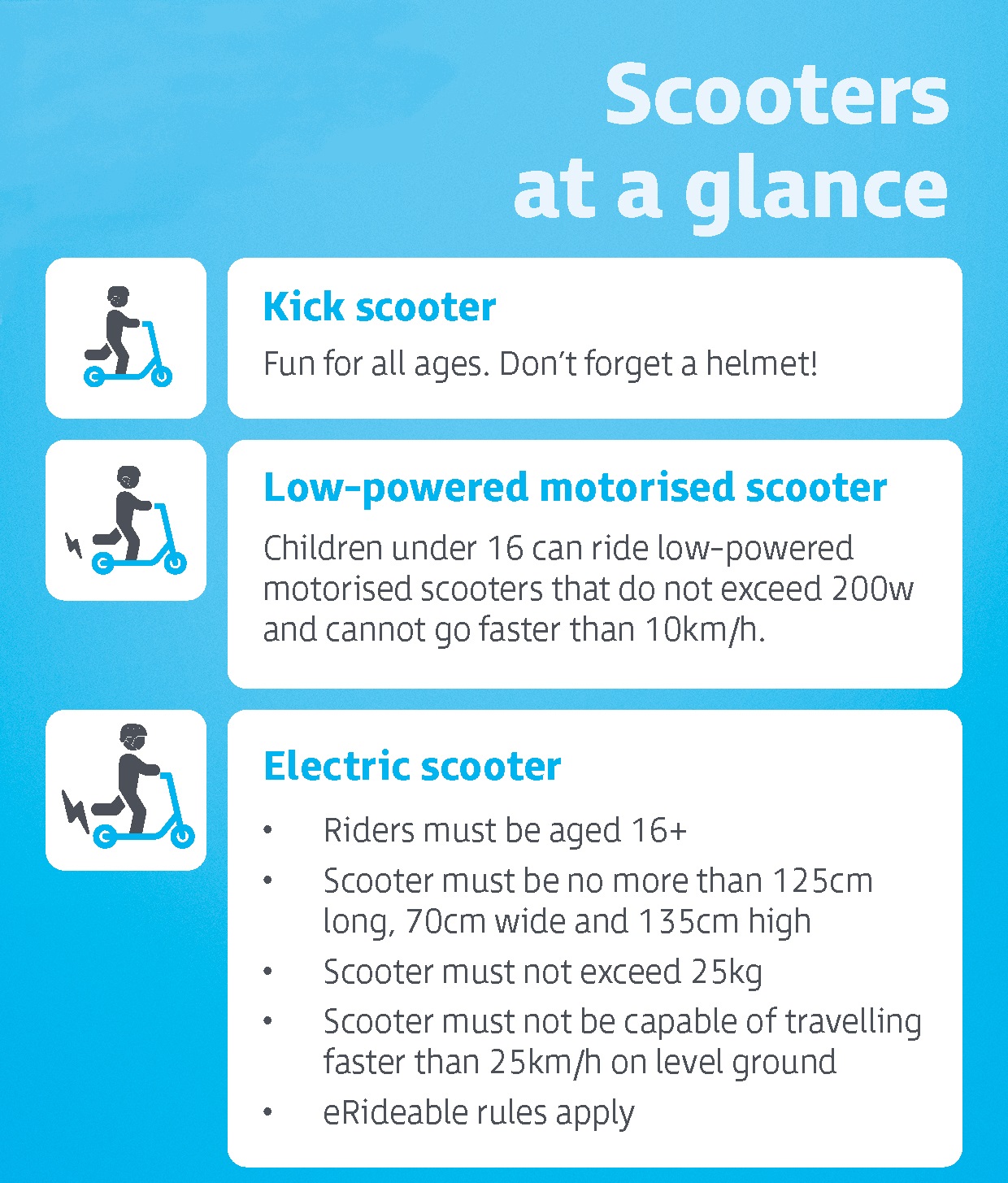
Children under 16 can ride low-powered motorised scooters which do not exceed 200w or go faster than 10km/h. These motorised scooters are not considered eRideables and are covered by their own rules under the Road Traffic Code 2000.
What's a motorised scooter?
A motorised scooter means a scooter that:
- has 1 or more electric motors with a maximum power output of 200 watts; and
- has a top speed of 10km/h
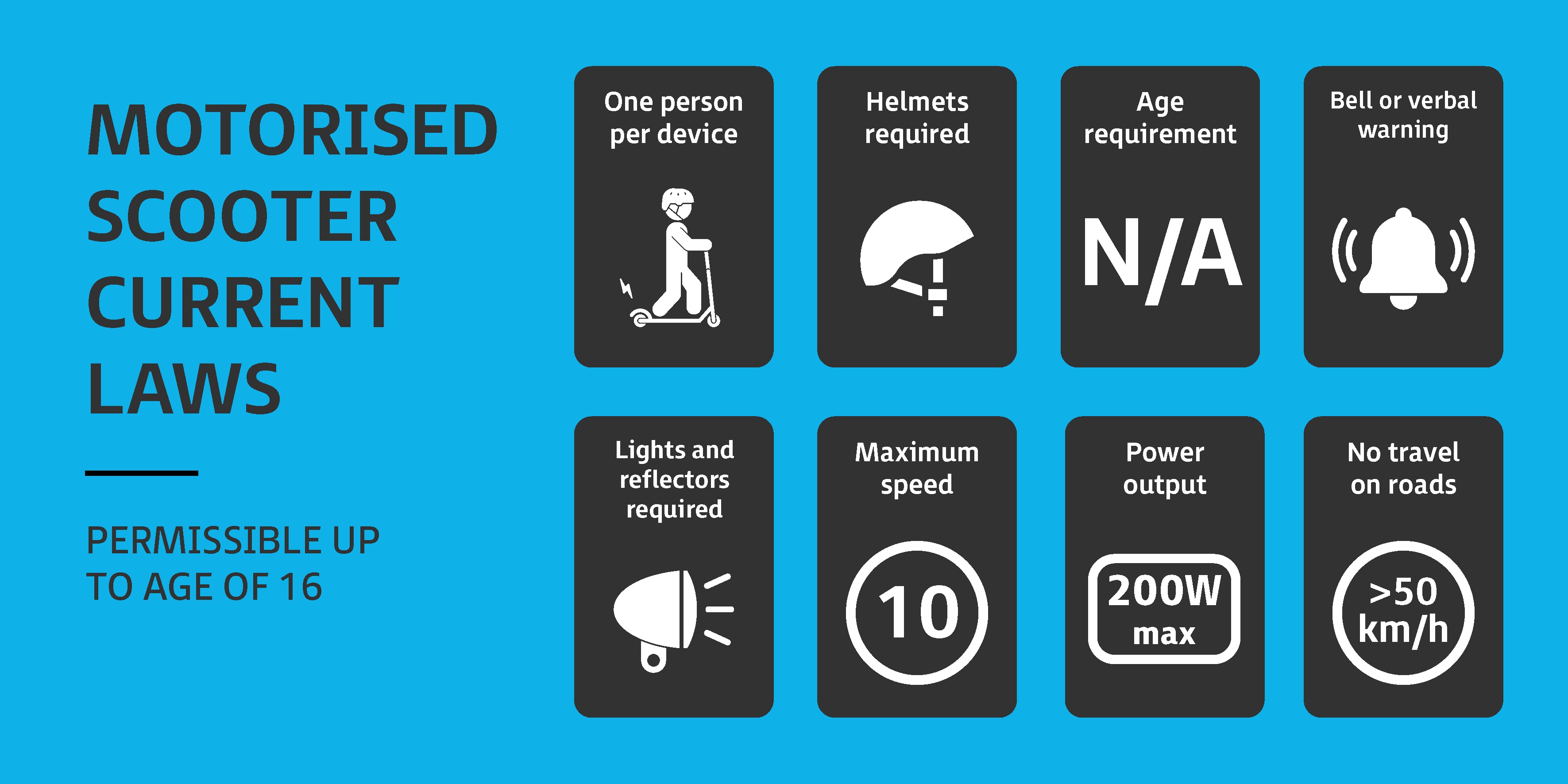
These motorised low-powered scooters are not considered to be eRideables, and are covered under their own rules. They are legal for children under 16 to use.
Riders of motorised scooters must wear a helmet, keep left unless overtaking, and give way to pedestrians. They should make sure that their scooter is fitted with lights or reflectors if driving at night.
Other rideable devices
Motorised wheelchairs, mobility scooters, eBikes or power assisted pedal cycles, and electric personal transporters (such as Segways) are also not eRideables, and are governed by their own rules under the Road Traffic Code 2000.
What to look for when buying an eRideable
If you’re thinking about buying an eRideable, make sure that the one that you pick is in line with the rules. This is what to look out for:
Size and weight
Make sure that the device you are considering is no more than 125cm long, 70cm wide and 135cm high, and does not weigh more than 25kg.
Power and speed
Check the device's capabilities - it should not be able to travel faster than 25km/h on level ground. As long as the device fits the size and speed requirements, there are no restrictions on power output.
If you plan on buying a scooter for someone under 16, make sure it is a motorised scooter and not an eRideable - in this case the device should have a maximum power of 200 watts and max speed of 10km/h. It is illegal for under-16s to use an eRideable.
Design
Make sure that there are no sharp edges on the device that could cause injury, and check that it is comfortable to use.
Lights and reflectors
If possible, look for devices that have lights and reflectors fitted. Look out for:
- a white light at the front of the device
- red light and red reflector on the back of the device
- two yellow reflectors on the side of the device
Sounds
Make sure the eRideable is fitted with a warning device (such as a bell) if practical. If the device you've chosen doesn't include a bell, consider adding one.
Helmet standards
Research shows that helmets can reduce serious head injuries by about 69% and reduce fatal head injuries by about 65%.
- All eRiders must wear an approved helmet that is securely fastened (unless an exempt has been granted).
- Approved helmets carry a sticker or label certifying they have passed safety tests.
- WA adopted new helmet standards from 3 July 2024. Helmets must now comply with one of the following Australian or overseas standards outlined below:
- AS/NZS 2063:2008 Bicycle Helmets (Australian Standard);
- AS/NZS 2063:2020 Helmets for use on bicycles and wheeled recreation devices (Australian standard);
- EN 1078:2012+A1:2012, Helmets for pedal cyclists and for users of skateboards and roller skates (European standard);
- U.S. Consumer Product Safety Commission (16 C.F.R. Part 1203) Safety Standard for Bicycle Helmets (American standard);
- ASTM F1447-18 Standard Specification for Helmets Used in Recreational Bicycling or Roller Skating (American standard);
- Snell B-95, 1995 Bicycle Helmet Standard, 1998 revision, Standard for Protective Headgear for Use in Bicycling (Snell standard).
- The following bicycle helmet standards have been phased out as of 22 September 2025:
- AS/NZS 2063:1996 (Standards Australia);
- Standard B-95 (the Snell Memorial Foundation);
- Standard B-95A (the Snell Memorial Foundation;
- Standard B-95C (the Snell Memorial Foundation).
- Always replace your helmet if it is worn out (frayed straps, crumbling foam etc), is cracked or has been damaged or been in a crash.
- You may be exempt from wearing a helmet if your religious headdress means a helmet won’t sit correctly on your head. You will also be exempt if you have a medical reason for not wearing a helmet AND you have been granted a written exemption by the Department of Transport.
Correct helmet usage
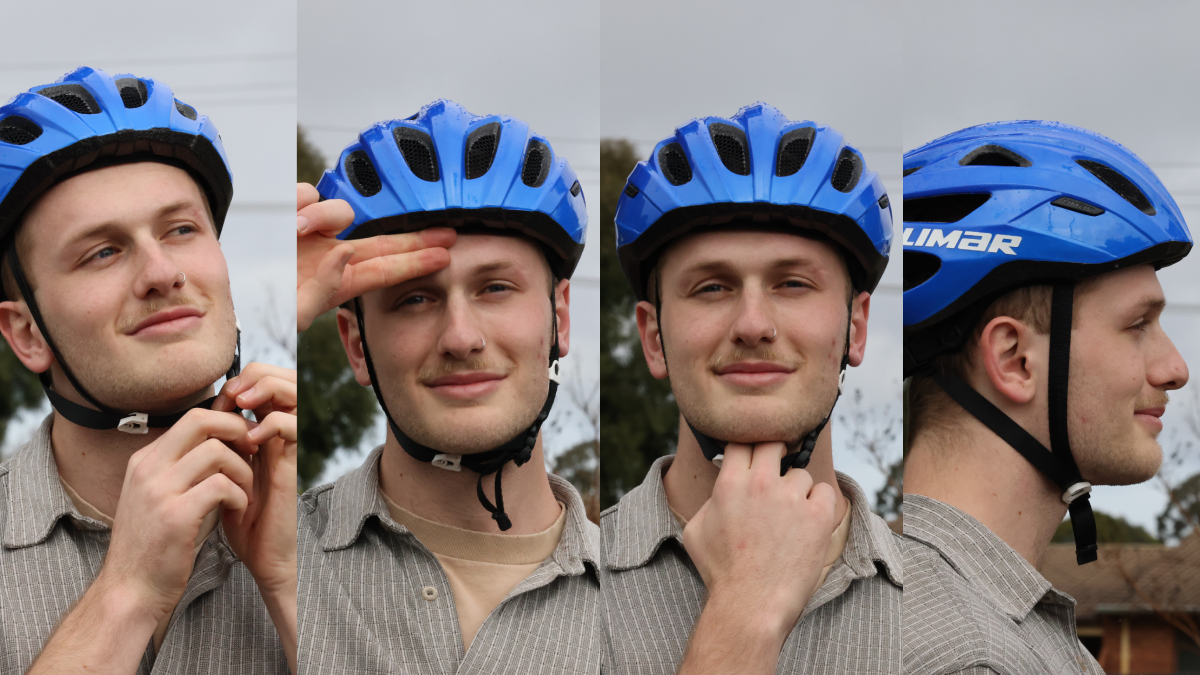
- Can you fit two fingers between your eyebrows and the helmet?
- Do the straps join in a "V" just below the ears?
- Can you fit two fingers between the helmet strap and your chin?

eRideable learning resources
Show moreFor printable posters, fact sheets and learning materials, visit our eRideable resources page.
eRideables Fact Sheets and Posters
Our Get Streetwise website has videos and quizzes on eRideables and other road safety topics.
