


Emergency Physician and State Director of Trauma Steve Dunjey explains the serious impact of incorrectly wearing a seatbelt.
There's only one way to wear a seatbelt
Wearing a seatbelt properly is one of the easiest ways to protect drivers and passengers in a vehicle.
Here’s how to correctly use your seatbelt:
- Always ensure your seatbelt is properly adjusted and securely fastened.
- The chest sash should be placed over the middle of the shoulder and diagonally across the chest.
- The lap belt should sit snugly over the hips.
- The entire seatbelt should be taut, with no twists or slackness.
- Remove bulky clothing as this can reduce the effectiveness of the seatbelt.
- Never share a seatbelt with a child on your lap.

For information about infringements, including exemption requests, please visit Traffic infringements | Transport WA
Seatbelt use during pregnancy
If you don’t wear your seatbelt properly during pregnancy, you risk your own safety and that of your unborn child. To make sure your seatbelt is protecting you both, you should:
- Use the seatbelt locator mechanism (if available) to adjust the seatbelt angle for a snug and comfortable fit;
- Position the chest sash between the breasts and to the side of the belly; and
- Position the lap belt under the belly and secure it across the hips.

Medical conditions and disabilities
If you or your child can’t use a seatbelt or child car restraint correctly due to a medical condition or disability, you must discuss this with a doctor or other appropriate medical practitioner before travelling without a properly adjusted seatbelt or child car restraint.
Children (under the age of 16)
If your child (under the age of 16) has a medical condition or disability that prevents them using a standard child car restraint or wearing their seatbelt properly adjusted and securely fastened, they may be able to use an additional or alternative restraint such as a vest or specialty harness or a special purpose car seat.
However, the restraint needs to be prescribed by an appropriate medical practitioner. Further information is available from the Department of Transport and Major Infrastructure.
Adults and children aged 16 and over
If a person is unable to wear a seatbelt properly for medical reasons or because of their size, build or other characteristic, they may qualify for a defence on medical grounds.
The person must obtain a relevant medical certificate before travelling without wearing their seatbelt (or wearing it incorrectly). The medical certificate must be signed by a medical practitioner and be current at the time of the alleged offence. It must certify that:
while driving or travelling in a motor vehicle —
(i) the person is unable for medical reasons to wear a seatbelt; or
(ii) because of the person’s size, build or other characteristic, it would be unreasonable to require the person to wear a seatbelt;
A certificate is current if, at the relevant time:
(a) it is specified to have effect only for a specified period and that period has not expired; or
(b) it is endorsed with the words “permanent disability”; or
(c) in any other case, a period of not more than 2 years has expired from the day of its issue.
If the certificate imposes conditions on the person (e.g. using a seatbelt extender or not travelling in the front seat), the person must comply with those conditions, otherwise the defence may not apply.
Child car restraints
Children under the age of seven years must be restrained in an appropriate child car restraint.
Children aged seven and up must use a child restraint unless they can wear an adult seatbelt properly.
Make sure you check out the 5-step test before transitioning a child into an adult seat and seatbelt.
Avoid old or worn restraints that are more than 10 years old or have previously been in a crash. Ensure your child car restraint has been correctly installed in your vehicle.
For information on the appropriate child car restraint for your child, where to access Type 1 and Type 2 Child Car Restraint Fitters around the state, and children in on-demand transport, visit our page for parents and carers.
Seatbelts save lives
We have partnered with the Western Australia Police Force, Department of Fire and Emergency Services and St John WA to create the Seatbelts save lives campaign.
This campaign raises awareness that people are dying in crashes not wearing seatbelts. People who may have otherwise survived.
First responders Carla, Emma and Clinton provide a candid insight into the true impact of not wearing a seatbelt when a crash occurs – from the point-of-view of those first on the scene of a crash. If you see what they see, it would just click that seatbelts save lives.
Offences and penalties
It is an offence to not wear or incorrectly wear a seatbelt in Western Australia. Further, drivers must ensure that all passengers travelling in their vehicle are appropriately restrained.
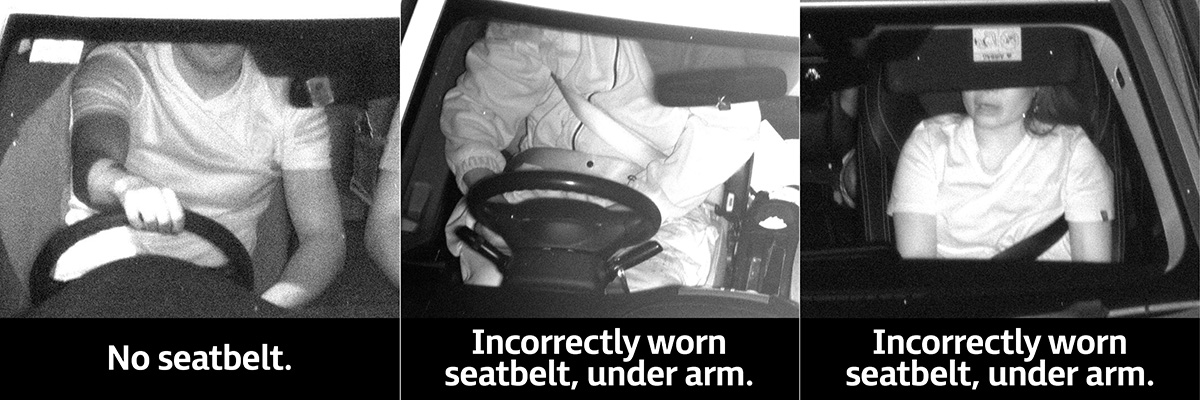
Please note: an inappropriately restrained passenger (for example, a young child using a seatbelt instead of child car restraint, or a passenger wearing their seatbelt incorrectly under their arm or off the shoulder) is considered an unrestrained passenger in the table below.
| Driver offence | Penalty | Demerits |
|---|---|---|
| Unrestrained driver | $550 | 4 |
| Unrestrained driver with 1 unrestrained passenger | $600 | 4 |
| Unrestrained driver with 2 unrestrained passengers | $700 | 4 |
| Unrestrained driver with 3 unrestrained passengers | $800 | 4 |
| Unrestrained driver with 4 or more unrestrained passengers | $900 | 4 |
| Restrained driver | ||
| Restrained driver with 1 unrestrained passenger | $550 | 4 |
| Restrained driver with 2 unrestrained passengers | $600 | 4 |
| Restrained driver with 3 unrestrained passengers | $700 | 4 |
| Restrained driver with 4 or more unrestrained passengers | $800 | 4 |
| Passenger offence | ||
| Passenger age 16 or over unrestrained | $550 |
Demerit points can vary during holiday periods/double demerit dates.
Safety cameras
There are now enforcement safety cameras which can detect seatbelt offences.
Find out more information about safety cameras here.

