


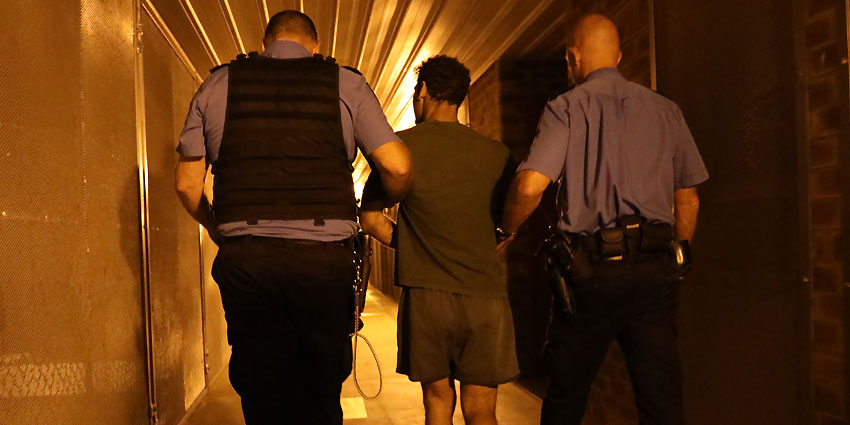
In a complex custodial environment, these measures form one part of a management regime aimed at protecting prison officers and prisoners from harm.
Officers are authorised to use restraints – usually handcuffs – to prevent a prisoner injuring themselves or others, on medical advice or to prevent an escape during an escort.
Corrective Services policy determines that prison officers should lawfully use the minimum amount of force necessary to manage a situation and only as a last resort.
Commissioner for Corrective Services Mike Reynolds said officers where practicable must attempt to de-escalate an incident by other means and give non-compliant prisoners a reasonable opportunity to follow instructions before using force.
"Force must never be used as a form of punishment and officers need to consider the safety of themselves and others when determining what actions to take," Commissioner Reynolds said.
All incidents involving use of force are reported and recorded, and subject to a series of reviews by Corrective Services management. This may include a critical evaluation by the central Use of Force Committee or referral to the Professional Standards Division.
Data between 2016 and 2020 shows that 96 per cent of recorded incidences of force and restraints in WA prisons involved the use of handcuffs. Most (77 per cent) of those uses of handcuffs were during escorts, such as safely moving prisoners within or outside a facility.
Commissioner Reynolds said significant improvements had been made to the review processes by strengthening governance and monitoring trends to identify and rectify any systemic issues.
This includes additional guidance for Corrective Services staff in reporting and recording that distinguishes between when restraints have been used for escorts or in response to an incident.
"Use of force and restraints is a necessary and lawful option available to officers to keep our prisons and the community safe," Commissioner Reynolds said.
"A significant proportion of our prison population has serious offending histories and acute, complex behavioural issues that from time to time present a threat to others and themselves," he said.
"We are committed to ongoing reviews of systems and processes as part of continuous improvement."
 Print this page
