


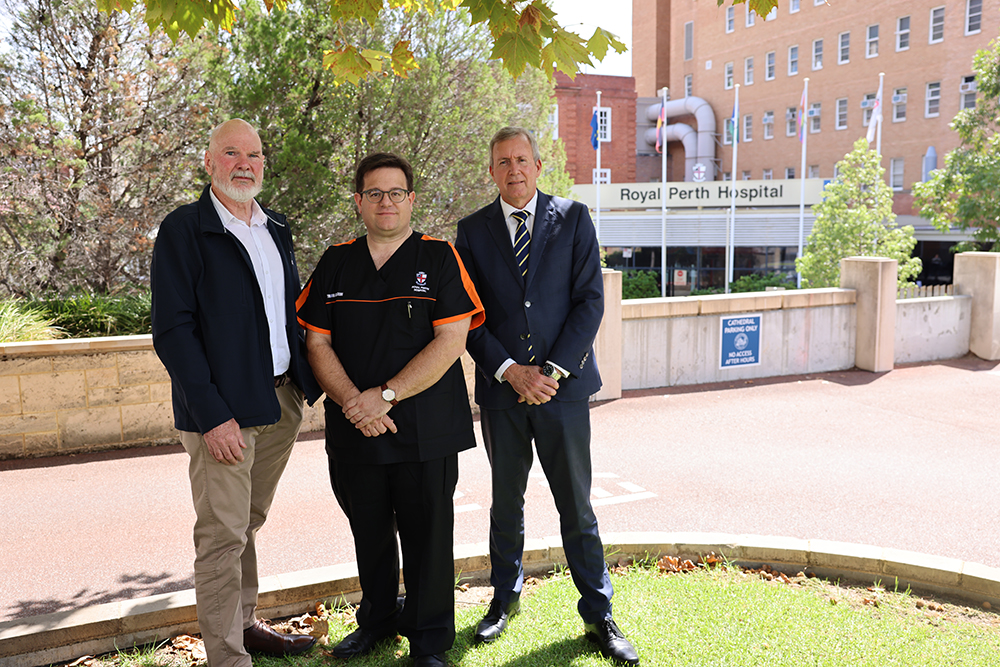
With thousands of West Australians taking off to their favourite Easter holiday destinations this weekend, the Road Safety Commission is urging everyone on the roads to make safer choices.
Road Safety Commissioner Adrian Warner says the Easter break is a very challenging period for road safety.
Tragically, five people lost their lives during last year’s double demerit period and there were six deaths the year before.
Since 1 January this year, there have been 44 deaths on WA roads. This includes 25 people in motor vehicles, 14 motorcyclists and five pedestrians.
Of the 44 deaths, 27 happened in regional areas.
Sadly, last year more than half of all road fatalities happened in regional areas. It’s a common trend with about 60 per cent of all deaths over the last five years happening on regional roads.
“With Easter also kicking off the start of the school holidays, everyone is in a rush to get into holiday mode and with this stampede mentality taking over our roads there could be tragic consequences,” he said.
“Most road deaths happen on high-speed roads with the fatal five, including distraction from mobile phones, speed, seatbelts, drugs and alcohol and fatigue being the biggest causes of serious and fatal road crashes.
“I encourage everyone on our roads this Easter – motorists, motorcyclists, cyclists and pedestrians – to slow down, think about your driving behaviour and make every journey safe.”
Crash test footage shows importance of wearing a seatbelt correctly
This Easter the Road Safety Commission is joining forces with doctors at Royal Perth Hospital to highlight the importance of wearing a seatbelt correctly.
While we know 99 per cent of people wear their seatbelt, on average about 20 per cent of people who died in a motor vehicle crash over the past five years weren’t wearing a seatbelt.
This also doesn’t include the countless number of other injuries and trauma caused by not wearing a seatbelt correctly.
This road crash simulation provided by Transport for NSW demonstrates the devastating consequences of not wearing a seatbelt device properly.
The video shows the impact of wearing a seatbelt under the arm which can result in massive internal injuries or even death at 60kmh.
RPH trauma surgeon, Professor Dieter Weber said when it came to safety on the roads, there was one very simple thing people could do to prevent injury.
“We've seen simply too many patients come through our doors because of a momentary lapse of judgment, but with lifetime consequences,” he said.
“The message is extremely clear from us, wear your seatbelt.
“Putting on a seatbelt, it's such a simple thing to do, it will save lives.”
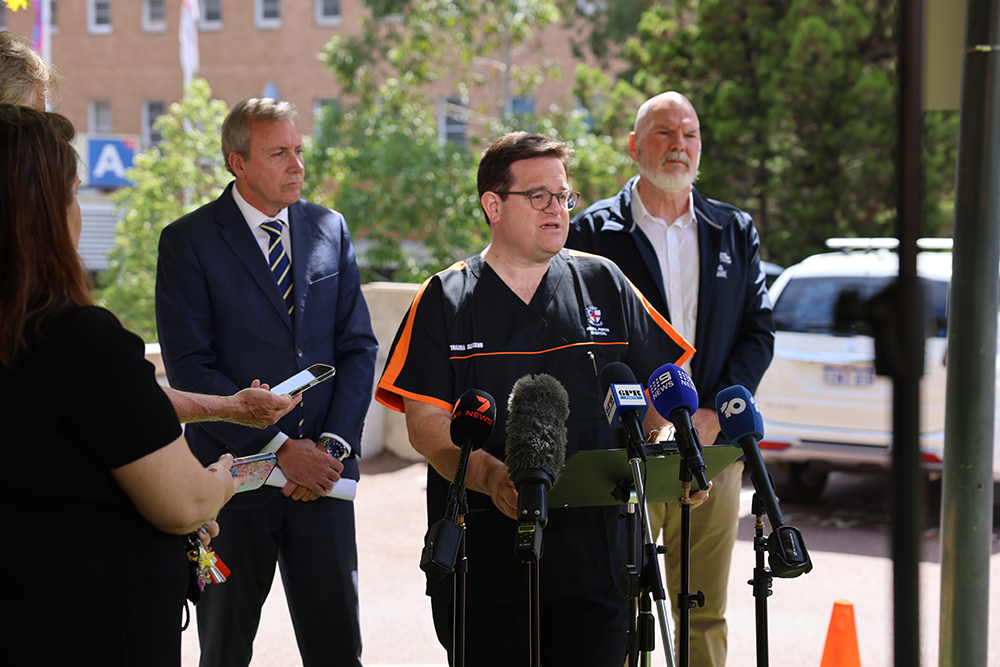
The most important message for all road users is to understand that it takes everyone, working together, to make a difference.
“Road safety is a collective effort,” professor Weber said.
“We've seen far too many of our fellow West Australians at Royal Perth hospital admitted to our state’s Major Trauma Unit with injuries that, sadly in some cases, will cost their lives, but in other cases, will leave them permanently disabled or injured with lifetime consequences for themselves and for the people around them.
“Easter is a holiday period and West Australians are looking forward to celebrating.
“But that comes with some responsibility – if we go on a family trip, buckling up is part of that conversation that happens in our family, and something that we all take as a collective responsibility.”
Seatbelt safety education campaign
To reinforce seatbelt safety over the holiday period, the Road Safety Commission recently released the second round of the State Government’s Caught in a Flash education campaign.
The campaign was first released in September last year and focused on the penalties associated with speeding, mobile phone use and incorrectly or not wearing a seatbelt.
The second round has a stronger focus on incorrect use of seatbelts and mobile phones, with advertisements reappearing across print, tv, radio and digital platforms.
To view Caught in a flash campaign visit Caught in a flash 2026.
Double Demerits – Starts 12.01am on Friday 2 April to 11.59pm on Monday 6 April.
Commissioner Warner said drivers should be aware that double demerits will be in force over this Easter period. The penalties include:
- 8 demerit points for mobile phone and seatbelt offences
- 10 demerit points for drink driving
- And up to 14 demerit points for speeding
“The risk of losing your licence should not be the motivating factor to change your behaviour when behind the wheel. Instead, think about the risk of losing your life or killing and injuring someone else, such as a loved one, should be the focus,” he said.
“In a contest between human physiology and the physics of a moving object in a crash, physics wins every time,” he said.
“Physics won’t change because you were running late and speeding.
“Physics won’t bend because you don’t want to wear your seatbelt correctly.
“Physics won’t pause because a text couldn’t wait.”
Safety cameras will be operating in both regional and metropolitan areas with a focus on changing driver behaviour.
The cameras have shown to be an effective way to change dangerous driving behaviours, with a 70 per drop in the rate of mobile phone and seatbelt offences since February 2025.
 Print this page
