


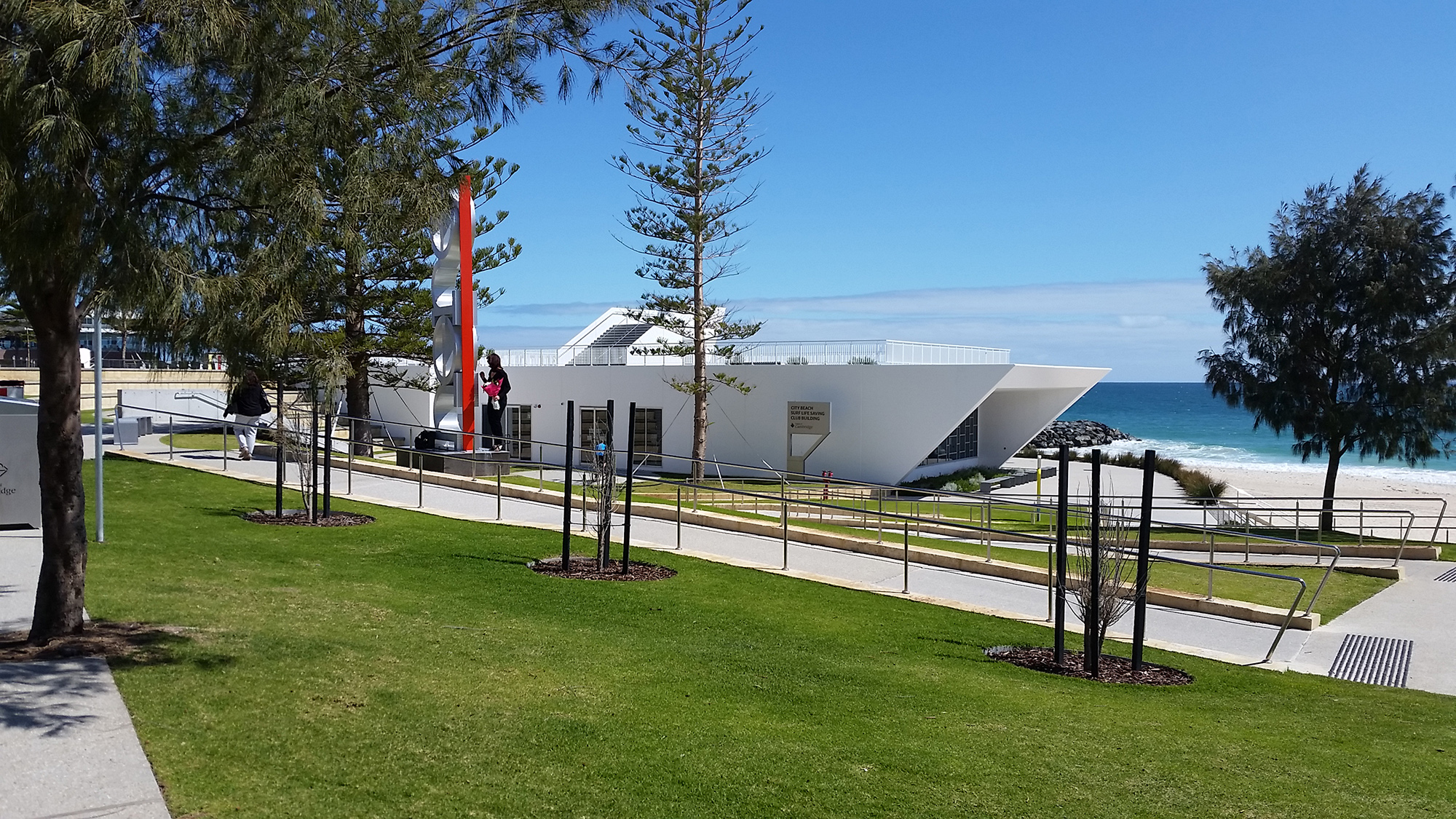
The City Beach and Floreat Beach Precinct is an extensive area of shoreline, approximately 500m in length roughly defined by two purpose-built groynes to the north and south. The development of City Beach and Floreat Beach precinct reflects the increasing popularity of beach swimming in the early decades of the 20th Century.
Recreational beach swimming increased in popularity in the early 20th Century and saw the development of a beach culture associated with leisure, freedom, and enjoyment. The increased ease of access due to improved transport saw a resurgence in beach popularity in the 1960s. This combined with a period of innovation and experimentation in building design saw the creation of structures which complimented the coastal landscape.
The natural landscape of City Beach and Floreat Beach Precinct is characteristic of beaches within the Perth metropolitan area, with its open, white sandy beach landscape, expansive sand dunes, and native vegetation.
The physical characteristic of City Beach includes a series of undulating stone seawalls built in the 1960s which separate the beach from a raised landscaped area of established trees and grass as well as a cluster of modern buildings. The southern groyne was built in 1936 and includes the footprint of the original lookout tower (now replaced with a modern structure). The northern groyne was built in the 1950s to provide protection for swimmers and address the coastal erosion.
The City Beach and Floreat Beach Precinct is a designed landscape that contains a mixture of natural features and built structures from multiple phases of development which collectively form a cultural environment that contributes strongly to the community’s sense of place. The place is highly valued by the community as a recreational area and for its association with the City of Perth Surf Life Saving Club, which has operated continually at the site since the 1920s.
 Print this page
