


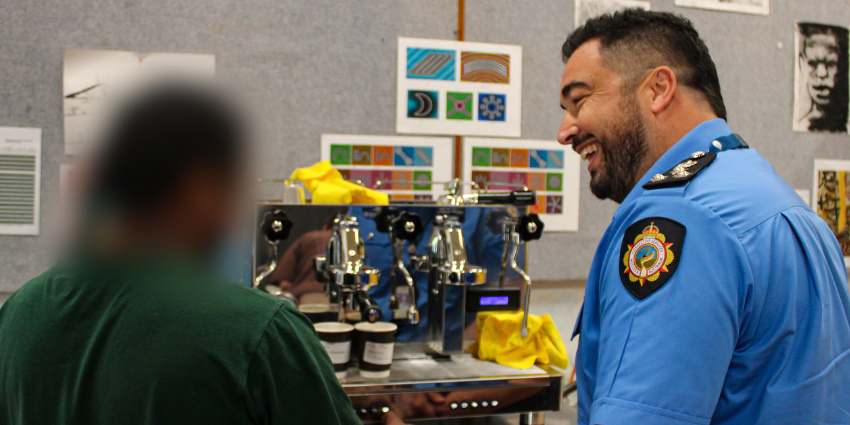
Barista training is proving to be a valuable rehabilitation program within prisons, giving participants practical skills that can lead directly to employment.
The hospitality industry has a consistent demand for workers, making coffee-making and customer service skills highly transferable and relevant.
One barista tutor, Josh, says it’s important to make the training as realistic as possible because busy cafes often operate at a relentless pace.
It’s also his biggest satisfaction to have a prisoner come up after a particularly hectic session and say, “It wasn’t perfect, but I think I can do this.”
Josh runs barista training at Boronia Pre-Release Centre, where the women run a bustling café catering to visitors and staff.
“It is very fulfilling teaching people who are genuinely looking for options to start afresh. One woman who’s completed her formal training is now working one day a week at an external café as she prepares to return to the community,” he says.
Banksia Hill Detention Centre also operates a coffee kiosk up to five days a week.
It’s run by two or three young people who have completed the 10-week barista course and reside in self-care.
Sandra, Principal Youth Education, says the café service gives them more hands-on experience and the chance to keep up with their skills.
“We tend to see improved self-esteem and a sense of pride in the young baristas. They gain confidence to communicate with the range of people who visit the kiosk. It helps build a strong work ethic as well as the ability to work unsupervised,” she said.
Cafes are also an important training ground in regional prisons like Roebourne, where 32 students enrol every year for the barista courses which are delivered through a partnership with TAFE.
After completing the units, some participants moved straight into practical employment within the prison by operating a weekly coffee service for prison staff.
Campus Manager Jessica says the initiative has already inspired future career ambitions, with one man hoping to open his own coffee business and teach barista skills to others.
"Seeing individuals planning futures they’d never thought possible is one of the most rewarding outcomes of the program, which ultimately aims to support successful reintegration into the community,” Jessica said.
 Print this page
