


This content contains details some readers may find distressing.
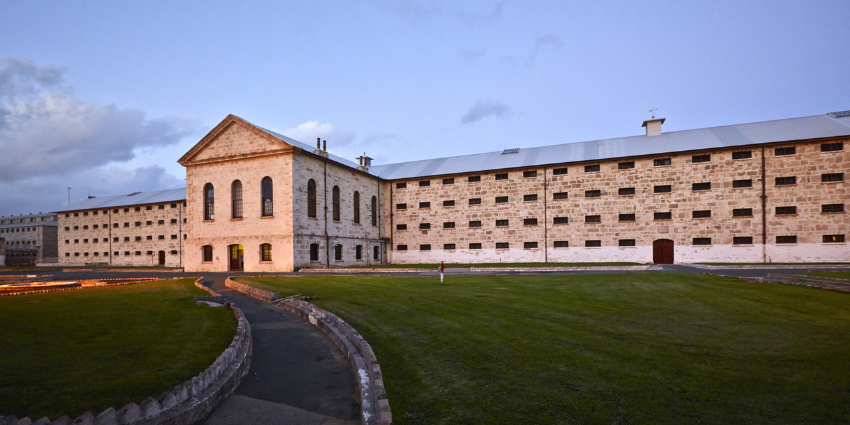
Fremantle Prison main cell block. Image credit: Fremantle Prison.
Fremantle Prison was built as a convict establishment by the British government following the decision to transport convicts to Western Australia in the mid-19th century. Constructed between 1852 and 1859 using convict labour, the prison was built from limestone quarried on the site. The first prisoners moved into the Prison’s Main Cell Block in 1855.
In 1886 following the end of the convict system, Fremantle Prison was handed over to the Western Australian Government and functioned as the State’s primary place of incarceration until its closure in 1991. The Prison's 136-year history is marked by convict labour, brutal punishments, hangings, escapes, prisoner riots and significant social and political changes.
In 1992, Fremantle Prison opened for tours and has since become one of Western Australia’s premier tourist attractions, welcoming more than 200,000 visitors each year. It is recognised as one of the world’s largest and most intact surviving convict prisons, and along with 10 other convict sites, is part of the Australian Convict Sites World Heritage Property recognised by UNESCO.
Fremantle Prison was added to the State Register of Heritage Places in June 1995.
Acknowledgement of Country
Show moreThe Heritage Council acknowledges the Whadjuk Noongar people as the Traditional Custodians of the land on which this place is located, their enduring and continuing connection to the land, and its great significance for Aboriginal people. We pay our respects to the Ancestors and Elders, both past and present, and acknowledge those who continue to share knowledge and journey toward reconciliation. Information on the Whadjuk Aboriginal Corporation can be found at https://whadjuknoongar.org.au.
History
Show moreThe convict era
Convict transportation to Western Australia began on 1 June 1850 in an effort to address severe labour shortages in the struggling 20-year-old Swan River Colony. Convicts would be used to build much-needed infrastructure such as public and government buildings, roads, bridges and jetties.
One of their first tasks was to build the prison where they were to be housed. Land above the town of Fremantle was chosen as the ridge of limestone provided the building material not only for the prison itself, but also for the supporting infrastructure. Construction of the prison began in 1852 and was completed in 1859. By 1855, enough of the Main Cell Block, perimeter walls and service buildings were complete to accommodate the convict prisoners. The Main Cell Block, the central dominating feature of the prison, stretches 150 metres and rises four stories high.
Transportation of convicts ceased in 1868, and in 1886, the British government passed control of the Prison to the colonial government.
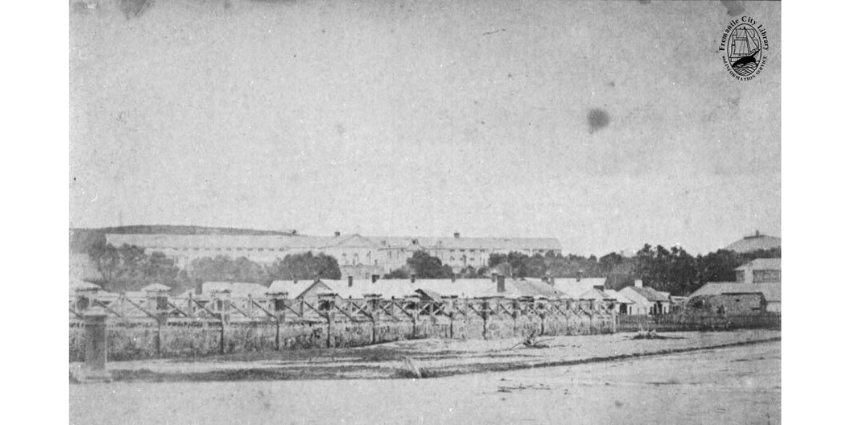
View of Main Cell Block shortly after the Prison was completed, 1860. Image credit: City of Fremantle Local History Centre (LH002111).
Post-colonial era
Following a Royal Commission in 1898, changes were made to the conditions at the Prison. These included the introduction of a prisoner classification system, cell enlargement (achieved by removing the inner wall between two cells) and the construction of workshops that offered work opportunities for prisoners such as tailoring, bookbinding, shoe making and sign painting.
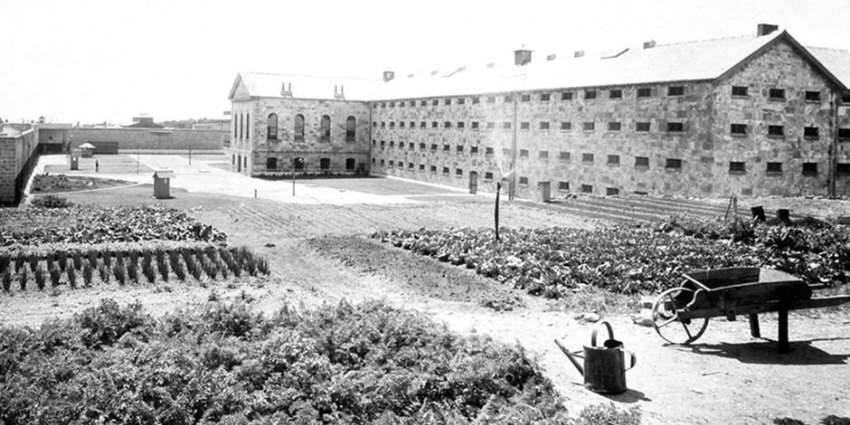
Gardens cultivated by the prisoners at the southern end of site as part of the reforms during the early 1900s. c1910. Image credit: Fremantle Prison Collection
The first female prisoners were incarcerated at Fremantle Prison in 1889, with a dedicated section built in the north-west corner of the site. This remained the State’s only women's prison until 1970 when a new facility was built on the outskirts of Perth.
Punishments at Fremantle Prison evolved over time, reflecting social changes. Flogging and time in irons were eventually replaced by longer sentences and deprivation of liberties such as visitors or entertainment. Capital punishment in the State was outlawed in 1984. Prior to this, Fremantle Prison was Western Australia's only lawful place of execution between 1888 and 1984. More than 40 hangings were carried out at the Prison, with the last one occurring in 1964.
Modern era
The 1890s gold rush led to a population boom and rise in crime, prompting the construction and opening of New Division in 1907, featuring a new cell wing and radial exercise yard.
In 1903, Fremantle Prison became the main place of incarceration for Aboriginal prisoners after the closure of the Wadjemup (Rottnest Island) penal establishment. Aboriginal prisoners faced unique hardships and were segregated from other prisoners until the 1960s.
During both world wars, the Prison was taken over by the Australian Army and used as a military prison for the internment of enemy aliens and prisoners of war.
Prison closure
In 1983 the Western Australian Government resolved to close Fremantle Prison as soon as appropriate facilities could be provided.
Since the Prison first opened, few upgrades to prisoner amenities had been undertaken. A riot by prisoners in 1968 brought attention to the poor conditions in which inmates were accommodated; however, little changed. There were no flushing toilets with prisoners required to use buckets kept in their cells, no air conditioning or heating leading to extreme temperatures in the cells during both summer and winter and there were issues with overcrowding, with 2 or 3 prisoners often placed together in a single-person cell. In 1988 a major riot broke out involving 130 prisoners over prison conditions and the mistreatment of a prisoner. Five officers were taken hostage, parts of the prison were set alight and approximately $2 million of damage was caused to the Main Cell Block. Although new security measures were put in place following the riot, this incident ultimately led to the Prison’s closure in 1991.
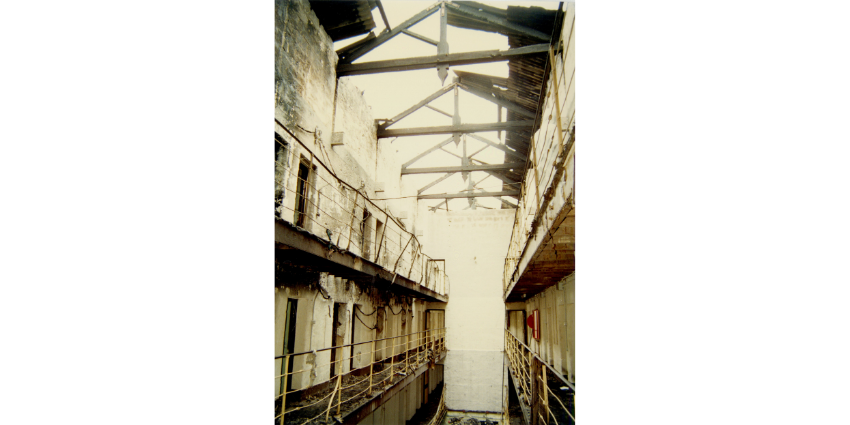
Damage to the Main Cell Block following the 1988 riot. Image credit: Fremantle Prison Collection.
Tourist attraction and World heritage listing
Recognised as a significant historic place, Fremantle Prison was added to the State Register of Heritage Places in 1995 and became the first building in Western Australia on the National Heritage List in 2005.
In 2010, the United Nations Educational, Scientific and Cultural Organization (UNESCO) World Heritage Committee placed Fremantle Prison on the World Heritage list - making it the first and only historic heritage place in Western Australia to receive this recognition. Fremantle Prison and 10 other Australian convict sites are listed as part of a serial nomination under the theme of Convictism - Forced Migration. No other sites of convict transportation have made the World Heritage list.
Since opening to the public for tours in 1992, Fremantle Prison has developed into a multifaceted, award-winning cultural tourism attraction which welcomes more than 200,000 visitors each year for tours, events and concerts. Find out what’s happening at Fremantle Prison.
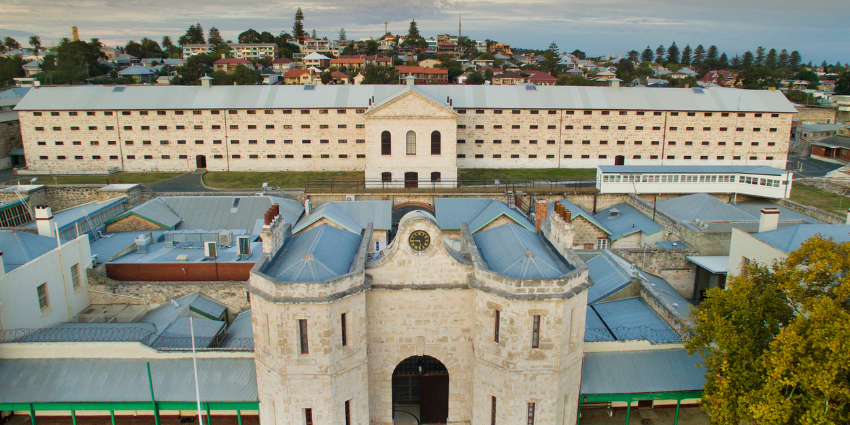
Drone view of Fremantle Prison featuring the Gatehouse complex and the Main Cell Block. Image credit: Fremantle Prison
State Register of Heritage Places and Place Themes
Show moreThemes relevant to this place, as identified in the Heritage Council’s Thematic History of Western Australia, include:
- Governing – Law, Order and Defence
- Infrastructure – Development of Settlements and Services
- Cultural Life – Religion
Sources
Show more- State Register of Heritage Places, Heritage Council of Western Australia, P1014 Fremantle Prison, Assessment Documentation, accessed August 2025.
- Department of Planning, Lands and Heritage, Fremantle Prison, History & Heritage, accessed August 2025.
- Extent Heritage and Lovell Chen, 2019. Fremantle Prison Heritage Management Plan, prepared for the Department of Planning, Lands and Heritage.
Image gallery
Show more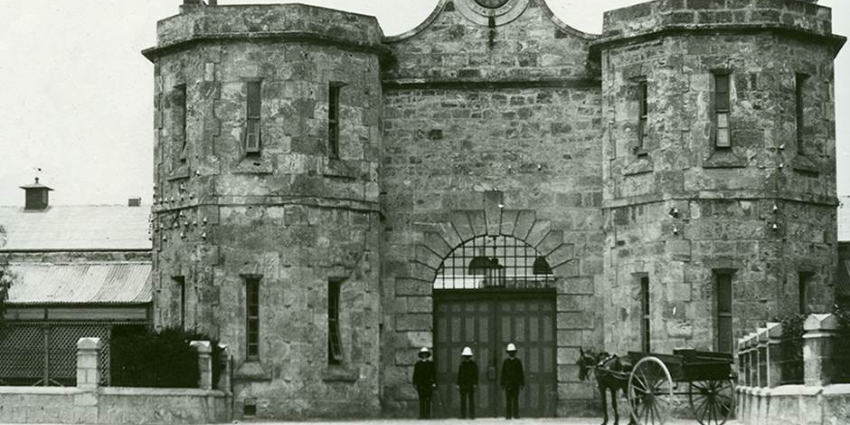
Prison Officers at the Gatehouse entrance, c1900-1920. Image credit: Fremantle Prison Collection. |
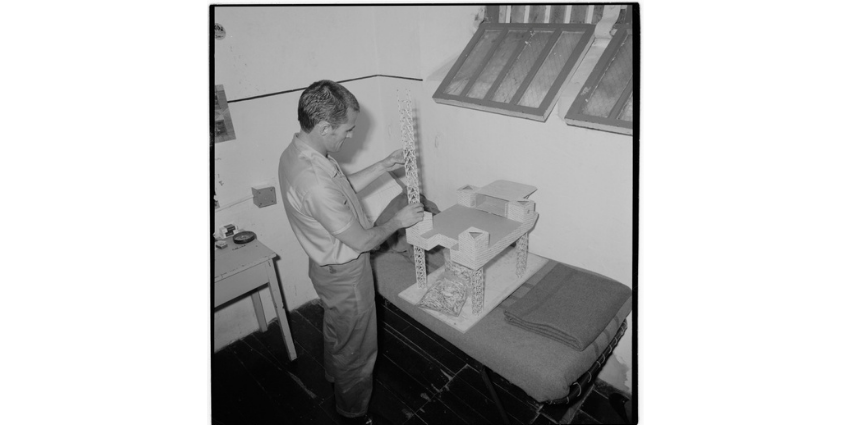
A prisoner making a model of an oil rig in his cell at Fremantle Prison, 1973. |
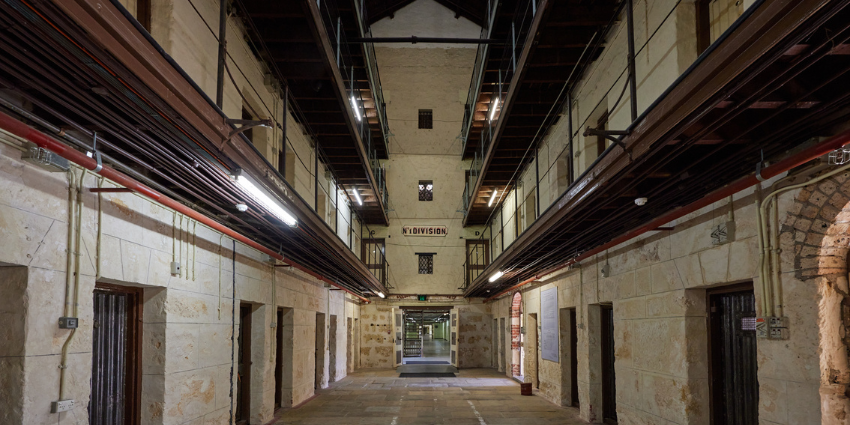
Ground floor in Division 1 of Fremantle Prison’s Main Cell Block. |
