


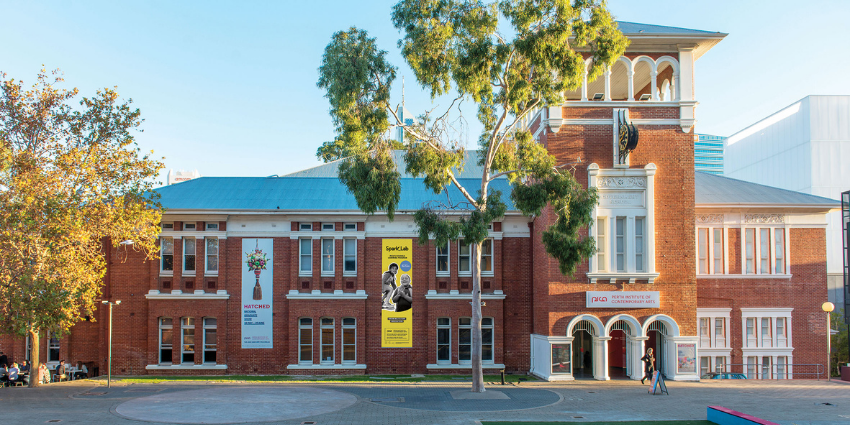
Perth Institute of Contemporary Arts (PICA). Image credit: Photo courtesy of Perth Institute of Contemporary Arts (PICA), photograph by Alessandro Bianchetti.
The area now known as the Perth Cultural Centre has long been known as Yandilup, meaning ‘the reeds are on and by this place’. For thousands of years, Yandilup was an important gathering place where Whadjuk Noongar people met, traded and shared stories and songs.
PICA & Arts House originated as part of Perth Central School, Western Australia’s first purpose-built central school. Constructed between 1896 and 1906, the precinct reflected a progressive approach to education, combining academic learning with practical vocational training. Today, the former school buildings are valued cultural venues that support contemporary arts and creative practice.
PICA & Arts House was entered in the State Register of Heritage Places in March 2000.
Acknowledgement of Country
Show moreThe Heritage Council acknowledges the Whadjuk Noongar people as the Traditional Custodians of the land on which this place is located, their enduring and continuing connection to the land, and its great significance for Aboriginal people. We pay our respects to the Ancestors and Elders, both past and present, and acknowledge those who continue to share knowledge and journey toward reconciliation. Information on the Whadjuk Aboriginal Corporation can be found at: https://whadjuknoongar.org.au/.
History
Show morePerth Central School
Perth Central School was established as a major educational initiative in the late 19th century. The former Perth Boys' School, completed in 1896 in the Federation Free Classical style, became the model for future central schools across Western Australia and reflected a broader shift towards integrated and practical education.
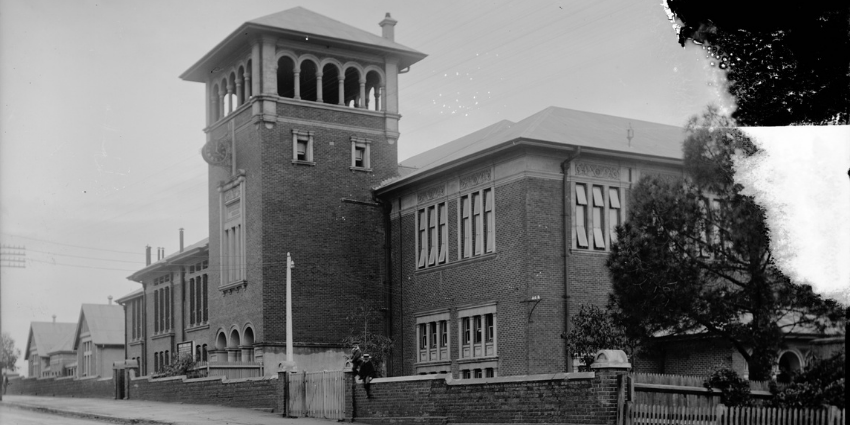
Perth Boys School (now known as PICA & Arts House), c1905. Image credit: Photo courtesy of the State Library of Western Australia (006175PD).
Expansion and specialised training
Between 1898 and 1906, additional buildings were constructed to provide specialised instruction, including the Manual Training School, the Monitors’ School and the Cookery and Laundry Centre. These facilities offered vocational and domestic education in response to the changing needs of the workforce and community.
Educational opportunities reflected the social expectations of the time. Girls studied subjects such as laundry, cookery, dressmaking, first aid and infant welfare, while boys received instruction in manual training, music and sport. From 1912, girls were also offered courses in subjects including languages and natural sciences.
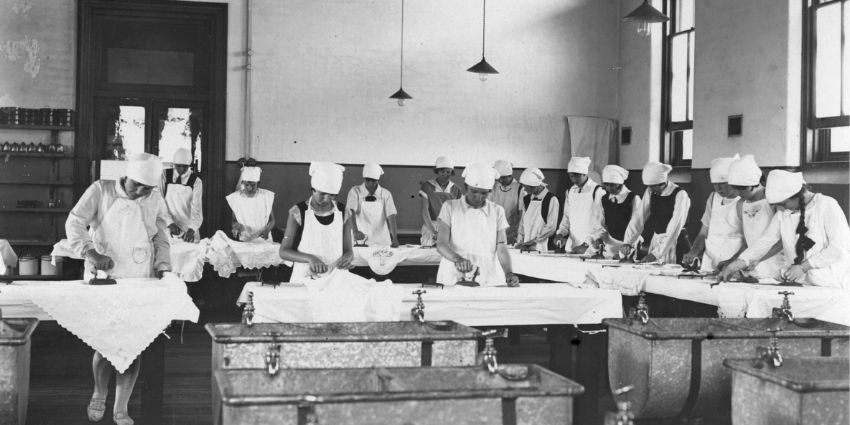
Laundry class at the Perth Girls School, 1920. Image credit: Photo courtesy of the State Library of Western Australia (006561D).
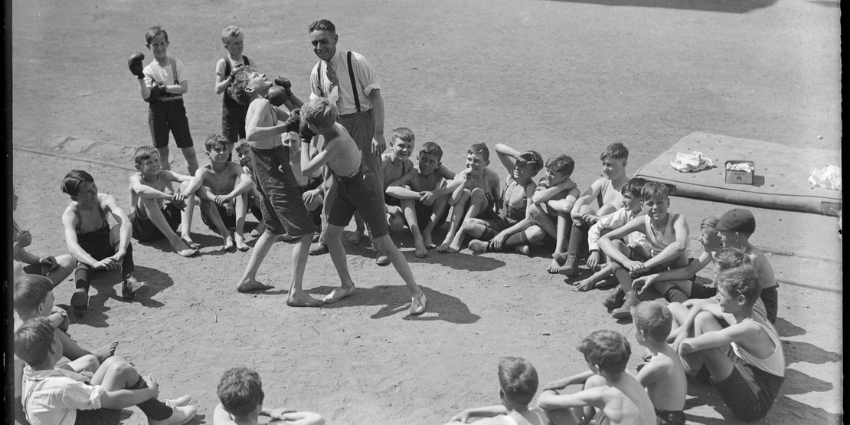
A boxing lesson at the Perth Boys School, 1929. Image credit: Photo courtesy of the State Library of Western Australia (049231PD).
Wartime and technical education
During World War I, students supported the war effort through manual and domestic training activities, including preparing care parcels for soldiers and hospitals. In 1942, the school closed for much of the year because of its proximity to Perth Railway Station and nearby military facilities, which were considered potential air raid targets.
From 1958, the former Boys’ School housed the James Street Branch of Perth Technical College, a predecessor to TAFE. In 1987, the college’s resources were incorporated into Curtin University of Technology.
Cultural transformation
By the late 20th century, most of the original Perth Central School buildings had been demolished, leaving the former Boys’ School and associated Arts House buildings.
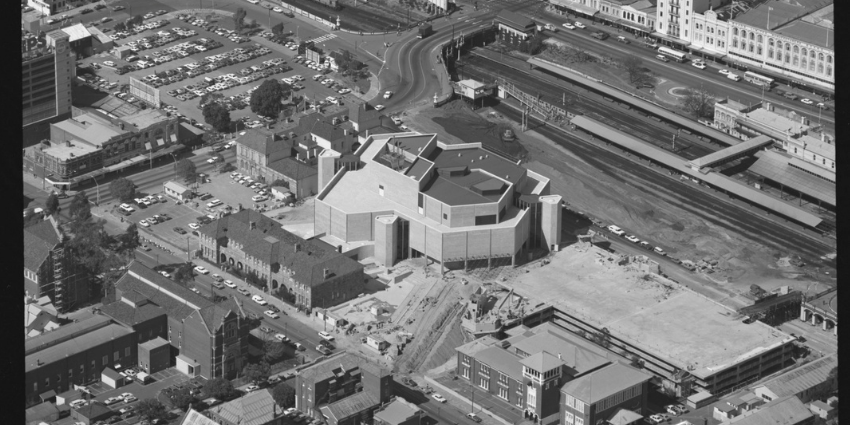
Aerial view of the area that has become the Perth Cultural Centre. PICA & Arts House is located towards the bottom left of the image, 1980. Image credit: Photo courtesy of the State Library of Western Australia (325279PD).
In the late 1980s, a joint State and Commonwealth initiative transformed the site into a centre for contemporary arts. The Perth Institute of Contemporary Arts (PICA) was established as a hub for innovative art practice and performance, while adaptive reuse of the historic buildings demonstrated how heritage places could be revitalised for new cultural purposes.
State Register of Heritage Places and Themes
Show moreP2028 – PICA & Arts House Register Entry
Themes relevant to this place, as identified in the Heritage Council’s Thematic History of Western Australia, include:
- Social Services - Education
- Cultural Life – Recreation and Organised Leisure
- Infrastructure – Development of Settlement and Services
Sources
Show moreState Register of Heritage Places, Heritage Council of Western Australia, P2028 PICA & Arts House, Assessment Documentation, accessed June 2025.
Perth Institute of Contemporary Arts, Education to Art, accessed September 2025.
Gnarla Boodja mili Mili (Our Country on Paper)
Image gallery
Show more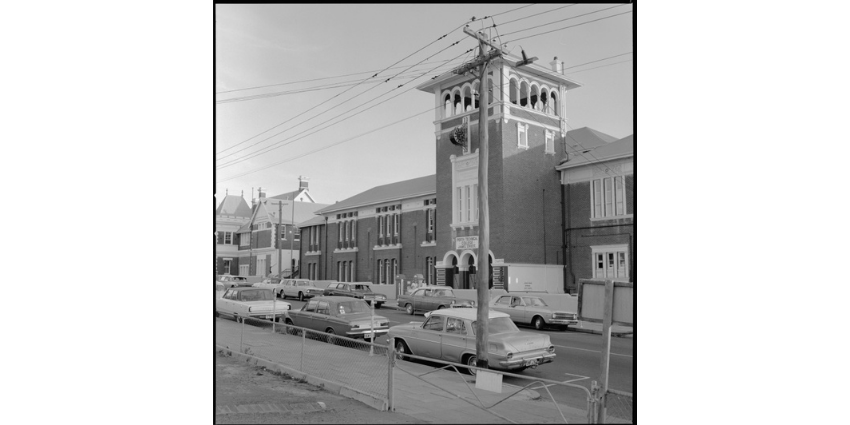
Perth Technical College (now known as PICA & Arts House), 1970. Image credit: Photo courtesy of the State Library of Western Australia (347016PD). |
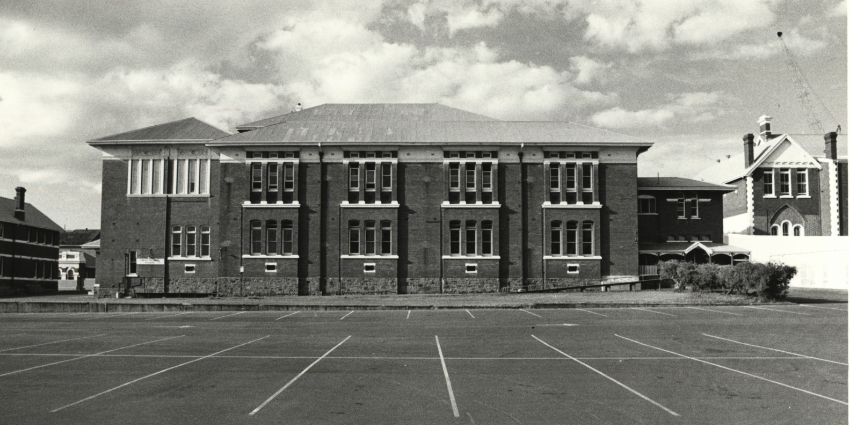
The rear of the Perth Technical College (now known as PICA & Arts House), 1971. The parking lot has since been replaced by the multi-storey Cultural Centre carpark. Image credit: Department of Planning, Lands and Heritage, photographer F.A. Sharr. |
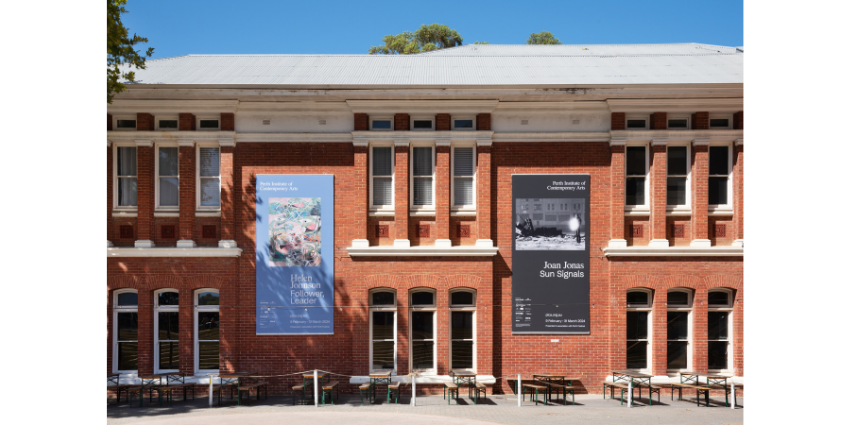
Perth Institute of Contemporary Arts (PICA). Image credit: Photo courtesy of Perth Institute of Contemporary Arts (PICA), photograph by Dan McCabe. |
