


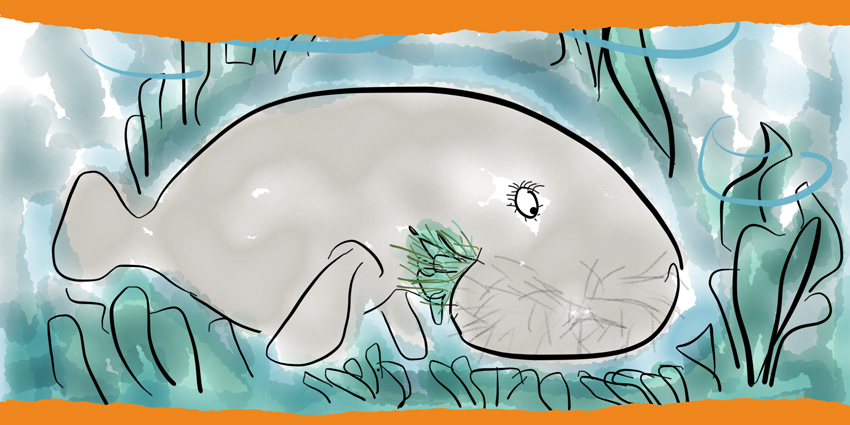
Daisy the dugong loves to play chasey with her friend Macey the fish…but when some other fish show up, fish she doesn’t know too well.
Daisy feels pressured into giving the strange fish a hug.
Daisy feels no good about what she did, but will she tell her Aunty?
Daisy learns an important lesson about her safe people and how to listen to her body’s warning signs.
Daisy’s Yarn highlights themes of safety networks, early warning signs and safe communication; including safe and unsafe touch.
Stories and Connection build relationships
Daisy Dugong or ‘Daisy Doooog’ as she is affectionately known, was born in on Wadjak Noongar Country, Perth WA on 8 July 2015 – far from her home north of Broome. Daisy loves to travel, about as much as she loves lazing about chewing seagrass. She has been home a couple of times to Darwin, NT and dipped her fins in the crispy cool waters of the Great Southern ocean on a trip to Albany.
Daisy is most famous for her squeezy hugs. Her soft grey skin made from a recycled t-shirt has worn thin in places, so if you’re lucky enough to meet her in person, you’ll notice some groovy tattoo daisy patches, which help to hold things together.
Along with visits to children in care and their carers, prisons visits for sewing yarning circles and to many child protection staff workshops, Daisy has quite an impressive portfolio of guest appearances. Most notably, the 10th Annual SNAICC Conference in Darwin 2023.
The Story Animals patterns and design, including Daisy Dugong, were originally created, and first sewn, by Social Worker Verity Roennfeldt, Communities staff and Director of The Story Animals program. Since then, Verity has shared her patterns and sewing knowledge, embedded within the tasks of her Communities role, with various groups across the State. These groups and activities have been a platform where relationships are quickly established through the ‘do-ing and making’. Coming together and making something with our hands while we talk, is a therapeutic methodology that has been employed for hundreds of years, now also widely supported in research allowing for deeper connection and safer conversations about difficult topics, themes and issues.
Activity sheets
Make a fish
Learn how to make a fish from Daisy’s Yarn with our step-by-step instructions and ‘how to’ video. This character can be made by hand stitching or using a sewing machine and is perfect for beginners – you don’t need to have any sewing experience.
Instructions
Testimonials
Former resident Boronia Women Pre-Release Centre:
Show more“I knew I had to keep making these animals and I knew I had to get other women to understand the real meaning of The Story Animals. They aren’t just stuffed toys, they are a safety net, a friend for these little people who are feeling lost and [I think] the meaning of giving and making [them] was the best part because it come from the heart.”
Emily, Child Protection Team Leader:
Show more“Using The Story Animals characters and books with 3 of the families on my team has had a profound impact: encouraging them talking real stuff with each other – being honest – enjoying each other and laughing together. They’ve been finding their own solutions to issues in creative ways that work for them and is agreed by them. Empowering families and children to have a voice and share their voice and opinions and ideas is at the heart of this work. The carers for the children have developed insight, empathy and the ability to reflect and respond differently. The children have a voice and have also developed some ownership in how issues are resolved within the family.”
Garron, Child Protection Case Manager:
Show more“The Story Animal work has given Departmental staff a way to communicate with children and families at a depth that no other tool has reached before. I’ve witnessed both children and adults react with delight as they meet The Story Animals and hear the messages conveyed through this important work. I’ve personally observed this work bring together a family fragmented by grief, loss and the removal of children.”
Kerri, Aboriginal Practice Leader: “These yarn books and characters help all of us work together to build relationships with people in hard times, when emotions are high, so that we can bring stories to life beyond tick boxes and forms for Aboriginal children in care.”
Raj, Carer Assessment Team:
Show more“At the Make a Fish workshop, I felt myself get out of my head and into my heart. I am delighted to have access to this resource that aligns so closely with the specific needs of children in care and their trauma histories.”
Teegan:
Show more"At first I was like, ‘I don’t know how to sew’ but that changed very quick with Verity’s positive encouragement of never say you can't do anything. Because you can do anything you want, you just have to believe in yourself, so away I went. Verity was right, I picked sewing up on the machine like a pro, it was so easy – not to mention fun but we didn’t just sew, we talked about life in general and our problems – it was a place we felt like we weren’t in prison for that moment.”
Cathy, General Carer Assessor:
Show more“Thank you so much for introducing us to the animal stories. I’ve been looking for similar books for kids to help them understand addiction and drug use, as it’s such a big issue for kids and there doesn’t seem to be much around that doesn’t cost the earth. The story of Demetrius is a good starting point for those topics. I’ve used similar stories for kids but often the stories are too long and need redacting. These are much shorter, open up great topics to discuss and ways to introduce topics to kids. I love the questions and reflections at the end of each book too. They are so spot on for kids in care. These are so good. Thank you. Thank you. Thank you."
Amelia, Senior Family Links Officer:
Show more“But I can say, without doubt, my most frank and honest discussions with ladies occurred whilst at the yarning sessions. This forum was where the ladies opened up far more than they ever had while sitting in my office. Having the Elders present, and chatting while learning to sew, and talking about the Animals, seemed to break down the ladies barriers and in doing so built up their trust of me. I would like to think that this in turn led to many better outcomes for these ladies, when advocating on their behalf, to the Child Protection Workers, about different issues. I found these sessions culturally enriching, as a migrant to Australia, and I learned so much by attending. I am grateful I had this opportunity to participate.”
