


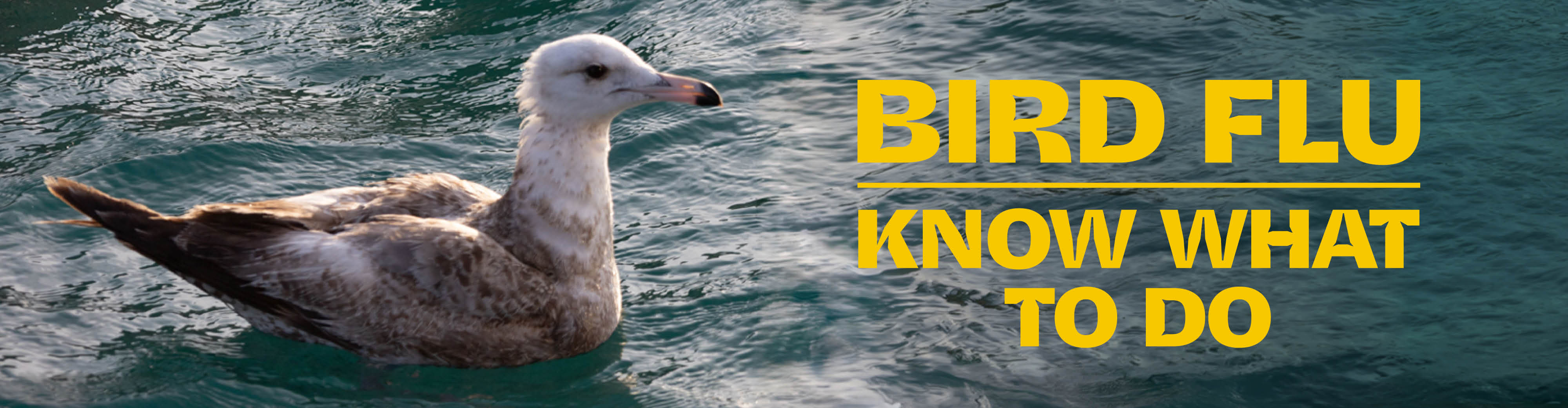
- Avoid contact and keep your distance.
- Record the date, time, location and take photos if possible
- Report it to the 24-hour Emergency Animal Disease Hotline on 1800 675 888
Find out more about the signs and how to report.
Current situation in Western Australia
H5 bird flu has been detected in a small number of sea birds in Western Australia. There have been no detections in poultry and no evidence of local spread among wildlife at this time.
To check for local H5 bird flu detections in wildlife, view our interactive dashboard below.
The risk to human health remains low and Western Australia is well prepared to respond to detections of H5 bird flu.
Weekly bird flu updates are provided by the WA Government to inform the public on the current situation in Western Australia and actions being taken in response. You can find the latest update here:
What is H5 bird flu?
H5 bird flu (high pathogenicity H5N1 avian influenza) is a serious disease that mainly affects birds. It can also infect other animals, and in rare cases, people.
Ways that bird flu can spread include by contact with:
- the droppings, body fluids and feathers from infected birds
- feed, water, bedding, equipment, vehicles or an environment where infected birds have been present
- people carrying the disease on their hands, shoes, clothing, equipment, vehicles
Animals can also be infected by eating infected carcasses.
How you can help
There are simple steps we can all take to help.
- Keep pets away from wildlife – help protect native animals by keeping cats indoors and preventing them from roaming. Keep dogs on a leash where wildlife are present.
- Keep footwear and clothing clean – when visiting national parks, nature reserves or agricultural areas, clean your shoes and clothing before moving to another location. This helps reduce the risk of spreading diseases between places.
- Avoid, record, report – do not touch or move dead birds or other wildlife. If you notice groups of sick or dead animals AVOID, RECORD and REPORT to the Emergency Animal Disease hotline: 1800 675 888.




What is H5 bird flu?
Show moreHigh pathogenic avian influenza H5 clade 2.3.4.4b (known as H5 bird flu) is a high pathogenic strain of avian influenza that has spread quickly across the world since it emerged in 2020.
H5 bird flu affects most types of birds (wild, captive and poultry), and a large range of mammals. It is not known to affect reptiles, fish and amphibians (such as frogs).
In other countries, H5 bird flu has caused disease and deaths in:
- more than 560 bird species
- more than 100 species of mammals, including predators/scavengers and marine mammals
- poultry.
H5 bird flu is assessed as low risk to people by the World Health Organisation but some people who work closely with infected animals have become infected, usually with mild symptoms.
Human-to-human transmission has not occurred. Read more about human health.
What about other strains of avian influenza (bird flu)?
Show moreAvian influenza (bird flu) is an infectious virus with many subtypes or strains. Avian influenza mainly affects birds, hence the name.
Waterfowl such as ducks, swans and geese (Anseriformes) and gulls, terns and shorebirds (Charadiformes) are the natural host for avian influenza viruses.
Avian influenza strains are categorised as either low pathogenicity (LPAI) or high pathogenicity (HPAI), depending on how severely the strain affects poultry.
Low pathogenic strains of avian influenza circulate in wild waterbirds in Australia and worldwide without causing disease signs in the wild birds.
High pathogenic strains cause severe outbreaks in poultry. To date, all 12 outbreaks of high pathogenic avian influenza that have occurred in Australia in poultry have been the H7 strain, these have all been low pathogenic strains that were circulating in Australian birds. When these low pathogenic strains get into a large poultry establishment and replicate through thousands of birds they have to ability to mutate and become high pathogenic.
All H7 outbreaks that have occurred in Australian poultry have been eradicated and Australia is currently free of avian influenza in poultry under World Organisation for Animal Health (WOAH) definitions.
H5 bird flu is different to other strains of avian influenza because it seriously affects a much wider range of species than the H7 strain, which only impacted poultry.
Has H5 bird flu been detected in Australia?
Show moreAustralia recorded its first confirmed case of H5 bird flu in Esperance, Western Australia on 19 June 2026, in a wild migratory seabird. Since then, more cases have been recorded in wild seabirds in WA, South Australia, New South Wales, Queensland and Victoria.
To date (24 July 2026), there is no evidence of spread to WA wildlife or mass wildlife mortalities. There is also no evidence of spread to poultry.
Importantly, this detection in wild birds does not change Australia’s status as free of high pathogenic avian influenza in poultry, in line with World Organisation for Animal Health standards.
How is the WA government responding to H5 bird flu?
Show moreThe Department of Primary Industries and Regional Development (DPIRD) is leading the State response to the detection of H5 bird flu in WA, working closely with the Department of Biodiversity, Conservation and Attractions, the Department of Health, and the Western Australian Local Government Association. National coordination is led by the Australian Government Department of Agriculture, Fisheries and Forestry.
Australia and WA are taking a One Health approach, recognising the connection between human, animal and environmental health.
At this stage the response is determining if it has established in Australian wildlife through targeted and locational surveillance.
Divisional teams are operating in the Perth metropolitan area, Esperance, Albany and Bunbury to work with local wildlife rehabilitators, veterinarians, communities and industry. A command team is also being activated in the Mid-West to strengthen on-the ground liaison.
How did H5 bird flu arrive in Australia?
Show moreH5 bird flu has reached the Australian coastline by the arrival of a small number of infected wild migratory seabirds from sub-Antarctic regions where the infection is already known to be present. Movements of migratory wild birds cannot be prevented or controlled.
How will H5 bird flu impact Traditional Owners?
Show moreWA Government is engaging directly with WA Traditional Owners about the potential impacts of H5 bird flu on their cultural practices and health.
General information about H5 bird flu is also available for Traditional Owners on the Australian Government website:
What are the signs of H5 bird flu in wild birds, mammals and poultry?
Show moreThe signs of H5 bird flu can vary between different species. The signs can include:
Wild birds
- can’t stand, walk, or fly properly
- droopy or puffed-up appearance
- breathing problems (panting or sneezing)
- unusual head or neck posture
- sudden death (especially in large numbers)
Mammals
- weakness or tiredness
- trouble walking or breathing
- seizures, tremors or walking in circles
- drooling or runny nose
- sudden illness or death
Poultry
- sudden death
- lethargy or reluctance to walk, eat or drink
- droopy appearance or ruffled feathers
- head or limb swelling
- bruising (purple discolouration) of the wattle, comb, feet or skin
- respiratory signs such as panting, nasal discharge or sneezing
- diarrhoea
- unusual head or neck posture, lack of coordination, inability to walk or stand.
What should I do if I see sick or dead wild birds?
Show moreAvoid – Sick and dead birds can carry diseases, including H5 bird flu, that can affect humans. It is recommended to avoid direct contact with birds that are sick or have died unexpectedly unless you use appropriate personal protective equipment (PPE) and the risk of leaving the birds/animals in place outweighs the risk of spreading infection by moving them.
Record – If you see sick or dead birds or other animals, note the number, species if known, location, date and time.
Report – Report sick or dead wild birds and animals to the Emergency Animal Disease hotline (1800 675 888). Orphaned or injured wildlife should be reported to the Wildcare Helpline (9474 9055). Reporting signs of H5 bird flu is important to enable early detection and to monitor and raise awareness of any disease spread.
What is the risk of H5 bird flu to humans?
Show moreH5 bird flu is considered a low risk to the public as it rarely affects humans unless there is direct and sustained close contact with sick birds or other infected animals or contaminated environments.
It is recommended to avoid direct contact with birds and other wildlife that are sick or have died unexpectedly unless you use appropriate personal protective equipment (PPE).
Anyone who has had contact with a wild bird or animal confirmed to have H5 bird flu should contact their local WA Public Health Unit for advice. Read more about human health and H5 bird flu.
What is appropriate personal protective equipment (PPE) for handling sick or dead wild birds?
Show moreOnly people wearing appropriate personal protective equipment (PPE) should handle sick or dead wild birds and other wildlife.
PPE recommendations are outlined in these two Australian Centre for Disease Control documents:
- CDNA national guidelines for avian influenza – Protecting people who work with birds and wildlife | Australian Centre for Disease Control – information for employers and managers
- Bird flu toolkit for people who work with birds | Australian Centre for Disease Control
Read more about the human influenza (flu) vaccine and human health and PPE.
Can humans be vaccinated against H5 bird flu?
Show moreThere is no vaccination currently available against H5 bird flu in people.
It is recommended that anyone working with wild birds or poultry has the seasonal influenza vaccine.
The human seasonal flu vaccination will not protect against avian influenza but will minimise the risk of becoming infected with the human and avian influenza viruses at the same time, which could lead to the emergence of a new influenza strain.
Read more about the human influenza (flu) vaccine.
How does H5 bird flu spread?
Show moreH5 bird flu spreads by contact with:
- the saliva, nasal secretions, faeces (droppings) and feathers from infected birds
- feed, water, bedding, equipment, vehicles or an environment contaminated by infected birds
- people carrying the virus on their hands, shoes, clothing, equipment or vehicles.
Scavenger and predator birds (like birds of prey, raptors, seagulls) or animals (like sea lions or cats) become infected by eating infected birds or their carcasses.
To reduce spread from affected wildlife and to give them the best chance of recovery, if you are in an area known to have H5 bird flu present you should:
- walk your dog on a leash and keep them away from wildlife
- do not let cats roam (this protects cats from infection and bird populations from further stress)
- keep children away from affected wildlife
- clean shoes, hands and vehicle tyres on return home, and change clothes before you have contact with poultry or other birds at home.
If you own pet birds or poultry, visit our pet birds and poultry biosecurity page for additional biosecurity recommendations.
How can I protect my poultry or pet birds from H5 bird flu?
Show moreTo prevent the spread of H5 bird flu to your birds, take the following steps:
- Keep poultry and captive/pet birds away from wild birds – use netting or housing to keep them separate.
- Keep poultry feed and water where wild birds cannot contaminate them.
- Do not allow your birds to feed in areas where wild birds congregate and defecate.
- If using dam or surface water that wild birds may have contaminated, treat it appropriately before supplying to poultry.
- Clean feed and water containers, coops and aviaries regularly.
- Wash hands thoroughly before and after handling birds and eggs.
- Wear clean shoes and clothing when visiting your birds.
- Quarantine new birds before introducing them to your flock.
- Discourage visitors to your birds.
- Do not share equipment with other bird keepers (unless thoroughly cleaned and disinfected first).
Visit our DPIRD website for comprehensive poultry biosecurity information.
How can veterinarians, wildlife rehabilitators and carers reduce the risk of H5 bird flu spreading?
Show moreAnyone who works with wild birds, wild mammals and susceptible domestic mammals such as cats should:
- Be aware of the signs of H5 bird flu and report suspect cases to the Emergency Animal Disease hotline on 1800 675 888.
- Be aware, based on international experience, that most wild birds affected with H5 bird flu will not recover.
- Create a biosecurity plan to prevent the spread of H5 bird flu into their business.
- Communicate the biosecurity plan and human health preventive measures to staff.
- Clearly communicate biosecurity measures to clients, including whether the clinic will accept sick wild birds.
Biosecurity plans for veterinary hospitals and wildlife facilities should include:
- correct use and removal of personal protective equipment (PPE)
- protocols for handling, examining, treating and admitting potentially infected animals
- protocols for entering and exiting, as well as cleaning an isolation area
- protocols for the disposal of possibly infected animals.
Further information can be found at:
What is the role of a registered wildlife carer or rehabilitator during an H5 bird flu outbreak?
Show moreAs wildlife carers and rehabilitators may be the first to see the signs of H5 bird flu in wildlife, they play important roles in reporting.
As a wildlife carer or rehabilitator, it is important to:
- Be aware of the signs of HPAI in wildlife.
- Use appropriate PPE when handling wildlife.
- Get vaccinated and encourage vaccination among staff with the annual human influenza vaccine. This is important to minimise the risk of a person getting both the human seasonal influenza and avian influenza at the same time, which carries a risk of a new influenza strain emerging.
- Train staff in good biosecurity measures and how to implement them.
- Use good biosecurity when responding to sick or injured wildlife.
- Immediately report any suspected cases of H5 bird flu to the Emergency Animal Disease hotline on 1800 675 888.
- Assist DPIRD and other government authorities as required.
Further biosecurity information can be found on the Wildlife Health Australia website at:
Can wild birds be vaccinated against H5 bird flu?
Show moreVaccines for H5 bird flu, are not registered for general use in Australia.
A national approach to vaccination is being considered for captive wildlife in zoos and wildlife parks and on a risk-assessed, case-by-case basis in vulnerable wild bird populations.
However, mass vaccination of wild birds is not feasible. Effective vaccination requires two doses, which presents difficulties in wild birds, and the effectiveness of vaccines varies in different species and with different strains of virus. Ineffective vaccination may also contribute to the spread of the virus.
Can sick wild birds and other wildlife infected with H5 bird flu be transported to receive supportive care?
Show moreInternationally, despite best efforts, there has been little success in treating infected birds. Where possible, leaving affected birds where they are and preventing access to the area reduces any additional stress to the birds and may provide their best opportunity to recover.
Moving infected birds for treatment puts other birds and animals in the receiving facility at risk of being exposed to H5 bird flu, as well as presenting a risk to people.
It is recommended sick birds are not moved without first considering the risk to the wildlife facility or veterinary hospital that will be providing care, as well as the low likelihood the infected bird will recover. Each veterinary and wildlife facility will have their own biosecurity arrangements and risk management procedures, and not all facilities will accept sick birds during an H5 bird flu outbreak.
Who is responsible for disposal of dead wild birds during an H5 bird flu outbreak?
Show moreIn the current situation where surveillance is underway to establish if H5 bird flu has established in WA wildlife, please do not dispose of dead birds on your property until you have reported them to the Emergency Animal Disease hotline on 1800 675 888.
If the bird(s) are going to be tested, DPIRD or another government agency will come to the location and sample and dispose of the birds.
If the hotline advises by SMS that the dead bird(s) are low risk and will not be sampled, the following disposal options apply.
- If you find a dead bird on your private property: After reporting, if the hotline advises the case will not be tested, the resident is responsible for disposing of dead birds found on their property. Subject to council local laws, owners will be able to dispose of dead birds by placing them in plastic bags in their red bin or to bury them where suitable. Care should be taken to wear personal protective equipment. For a range of disposal methods and personal protective equipment, see the H5 bird flu – public guidance for disposal of dead wildlife manual.
- On public land: If you are not the property owner, leave dead birds or animals where they are after you have reported them to the hotline.
- If the birds or animals are triaged by the hotline as higher risk, they will be sampled and the carcasses removed if their location presents a risk to the public.
- If the dead birds or animals are triaged as low risk, the landowner will either decide to leave the carcasses where they are if they are not in an area frequented by the public or they may carry out disposal. Public access to the area may be limited during clean-up or decomposition.
Leaving carcasses to decompose is sometimes safer in remote areas. Clean-up could cause wild birds to scatter and cause additional stress to any surviving birds.
Can humans catch H5 bird flu from food?
Show moreFood Standards Australia New Zealand (FSANZ) has advised the following:
- Avian influenza is not known to transmit to humans via food and it is safe to eat properly cooked chicken meat and eggs.
- Commercially pasteurised milk products are safe to consume.
Can cats and dogs be infected with H5 bird flu?
Show moreOverseas, cats and dogs have become infected with H5 bird flu by eating infected birds, mammals and pet food containing raw meat.
Cats are particularly susceptible to H5 bird flu and may become lethargic, reluctant to eat, and show neurological signs (seizures, lack of coordination, circling), respiratory signs (difficulty breathing, discharge from the eyes or nose), blindness and death.
To protect your pets, it is recommended to:
- ensure cats do not have access to infected wild birds and other wildlife
- keep dogs on a lead when being walked to prevent access to infected dead birds or other wildlife
- not exercise dogs in areas where waterbirds and wildlife are known to be present
- ensure dog and cat food and water bowls cannot be accessed by wild birds.
If H5 bird flu establishes in Australia, do not feed raw meat to pets.
If your dog or cat has had contact with wildlife and shows signs of H5 bird flu, contact your private veterinarian for advice.
Is information about H5 bird flu available in languages other than English?
Show moreYes, H5 bird flu factsheets and posters are available in a range of languages.
I have a question about H5 bird flu in WA – where can I get more information?
Show moreIf your question is not answered by the information available on the WA Government H5 bird flu website, DPIRD has a dedicated email inbox for H5 bird flu questions at: H5birdflu@dpird.wa.gov.au. You can also follow our DPIRD WA social media accounts for regularly updated information.
