


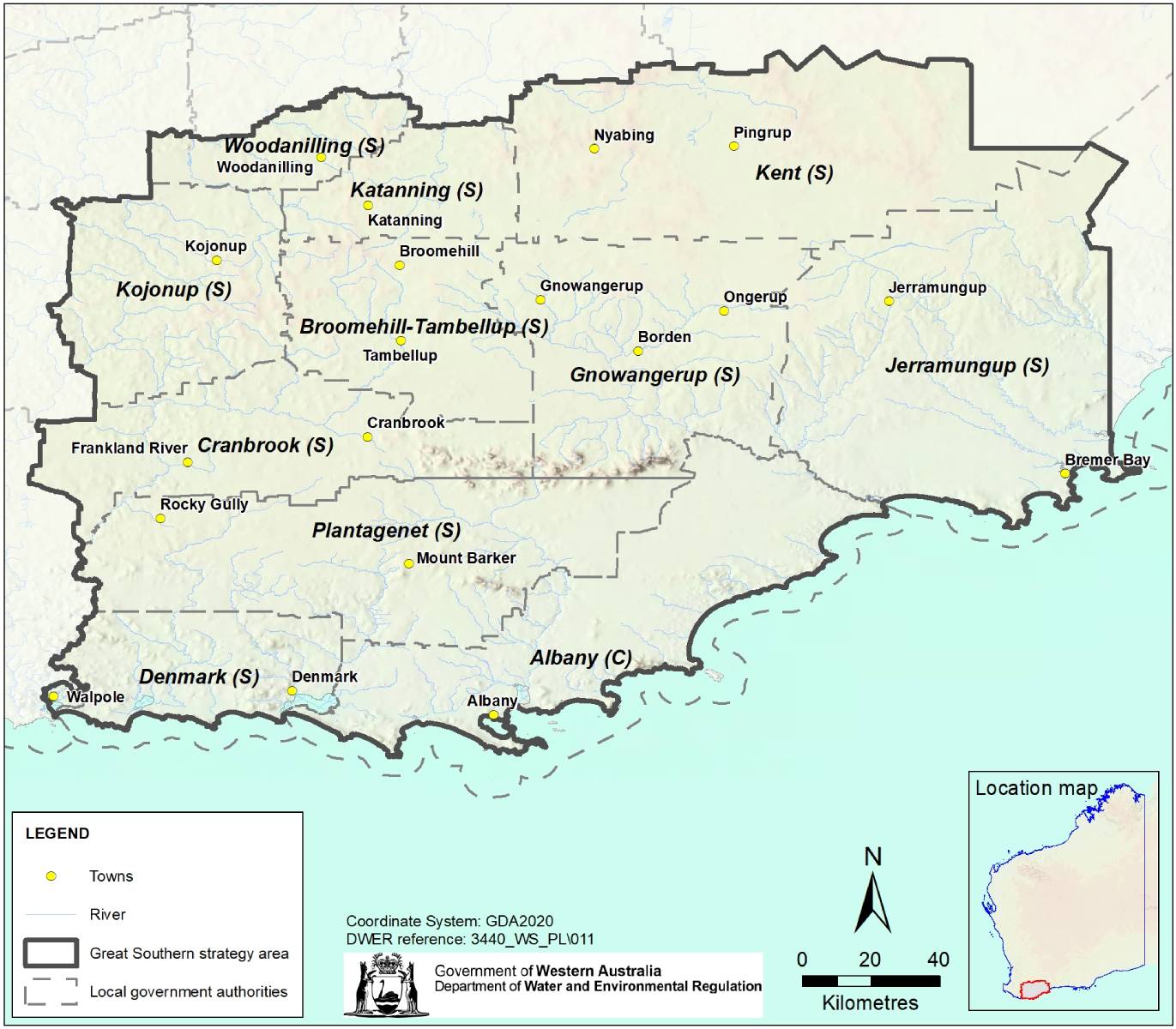
In 2024, the Department of Water and Environmental Regulation completed an evaluation of the 2014 Great Southern regional water supply strategy.
The strategy provided a long-term outlook of water demand and supply options for all water uses in the Great Southern region.
Our evaluation showed that most of the strategies and associated actions to manage water supply and demand in the region are progressed or completed, for example
- To manage the risks from abstraction and reduced rainfall recharge we adjusted the allocation limits for Albany groundwater subareas and amended Water Corporation’s licences for the Lower Great Southern towns water supply scheme.
- We provided the science on diminishing surface water flows in the Denmark River that led to Water Corporation establishing a 43 km pipeline connecting Denmark to the Lower Great Southern towns water supply scheme.
- We completed our groundwater investigations in the Albany hinterlands area.
- The Water Corporation’s Waterwise programs resulted in significant water savings by local governments and the community.
- Upgrades to community and emergency water supply infrastructure were carried out via the Community Water Supplies Partnerships program.
- The Water Corporation is investigating seawater desalination and local groundwater as options for future water sources for the Lower Great Southern towns water supply scheme, with public consultation underway.
Water use in the Great Southern region
Surface water remains the primary water source for towns, agriculture and industry in the Great Southern, with groundwater playing an increasingly important role particularly for the Lower Great Southern towns water supply scheme. However, reduced rainfall in the region means that both surface water and groundwater resources are not being replenished at the same rates as in the past. Long-term sustainability of water abstraction is a key challenge for regional development.
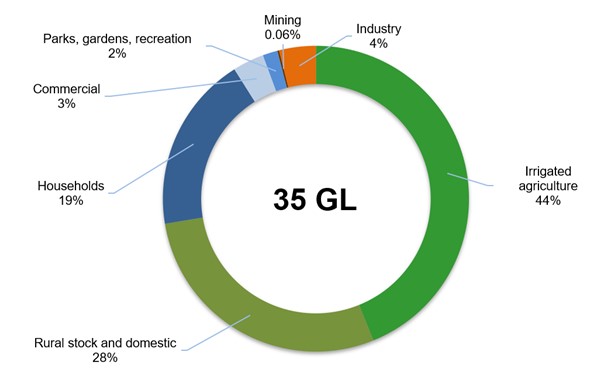
The total water demand for the region is approximately 35 GL/year, with the agriculture sector the largest water user, as it was in 2014. Irrigated agriculture accounts for 44 per cent of water used and 28 per cent is used for stock and domestic purposes in rural areas. Households are the next biggest user at 19 per cent, followed by industry at 4 per cent, and parks and gardens at 2 per cent.
Water demand outlook for the Great Southern region
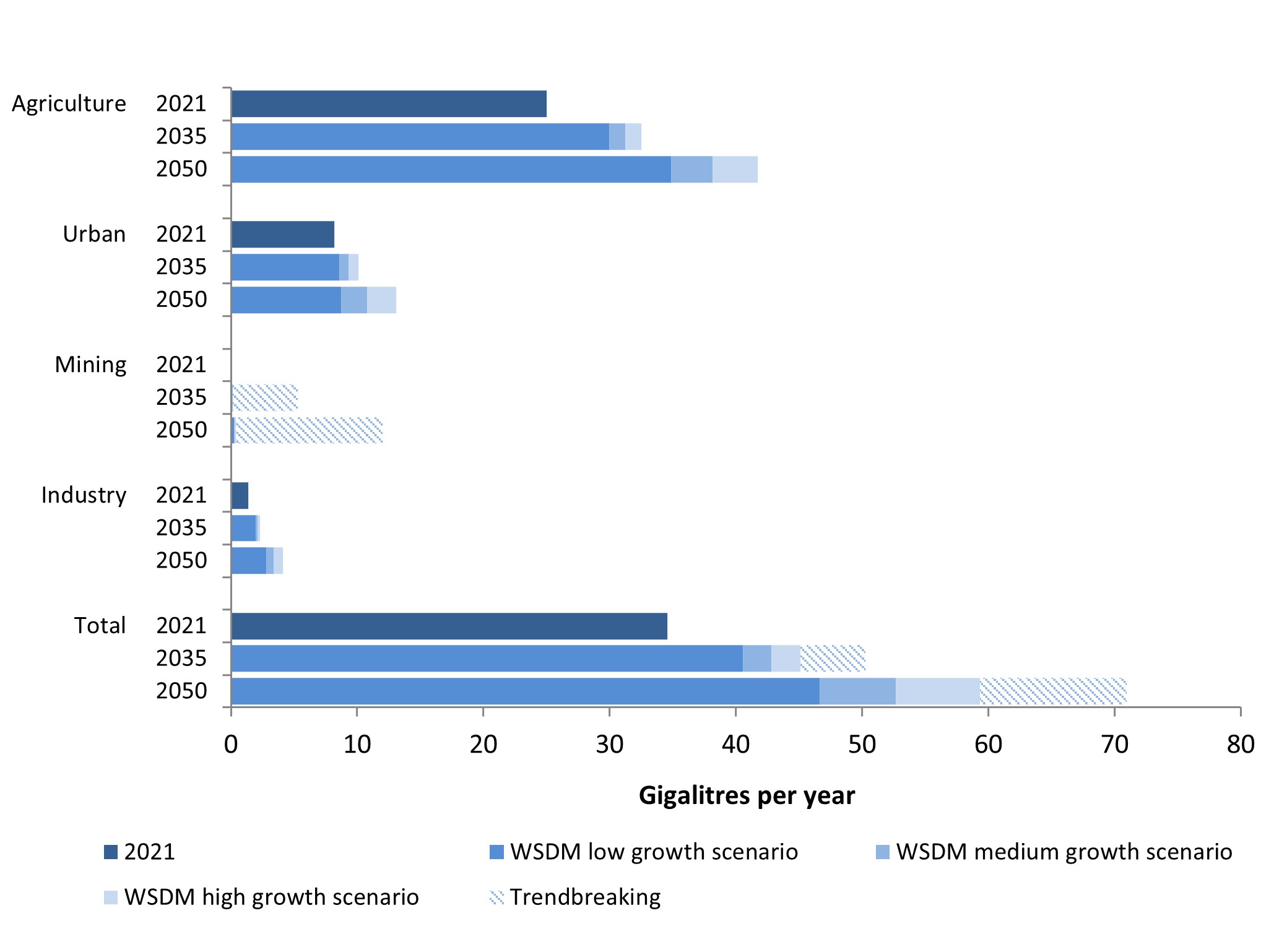
Updated water demand projections indicate a steady increase in demand for most Great Southern water use sectors over the next 30 years. Total water demand is estimated to increase to more than 40 GL per year by 2035 and approximately 50 GL by 2050 under a medium growth scenario.
The agriculture sector continues to have the highest water demand in the region; however, significant growth in production cannot be supported by existing surface and groundwater resources alone. A combination of demand reduction strategies and use of alternative water sources will be needed to realise the projected growth of agriculture in the region. Urban water use is expected to remain the second largest water demand in the region.
Water supply outlook for the Great Southern region
Climate change will continue to place more pressure on surface water and groundwater resources, affecting town water supplies, agricultural production and ecosystems. Average annual rainfall is projected to continue to decline and become more variable from year to year. In particular, decreases in winter and spring rainfall are expected. Higher temperatures mean increased evaporation, which puts water resources under further stress. These climate change effects are expected to continue and become more pronounced in the future.
To stretch existing water resources further in the Great Southern, we must all continue to use water more efficiently. Alternative, climate-resilient water sources will need to be developed to satisfy future water demand. Research and development of innovative ways to utilise alternative water sources need to continue. This will help reduce the pressure that increasing demand is placing on our precious water resources.
When additional water sources are needed, water source planning needs to be undertaken early, and consider diverse and climate-resilient sources. The Water Corporation is investigating new sources for the Lower Great Southern towns water supply scheme (Albany region and Denmark) and the Walpole town water supply scheme.
