


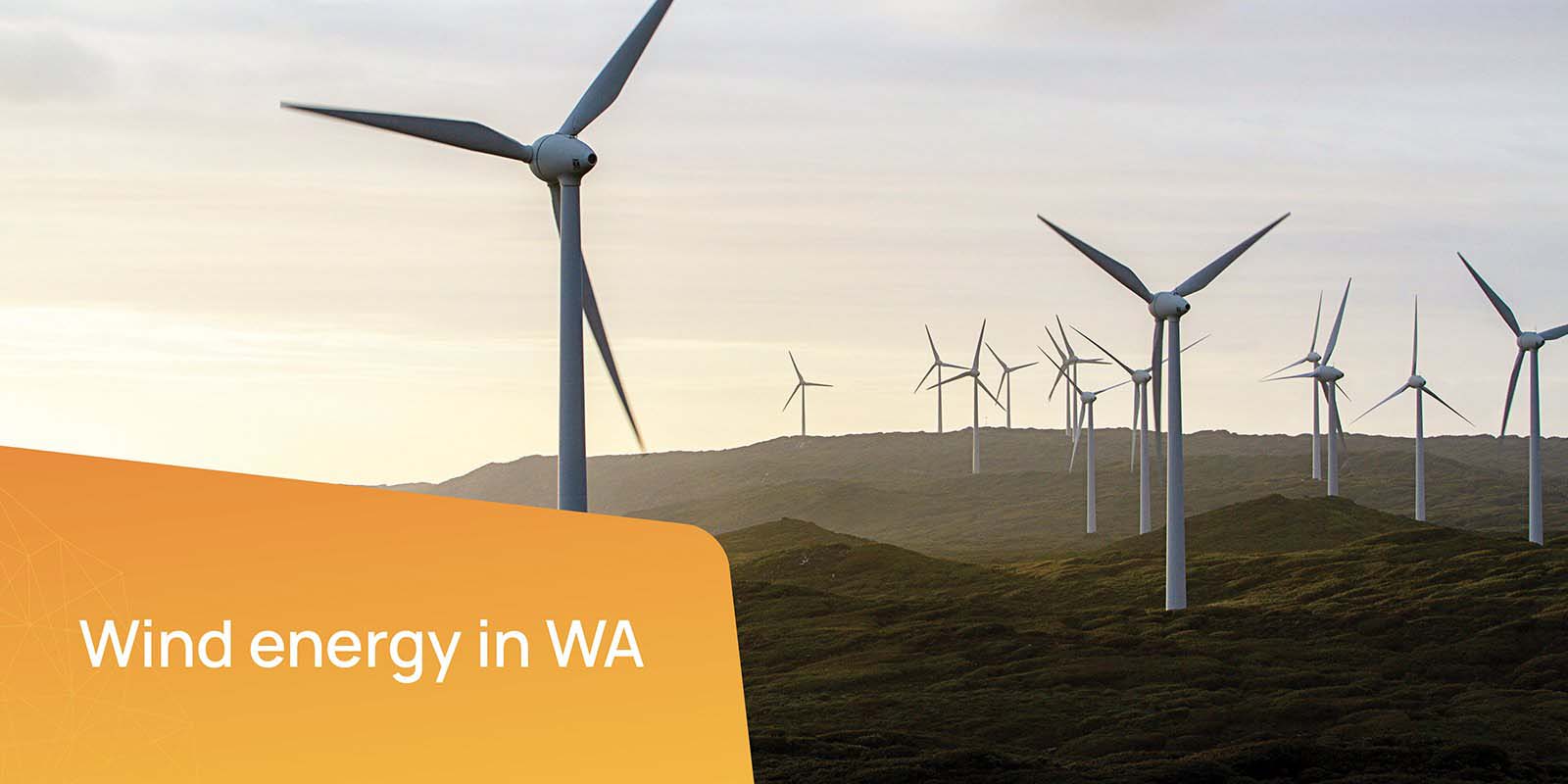
You can find more about wind farms here.
The power of the wind
Wind generation involves capturing energy from the wind and converting it to electricity. As the wind rotates turbine blades, these move a generator which produces electricity. One wind turbine can produce enough electricity to power up to 2,000 average households every year.
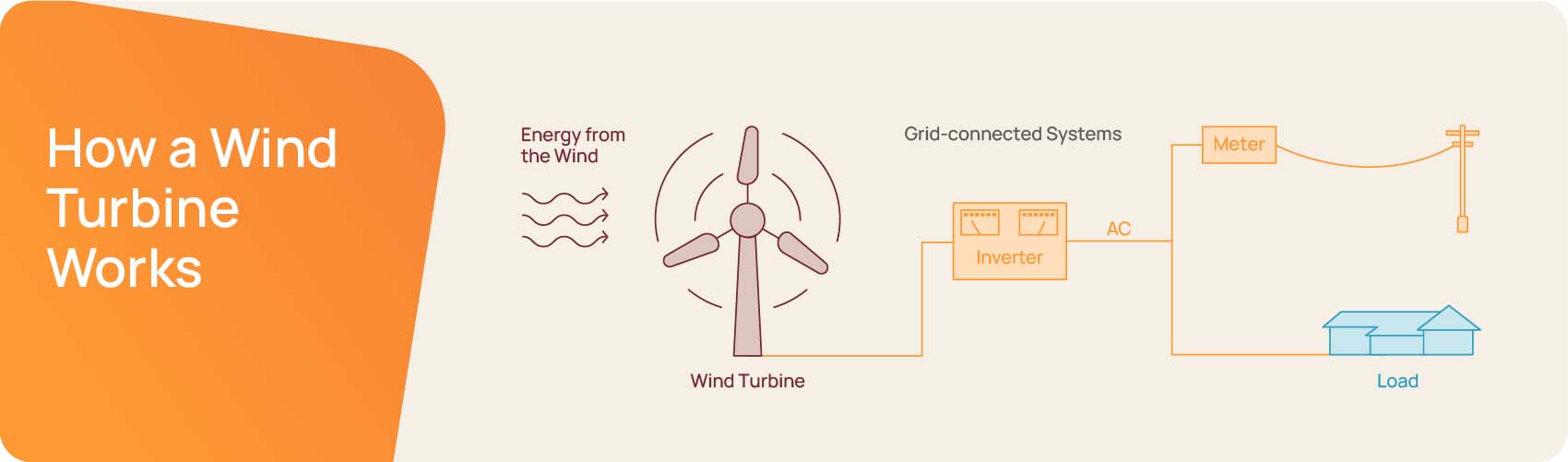
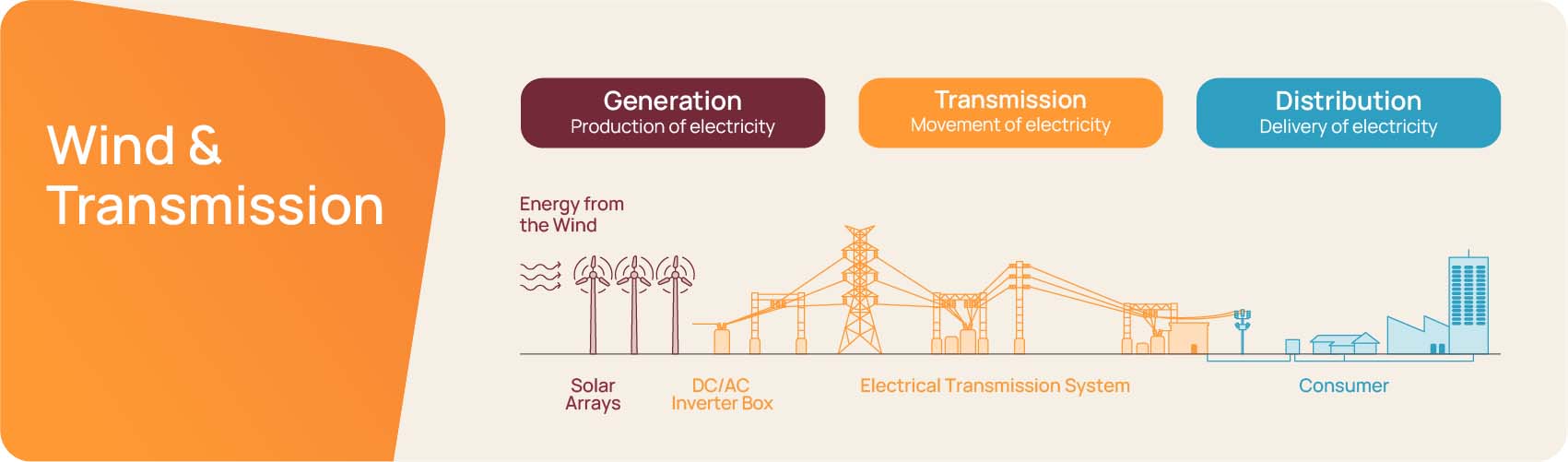
Transmission lines then transport this electricity to where it is needed. Transmission networks can be considered a ‘super highway’ that carries electricity through towers and wires to homes, businesses, and communities in WA. Each megawatt of energy produced by a wind turbine equates to saving around two-thirds of a tonne of greenhouse gases.
A cost-effective, renewable energy source
Wind generation provides very low-emissions energy generation compared with coal and gas-powered generation. While fossil fuel prices and supply can fluctuate according to many factors, wind is always a free and readily available energy source.
Compared to solar energy, which can only be generated when the sun is shining, wind turbines can produce energy any time the wind is blowing, including overnight. Of course, wind does not blow all the time, so wind energy needs to be supported by other energy technologies, including solar and energy storage. Our energy system needs a balance of renewable energy sources to keep our electricity supply reliable and secure.
Wind energy in WA
- Western Australia has excellent wind resources, with widespread coastal areas, gentle hills and flat plains, along with the potential for offshore wind.
- In particular, the Southwest, Pilbara and Goldfield regions host world class wind resources.
- In the South West Interconnected System (SWIS), WA’s main grid, wind energy already accounts for around 16 per cent of the electricity generated on an average day.
- Unlocking the world class wind resources in the Goldfields and Pilbara will be an important part of WA’s energy transition.
The future of wind energy in WA
As our energy system transitions towards a cleaner energy future, wind energy has an increasingly important role as a renewable generation source. Demand for energy will continue to grow in both the SWIS and the North West Interconnected System (NWIS) in coming years. Wind and solar have been identified by the CSIRO as the most cost-effective renewable energy generation technologies and will be crucial to meeting this demand.
Given the scale of demand growth in Western Australia, there are significant opportunities for private proponents to develop wind farms and there are many projects being progressed across the state.
New wind projects, and other plans for new energy infrastructure, need to meet a range of requirements to ensure any community or environmental impacts are considered and minimised.
Frequently asked questions about wind energy
How does renewable energy help lower our State’s emissions?
Show moreWind is an emissions-free source of energy. The shift to sustainable energy will help reduce impacts associated with climate change, like extreme weather events and declines in biodiversity. For each megawatt of energy produced by a wind turbine, we lower greenhouse gas emissions by around two thirds of a tonne - equivalent of taking about 2,300 cars off the road.
How are energy generation sources identified?
Show moreThe Australian Energy Market Operator (AEMO) determines how much electricity we need to meet the growing demand in the South West Interconnected System (SWIS). As we use less coal and need more energy, we’ll need other sources to step in.
AEMO doesn’t favour any specific technology. Instead, it lets the market decide the best options. Some energy solutions work better in WA than others. For example, WA’s dry climate and flat terrain make pumped hydro difficult. Wind and solar power are not only cheaper than other options like nuclear, gas, and batteries, but WA also has plenty of wind and sunshine. Analysis shows that a mix of solar and wind, supported by batteries and gas, will provide the most affordable, reliable, and environmentally sustainable energy for WA.
All parts of WA will see a mix of these energy sources. From the Pilbara to the Goldfields, new renewable energy projects and power lines will be needed in industrial, rural, and metro areas.
Why is wind an important part of the future energy requirements for our State?
Show moreWind helps ensure our energy supply is affordable: Research by the CSIRO has affirmed that wind and solar are Australia’s most cost-effective types of new-build electricity generation - even when the cost of new transmission infrastructure is factored in. Furthermore, Western Australia has some of the best wind resources in the whole of Australia.
Wind generation projects create more price security: It reduces our dependence on finite, polluting sources of energy, like coal or diesel, that are vulnerable to price fluctuations.
Wind, solar and batteries are key to a diverse and secure energy system: A diverse power grid – one with multiple types and sites of generation – is a resilient power grid. Accessing wind resources in different areas of the State, alongside solar and gas generation, improves network resilience, helping ensure there is backup energy available if there is an outage in another part of the grid.
How tall are wind turbines?
Show moreWind turbines range in sizes. Examples in Western Australia range anywhere between 120 - 295 metres in height, with blades of 76 - 91 metres.
While the wind farm developer is best to advise on the proposed size, details about the projects, including proposed wind turbine sizes, are included in project development applications, or referral documentation on Environmental Protection Authority's website, where applicable. It is noted that sizes can be subject to final design and proposal documentation may refer to maximum heights.
Larger wind turbines can reduce the number required for the same electricity output and can improve land use efficiency due to higher energy yield.
Are wind turbines noisy?
Show moreA study conducted by the University of New South Wales, was focused on measuring the effects of infrasound impacts on humans. This study exposed subjects to 72 hours of infrasound, pseudo infrasound, and traffic noise exposure. It determined that infrasound did not worsen sleep or cause any health-related concerns.
Additionally, the World Health Organisation's 2018 Environmental Noise Guidelines recommend that average noise exposure from wind turbines should not exceed 45 dB Lden (day-evening-night level) to minimise potential health effects. These Guidelines are based on evidence linking higher noise levels to increased annoyance and potential health risks. Landowners should consider using these Guidelines as a reference point when negotiating arrangements with project developers.
Furthermore, in WA the Environmental Protection (Noise) Regulations 1997 prescribe standards for noise emissions from premises and public places when the noise is received at other premises for the purpose of the Environmental Protection Act 1986. The prescribed standards apply to noise emissions from wind farms.
What is the carbon payback period for wind turbines?
Show moreA ‘carbon payback’ period refers to the length of time a wind farm must be operational to generate the amount of sustainable energy required to offset the amount of carbon used over the course of its lifetime, including during its manufacture.
The carbon payback period for wind turbines is approximately 5–12 months.
 Print this page
