


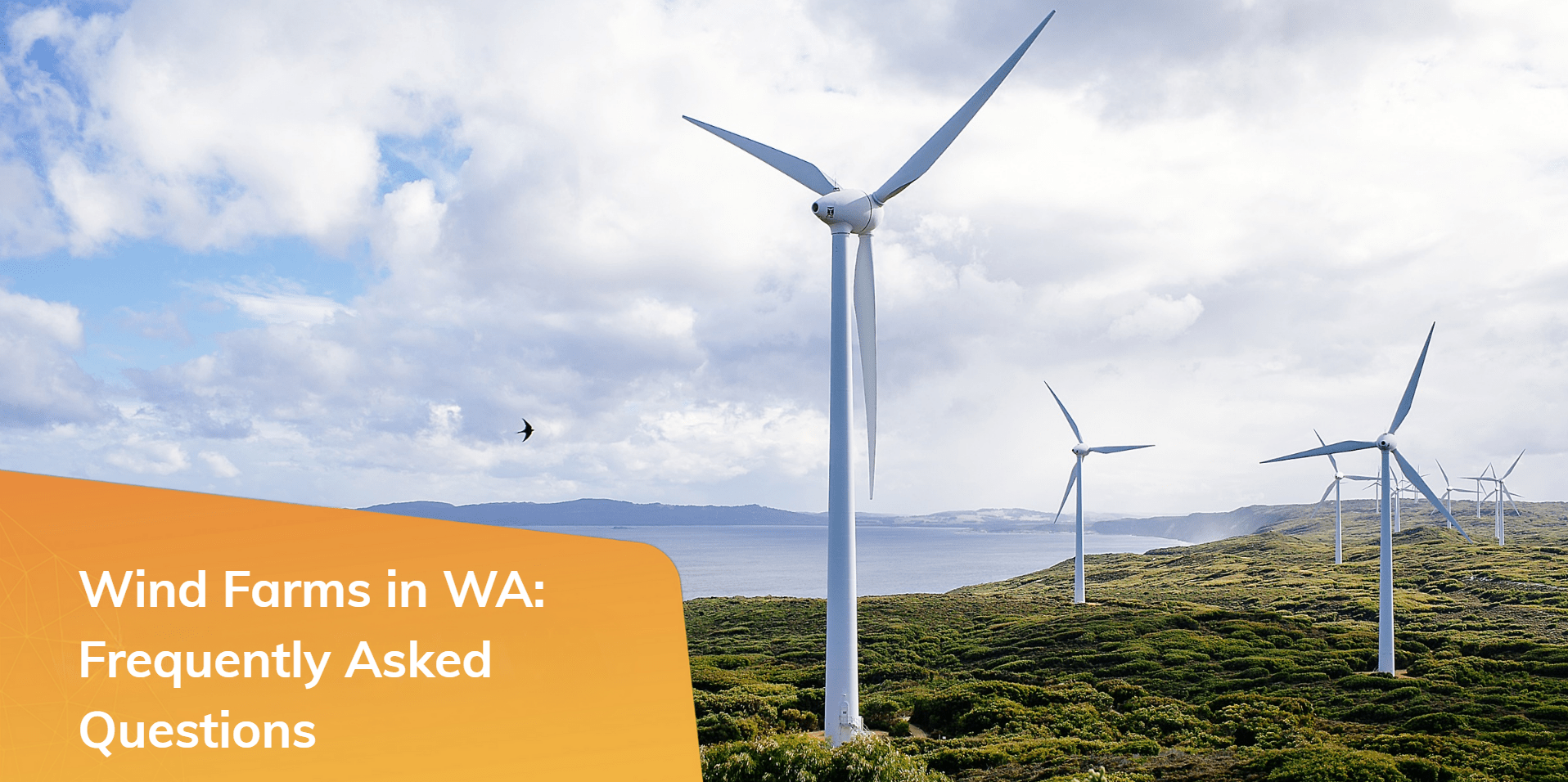
This page contains answers to common questions around hosting wind farms in Western Australia.
How can we maintain the balance between prime agricultural land and hosting a wind farm project?
Show moreInternationally and across Australia there are many examples of renewable energy infrastructure coexisting with the natural environment and existing land uses, including farming and agriculture.
At Yandin Wind Farm in WA, the 51 wind turbines in place only occupy around 0.03 per cent of the overall project site, meaning that normal farming activities like grazing and cropping continue undisrupted.
The Western Australian Planning Commission’s Position Statement: Renewable Energy Facilities, which guides the Planning Approval process, recommends that renewable energy facilities like wind and solar farms be located on cleared rural land with low agricultural value.
How tall are wind turbines?
Show moreWind turbines range in sizes. Examples in Western Australia range anywhere between 120 - 295 metres in height, with blades of 76 - 91 metres.
While the wind farm developer is best to advise on the proposed size, details about the projects, including proposed wind turbine sizes, are included in project development applications, or referral documentation on Environmental Protection Authority's website, where applicable. It is noted that sizes can be subject to final design and proposal documentation may refer to maximum heights.
Larger wind turbines can reduce the number required for the same electricity output and can improve land use efficiency due to higher energy yield.
Are wind farms noisy?
Show moreA study conducted by the University of New South Wales focused on measuring the effects of infrasound impacts on humans. This study exposed subjects to 72 hours of infrasound, pseudo infrasound, and traffic noise exposure. It determined that infrasound did not worsen sleep or cause any health-related concerns.
Additionally, the World Health Organisation's 2018 Environmental Noise Guidelines recommend that average noise exposure from wind turbines should not exceed 45 dB Lden (day-evening-night level) to minimise potential health effects. These Guidelines are based on evidence linking higher noise levels to increased annoyance and potential health risks. Landowners should consider using these Guidelines as a reference point when negotiating arrangements with project developers.
Furthermore, in WA the Environmental Protection (Noise) Regulations 1997 prescribe standards for noise emissions from premises and public places when the noise is received at other premises for the purpose of the Environmental Protection Act 1986. The prescribed standards apply to noise emissions from wind farms.
Will wind turbines limit landowners ability for crop spraying?
Show morePilots who conduct aerial spraying regularly operate in the vicinity of a range of hazards, including power lines, communications towers, and trees. Prior to each spraying assignment, pilots must complete their own site-specific safety assessment to identify hazards and then safely plans their flight around them accordingly.
Aerial spraying takes place when wind speeds are low, to avoid excessive spray drifting on to neighbouring properties.
Generally, aerial spraying is conducted in wind speeds under 8 knots, or approximately 15 km/h. Wind turbines only operate when wind speed is above 6 knots (11 km/h), meaning that they are likely to be inactive during most aerial spraying assignments.
Landowners should speak to developers around arrangements that can be made to minimise impact to hosting and neighbouring properties when crop spraying is required.
The Civil Aviation Safety Authority Safeguarding Framework details the appropriate steps wind farm developers should take to minimise hazards in areas where aerial agricultural operations occur.
How often are wind turbines maintained?
Show moreJust like any other mechanical machine, wind turbines require regular maintenance to ensure they operate efficiently and safely.
General practice is that wind turbines are serviced once every six to twelve months. This may differ based on the developer and their particular maintenance schedule.
It is recommended that landowners discuss and agree to a maintenance schedule as part of their Commercial Lease Agreement with the developer.
Can wind turbines fall during extreme weather events?
Show moreWind turbines are designed to automatically shut off at very high wind speeds. However, on rare occasions they can be damaged if hit directly by an extreme weather event (such as a cyclone). There have also been incredibly rare instances of individual blade parts, referred to as trailing edges, becoming detached . These are usually small and flexible, which reduces the chance of injury or property damage. Landowners can request developer ensure the positioning of individual turbines prevents blade parts or any other debris that may detach during an extreme weather event from landing in or contaminating any neighbouring property. This may involve establishing a minimum setback buffer from neighbouring properties and the consideration of future development.
What examples are there of neighbour agreements or compensation?
Show moreAs both are private agreements, the wind farm developer will decide when and if an agreement will be offered.
While compensation and Neighbour Agreements are usually commercial in confidence, some developers are choosing to highlight their neighbouring agreement programs publicly.
An example of a neighbouring agreement can be found on the Pines Wind Farm website.
For considerations around neighbouring agreements, the Australian Energy Infrastructure Commissioner has developed some helpful guidance, which can be found here.
Landowners should arrange for an independent legal and financial advisor to review all agreements before they are signed. Most developers will offer to compensate the landowner for this review.
Neighbour Agreements, while voluntary, are considered best practice and can help ensure efficient project delivery. If a wind farm developer has not yet offered or discussed neighbouring agreements, landowners can suggest or mandate that neighbour agreements are developed as part of contract terms.
How will renewable energy projects impact my land value?
Show moreIt is important for landowners to consider both the benefits and potential challenges associated with host a wind farm on their property.
Hosting wind turbines can add value to a property, providing landowners with a diverse source of income through lease payments and other financial incentives. This additional income can help landowners invest in their properties, improve their operations, and support their families.
However, it is also important to recognise that the value of agricultural land can fluctuate over time. Market conditions, climate variability, and changes in land use policies can all affect property value.
Hosting wind farms on your land may increase land value. However, independent financial advice should be sought to help the landowner determine the likely effect of a proposed development on their land value.
How will Government support local communities hosting renewable energy projects?
Show moreThe WA Government is working to support communities hosting new renewable energy projects in several ways, including:
- Establishment of PoweringWA to facilitate the energy transition;
- Engagement with Local Government Authorities (LGAs) to better understand their issues, needs and concerns);
- Working across Government to mitigate issues identified;
- Developing a Community Benefits Guideline;
- Developing supporting material and resources; and
- Encouraging proponents to engage meaningfully with neighbours and the broader community.
PoweringWA is currently developing support resources for landowners hosting or living near renewable energy projects. Additional resources are also available on the Australian Energy Infrastructure Commissioner Website.
To find out more about PoweringWA, click here.
 Stay up to date
