


The Road Safety Commission understands the importance of using different measures to achieve the best road safety outcomes for the state and save as many lives as possible.
As part of the Road Safety Reform Package, the Road Safety Commission is funding near miss camera installations which can detect near collisions between vehicles, people riding or walking, and/or equipment.
The camera assets are provided by an Australian company called LAB3.
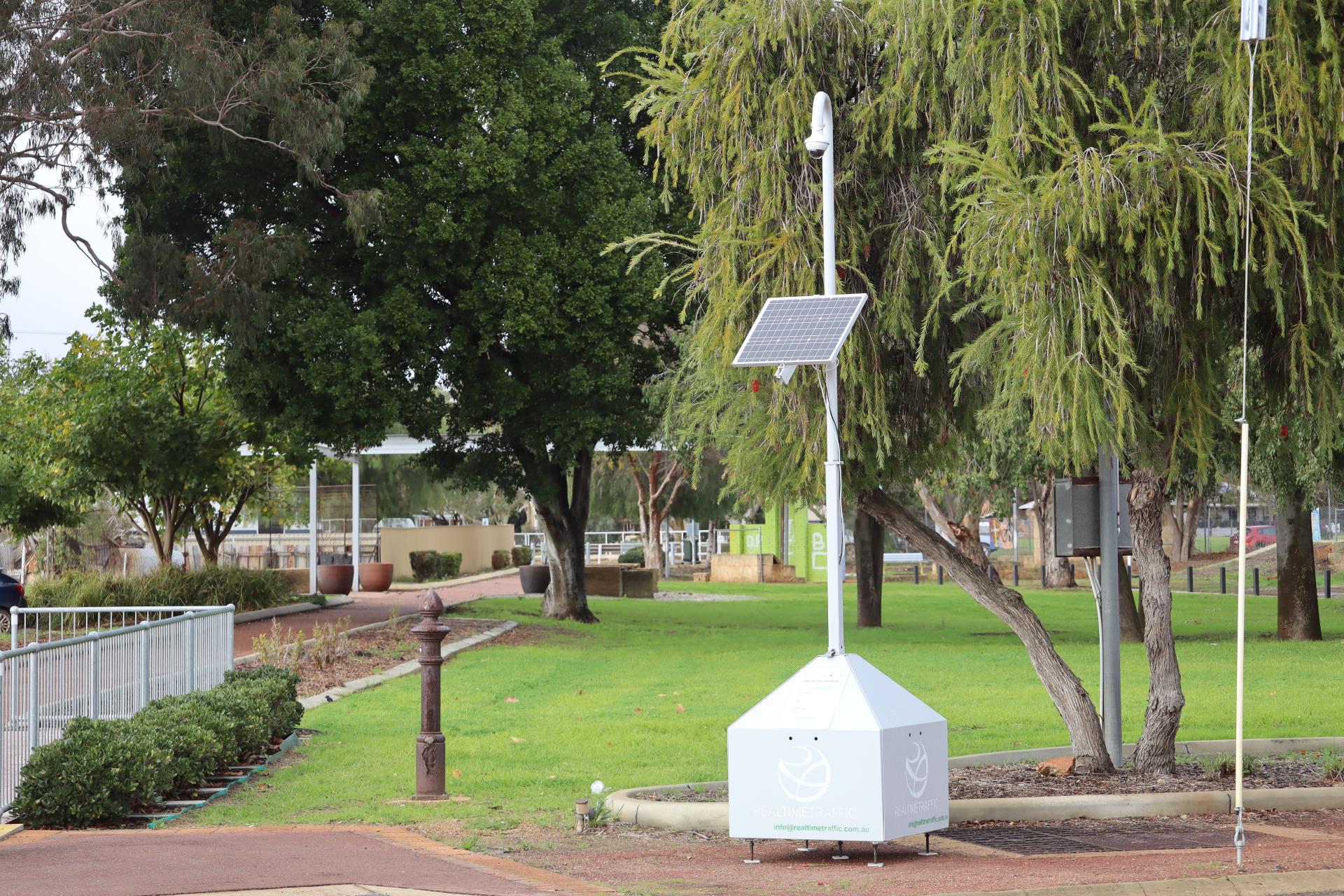
How do the cameras work?
Near miss cameras use a portable camera combined with AI software to analyse video in real time to provide insights, severity levels and risk ratings for near miss events.
The data collected from the cameras is de-identified through facial, number plate and vehicle blurring and uploaded to a dashboard.
It can then be studied and used to support the development of road safety planning and investment cases by local government to upgrade or improve road infrastructure.
What do the cameras measure?
There are three main metrics that are collected and analysed by the non-enforcement cameras.
- Classification/ traffic types: categorises different types of vehicles on the road, such as bicycles, motorcycles, passenger cars and buses. This helps us understand the mix of traffic and how different types of vehicles use the road.
- Speed: measures how fast each vehicle is moving at a specific point of an intersection. This data is not used for enforcement purposes, but to inform road safety treatments.
- Timing/ post encroachment time: calculates the time difference between one vehicle leaving an area (like an intersection) and another vehicle entering the same area. This helps identify potential close calls or near misses, which can be crucial for improving road safety.
