


In the summer starting in late 2024 we saw hot and dry conditions across the South West Land Division, which affected our communities, waterways, wetlands, farm dams, soils and vegetation.
While we experienced a late start to winter in 2025, rainfall was generally near or above average across the region, however it was unevenly distributed.
Hot and dry seasonal conditions will continue in early 2026. The Bureau of Meteorology reports that:
- rainfall is likely to be below average over summer, with a 40 per cent chance of above median rainfall through to March 2026
- it is going to be hotter in February and March 2026, with a 60-70 per cent chance of exceeding the median max temperature
To support our communities and environment during these expected weather conditions, we ask you to use water wisely and ensure that you have a secure source of water for this dry season. You can read more about how rainfall, streamflow and groundwater are tracking across the South West Land Division on our website.
Domestic gardens, firefighting and non-intensive stock watering
Access to water is essential to making sure that you and your property can adapt to a changing climate.
Groundwater bores for domestic gardens, firefighting and non-intensive stock watering do not require a water licence to take from the water table aquifer. Farm dams, tanks and most pumps in streams (where the watercourse is unproclaimed) also do not require a water licence but landholders need to be aware of their obligations in relation to their take of water. For more information on water licenses and permits see the FAQs.
If you use a farm dam, tank or pump from watercourse or wetland, we recommend that you:
- check your pumps and tanks are working
- make sure you have enough water stored to meet your needs for this dry season
- have regard to other users of the resource, including the environment.
For more seasonally relevant information and management options for farmers in the south-west agricultural areas visit Season 2026: Agricultural region.
If you use a groundwater bore for domestic gardens, firefighting and non-intensive stock watering we recommend that you:
- check your bore and pump infrastructure for obstructions, sediment, or clogging
- drop your pump or intake deeper into your bore, where depth allows
- automate irrigation pumping to be pre-dawn or dusk timing (before 9am or after 6pm)
- coordinate with neighbours to stagger your irrigation pumping demands
- reduce the frequency and duration of your irrigation (note that scheme water users have a two-day roster). Check garden bore water restrictions for your area here.
- adopt waterwise gardening practices. For more advice and information, see Be Groundwater Wise.
Groundwater licence holders
We encourage all water licence holders to use water efficiently and remain within your annual entitlement. Domestic licence holders should apply a similar approach to those that are unlicensed, as described above. For commercial users, we recommend that you regularly monitor water use (meter readings) to help forecast your water needs and adapt your use. Metering data must be submitted using the Department of Water and Environmental Regulation’s Water Online portal.
If your monitoring shows that you are likely to exceed your licence entitlement, please notify your nearest Department of Water and Environmental Regulation office.
What if I run out of water?
To access a publicly available regional standpipe, please contact your local government authority. These supplies are there to help you in emergency situations, however some are subject to application and not for public consumption. You can find information about access and locations of regional standpipes from your relevant water service provider:
Dry season impacts on waterways
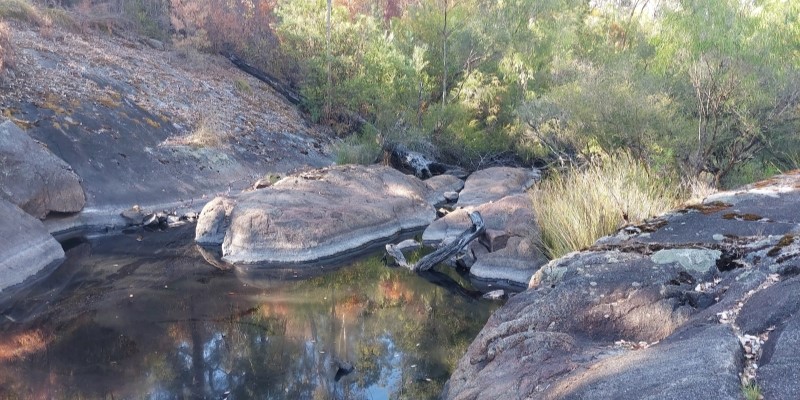
The hot and drier conditions this season may contribute to algal blooms and fish kills in our rivers and estuaries.
They occur naturally in our waterways, but lower water levels and higher temperatures can cause them to become more prevalent or cause blooms.
Some forms of algae can be harmful to humans, livestock or aquatic life and can sometimes lead to fish kills. Others can discolour water, leave residue or cause skin irritation in swimmers if they reach high enough concentrations.
Visit Threats to waterways for more information. If you see an algal bloom, please report it to:
- our ALGALWATCH team on 08 6250 8064 (office hours) or email peu@dwer.wa.gov.au
- your nearest Department of Water and Environmental Regulation office.
If you see a fish kill, please report it to:
- the Department of Primary Industry and Regional Development’s (DPIRD) Fisheries FishWatch hotline on 1800 815 507 (24 hour service)
- your nearest Department of Water and Environmental Regulation or DPIRD office
