


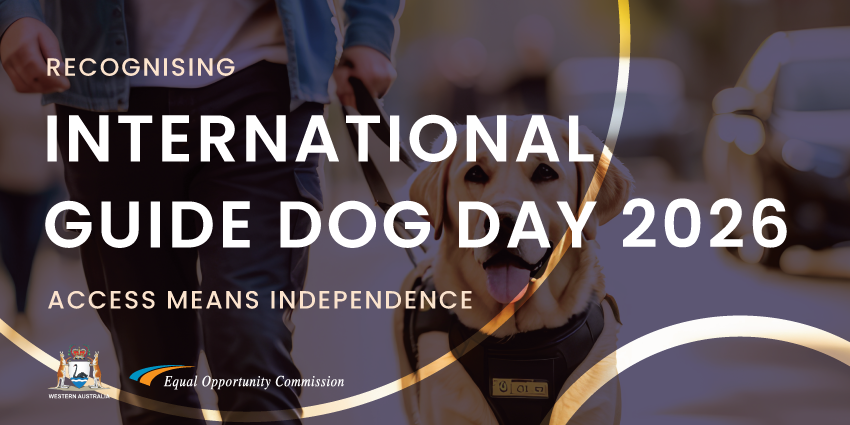
Every year on the last Wednesday of April, International Guide Dog Day celebrates the extraordinary partnership between people who are blind or have low vision and their guide dogs. It also marks the founding of the International Guide Dog Federation in 1989 and recognises the vital role guide dogs play in supporting people to live and participate fully in their communities.
While guide dogs are expertly trained and highly skilled, true independence depends on more than their training alone. It relies on communities, services and transport providers understanding and meeting their legal responsibilities. This is particularly important for taxis and rideshare services, where access challenges are still experienced, despite clear and long‑established legal protections.
Guide dogs are not pets. They are mobility aids that are expertly trained by accredited organisations, such as Guide Dogs WA, to meet international standards. These standards ensure guide dogs can safely and confidently access public spaces alongside their handlers. This supports people who are blind or have low vision to move through their communities with confidence and to rely on essential services, including on‑demand transport.
Access to transport is fundamental to everyday life. Without taxis and rideshares, many people who are blind or have low vision may be unable to get to work, attend medical appointments, take part in education, volunteer or stay connected to their community. When a person is refused a ride because of their guide dog, the impact goes beyond inconvenience. It can limit independence, restrict participation and leave people feeling unsafe, isolated or excluded.
For this reason, the law in Western Australia is clear. Refusing access because a person is accompanied by a guide dog or hearing dog is against the law. Under the Equal Opportunity Act 1984 (WA), a person must not be treated unfairly because they are blind, deaf, partially blind or partially deaf and use a guide dog or hearing dog. These protections apply to all public services, including taxis and rideshare vehicles. Guide dogs and hearing dogs have legal access rights, and general “no animals” rules, vehicle policies, allergies or personal preferences do not override those rights. Refusing a ride or providing poorer service because of a guide dog or hearing dog is likely to amount to unlawful discrimination. If someone is refused access, one thing they can do is make a complaint to the Equal Opportunity Commission of Western Australia, at no cost.
These protections exist because access to transport underpins independence. Global research shows that taxis and rideshares are among the most common places where guide dog handlers still experience discrimination. In both regional and metropolitan Western Australia, on‑demand transport is often the difference between participation and isolation. Ensuring accessibility in taxis and rideshares is not about courtesy or goodwill. It is a legal responsibility, and it helps support independence, safety and dignity for everyone.
