


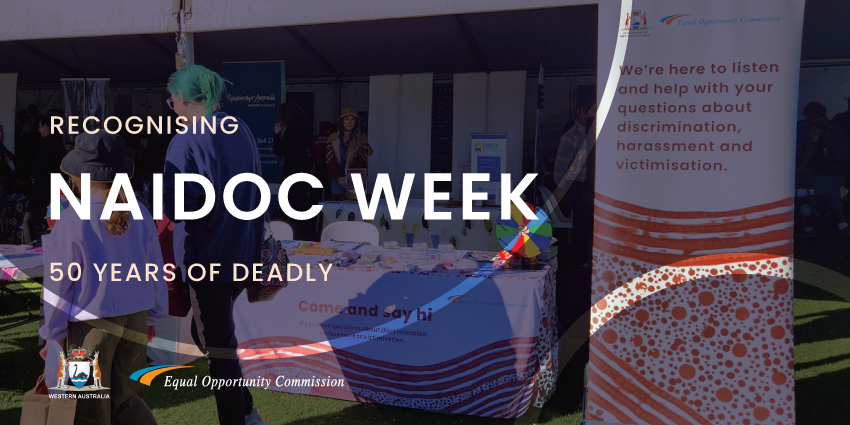
The Equal Opportunity Commission is proud to be participating in the NAIDOC festivals in Armadale (pictured), Mirrabooka and Northam throughout NAIDOC Week 2026.
Each year, NAIDOC Week provides an opportunity for Australians to celebrate the histories, cultures and achievements of Aboriginal and Torres Strait Islander peoples, to listen to the voices of Aboriginal and Torres Strait Islander communities, and to recognise their enduring contribution to our communities and nation. This year's theme, 50 Years of Deadly, marks five decades of NAIDOC Week and celebrates the strength, leadership, resilience, survival and cultural richness that have shaped the movement since its beginnings.
It honours the generations of Elders, community leaders, advocates, artists and changemakers who have helped shape the national conversation, often in the face of significant barriers. It also reminds us that progress has been driven by the determination of people and communities who have continued to advocate for recognition, respect and justice, while remaining grounded in culture, identity and connection to Country.
NAIDOC Week is also a time of celebration. For many Aboriginal and Torres Strait Islander people, it is one of the most important occasions of the year, bringing communities together to celebrate culture, achievement and the strength of generations past, present and future.
As we celebrate these achievements, we are also reminded that the work of creating equitable opportunities is ongoing. While important progress has been made, many Aboriginal and Torres Strait Islander people continue to experience discrimination across areas of public life, including employment, education, housing and access to services. These experiences affect not only participation, but outcomes as well.
In Western Australia, the Equal Opportunity Act 1984 (WA) provides important protections against racial discrimination and racial harassment. The Act helps protect people's right to participate in public life free from unfair treatment because of their race.
However, importantly, the Act does more than make discrimination unlawful. Its objects include promoting recognition and acceptance of the dignity and equal worth of all people, and encouraging understanding, respect and acceptance across our diverse community. The Act also recognises the importance of identifying and addressing the conditions that give rise to discrimination.
Together, these principles remind us that equal opportunity is not only about preventing harm. It is about creating environments where people are respected, valued and able to participate fully.
This message is particularly relevant to this year's theme. 50 Years of Deadly celebrates the achievements, leadership and contributions of Aboriginal and Torres Strait Islander peoples over the past five decades. It also reflects the importance of listening to Aboriginal and Torres Strait Islander voices and learning from the knowledge, experience and perspectives they share.
NAIDOC Week invites all of us to reflect on our role in that work. How do our workplaces, schools and services support inclusion? How do we create opportunities to listen and learn from Aboriginal and Torres Strait Islander voices? Where are opportunities being created, and where do barriers remain? What does it mean, in practice, to foster communities where Aboriginal and Torres Strait Islander peoples are treated with dignity, respect and fairness?
As we celebrate 50 years of NAIDOC Week, we acknowledge both the progress that has been made and the work still ahead.
