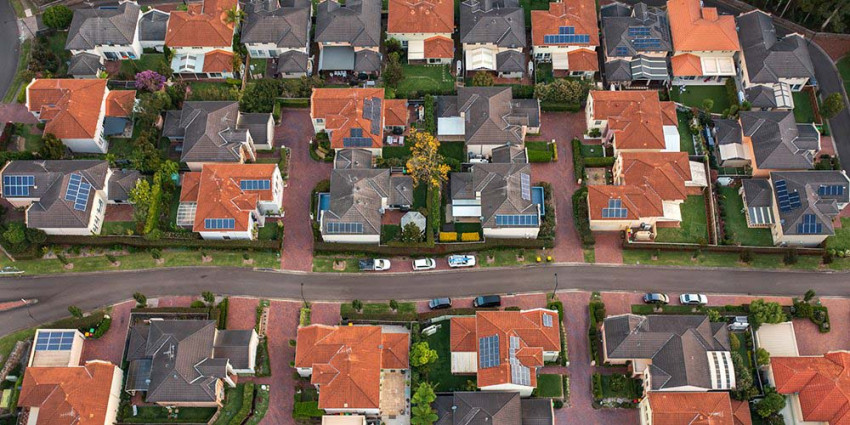
Distributed Energy Resources (DER) include rooftop solar and battery systems, electric vehicles and appliances that can be used for managing power demand.
Rooftop solar is a major feature of the electricity system. In 2025, 41% of electricity in Western Australia’s main electricity grid came from renewable energy, half of which came from household solar systems. At full capacity these can generate 2.5 gigawatts (GW) of electricity, more than double WA’s coal-fired power plants. Thanks to the WA Residential Battery Scheme (WARBS) launched in July 2025, batteries are standard in new solar system installations and people can join a virtual power plant (VPP).
The DER Roadmap has provided the foundation for DER to grow for the benefit of electricity consumers, the grid and the clean energy transition. Released in April 2020, it was a five-year program to integrate DER into the electricity system to ensure the benefits are shared across the whole community. Among other achievements, the DER Roadmap Third Progress Report, released in July 2024, highlighted the conclusion of the state’s flagship VPP pilot Project Symphony, the advancement of the DER Orchestration Roles and Responsibilities program, development of the first aggregation-style product for consumers, and completion of an EV charging behaviour study to better understand how charging can be influenced for improved customer and system outcomes. An end of program review is anticipated in 2026.
VPP technology allows DER to grow and electricity consumers to be rewarded for providing energy and other services to the grid. Project Jupiter is building on the work of the DER Roadmap to enable and demonstrate commercial VPP operation at scale. It commenced in January 2025 and is $108 million collaboration between Energy Policy WA, Western Power, AEMO and Synergy supported by $20.8 million from the Australian Renewable Energy Agency. Achievements to date include the rollout of new VPP products for consumers and changes to connection rules so that bigger solar and battery systems can be installed.
More DER Roadmap initiatives are noted below as well as key supporting legislative changes and policy positions.
Roadmap initiatives
Continued growth of Emergency Solar Management (ESM), which launched in 2022, and now in 2026 has an available capacity of over 300MW, and an expected response of over 200MW.
Launch of the Smart Connect Solar program which enables Horizon Power to maintain stability of the network while providing customers the opportunity to install solar where they were previously unable to do so.
Additional investment in community batteries to address network and system constraints through the Australian Government’s Community Batteries for Household Solar program.
Progression of the Electric Vehicle Action Plan (EVAP) and broader EV integration.
Roll-out the EV Add On tariff, designed to shift EV charging away from the evening peak and to recognise customer preference for overnight charging.
Launch of the WA Government’s $15 million Charge Up program designed to encourage the uptake of workplace charging stations.
Legislation & policy
- The Electricity Industry Amendment (Alternative Electricity Services (AES)) Act
- ‘Smarter Solar’ installation requirements for customers and for industry
- Options to upgrade an existing solar system such as adding panels or a home battery