Aboriginal Family Led Decision Making
The Aboriginal Family Led Decision Making (AFLDM) process supports the right to self-determination of Aboriginal and Torres Strait Islander families to make decisions about how to keep their child or young person safe and connected to their family, culture, Country and community.
AFLDM will continue to be delivered in Mirrabooka and the Midwest-Gascoyne until 2030. The State Government has committed $7.2 million over four years in the 2026 State Budget for the continuation of the Pilot.
Latest news
Background
In Western Australia, 60% of children in care are Aboriginal and/or Torres Strait Islander.*
(*Western Australian Child Protection Activity Performance Information 2024-25)
The disproportionate over-representation of Aboriginal children in out-of-home care requires a concerted effort to be addressed effectively and must be achieved by working in partnership with Aboriginal people and Aboriginal community.
Working in partnership with the Aboriginal community to address this overrepresentation of Aboriginal children in out-of-home care is a priority of the Department of Communities (Communities).
AFLDM aligns to the principles of the WA Signs of Safety Child Protection Practice Framework (Signs of Safety). Independent Aboriginal Convenors have adapted a modified Signs of Safety three columns approach into their AFLDM Family meetings. This is to better align AFLDM process with Statutory requirements. The three columns are phrased in a culturally safe way to families and captured in a Family Plan:
- What is good (replaces what is working well)
- What can be better (replaces what are worries)
- What can be done to make it better (replaces things that need to happen)
Through AFLDM, families are supported to make family driven decisions with the aim of preventing children entering out-of-home care, increasing reunification of children with their families and ensuring children are connected to culture and their community. When a family is involved with children protection, AFLDM allows meetings between the family and Communities to be facilitated by an Aboriginal Convenor, employed by an ACCO.
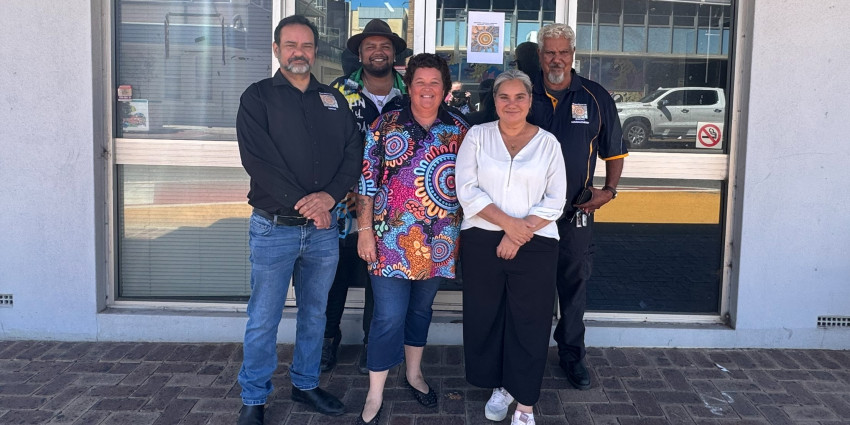
AFLDM is currently being delivered in two Western Australian districts; Mirrabooka and the Midwest-Gascoyne. In Mirrabooka, the service is delivered by Wungening Aboriginal Corporation. In the Midwest-Gascoyne, Bundiyarra Aboriginal Community Aboriginal Corporation delivers the service.
Both ACCOs provide families with a culturally safe space in which meetings are facilitated by an Aboriginal Convenor. Families are supported to make culturally based and family driven decisions regarding the care of their children.
AFLDM WA model is delivered in five stages:
- Referral Stage
- Preparation Stage
- The Family Meeting
- Implementing the Plan Stage
- Review the Plan Stage
The family meeting upholds a strength-based approach and focusses on the support that can be offered to the young person and family. The meeting has three phases:
- Sharing Information: Each participant will have an opportunity to share information during the meeting with family members in the first instance before other professionals. The family is provided with all information about the child protection concerns and worries to assist them in creating their family plan.
- Private Family Time: This promotes family led participation and ownership ensuring self-determination. There is no time limit allowing the family will consider options and develop a plan to ensure and promote the safety of the child(ren).
- Re-convening Meeting: The family will present the plan to meeting participants who will be asked if they agree with the plan. If the plan is agreed upon by all participants, it is sent to the Communities for acceptance.
After a family’s proposed plan has been accepted by all parties, Communities and the ACCO Convenor will work with the family to achieve the goals and tasks set out in the plan. Once a plan is implemented, there is a review four to six weeks after the AFLDM meeting. This meeting is facilitated by the independent Aboriginal Convenor and focuses on how well the plan is meeting the needs of the child and family, including progress made towards the family’s goals while keeping child(ren) safe.
AFLDM is one way that Communities is progressing legislative reform to enable and support child protections processes and decisions that are culturally safe for Aboriginal people in Western Australia. The reform agenda is underpinned by the State Government’s commitment to Target 12 of the National Agreement on Closing the Gap, to reduce the over-representation of Aboriginal and Torres Strait Islander children in out-of-home care by 45%.
Work undertaken to date
In 2020, Communities undertook a one-year planning and pilot co-design phase. Communities engaged the WA Aboriginal Community to inform the development of AFLDM pilot, led by Professor Rhonda Marriott and Associate Professor Melissa O’Donnell to facilitate four round table discussions as part of the co-design. It was determined the pilot would target three cohorts that intersect with child protection:
- Pre-birth cases – when a woman is pregnant and there are concerns for the needs and wellbeing of the unborn infant after birth.
- Intensive Family Support Cases – where there is an open child protection case where the child is at imminent risk of entering out-of-home care.
- Reunification cases – children on time limited orders with the goal of safely returning them to their families.
The 12-month AFLDM pilot commenced in October 2021 across both pilot sites, extended for an additional nine-months until 30 June 2023 to build and test the pilot within the cohort approach. On 01 July 2024, the AFLDM pilot was further extended to progress from cohorts to test full-service delivery approach in the pilot locations.
Please email the project team at afldmprojectteam@communities.wa.gov.au for more information.