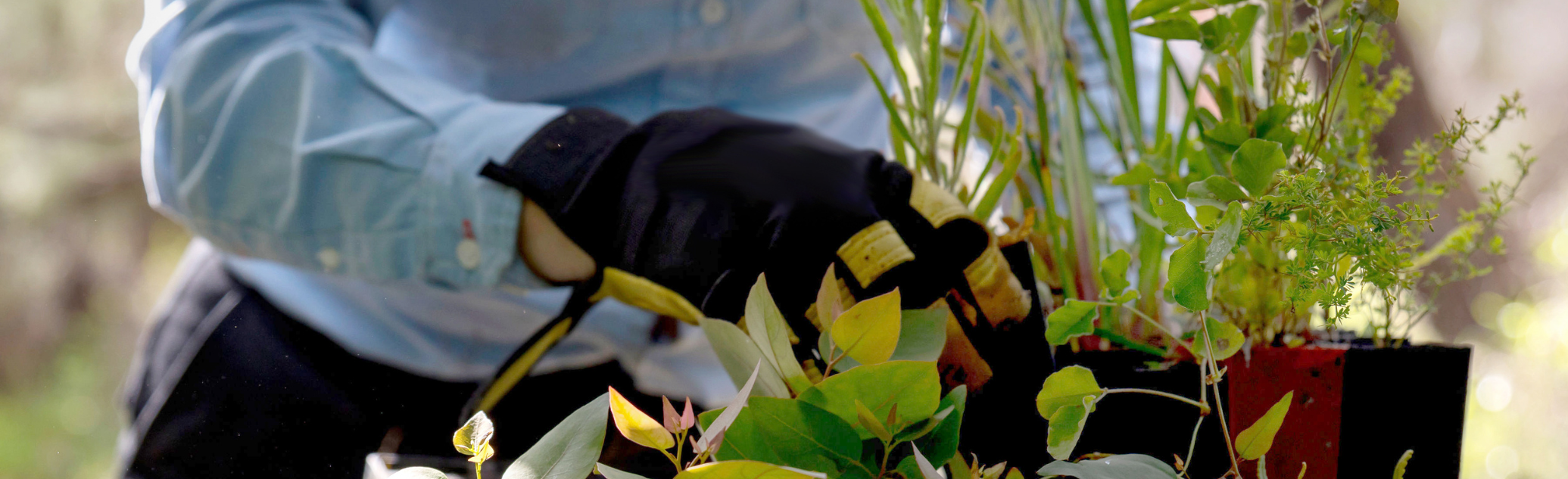
Strong urban greening work is already underway across State and local governments, organisations and the community — but an ongoing collective effort is needed to grow more – especially shady, cooling tree canopy. Below are some ideas to get you growing.
Read the Urban Greening Strategy
Show moreConsider your role in urban greening
Show moreSee Appendix 5 in the Urban Greening Strategy to understand all our urban greening stakeholders and where you fit in.
Reflect on nature and plants
Show moreWhat do tall, shady trees mean to you? How much vegetation do you see in the places you live, work and visit — and how does it make you feel? Would you like to see more? Consider the benefits greenery brings to your life, your family and your community.
Be a Let’s Grow advocate
Show moreChampion urban greening however you can. Get planting and inspire others by sharing your success, knowledge and insights.
Stay in touch
Show moreBring your greening ideas to life
Show moreApply for the ‘Treebate’ incentive
Show moreFor more information, visit the Treebate page.
Re-tree your yard
Show moreFor more information, visit the Residential Rebate Program page.
To report or learn more about Polyphagous shot-hole borer, visit this website.
Reach out to your local council
Show moreVisit WALGA's website to find your council.
Connect with local urban greeners
Show more- Find a conservation group or join a ‘Friends of’ group.
- Be part of the Town Team Movement.
- Find a community garden.
- Join a Kings Park tour or workshop.
- ReWild somewhere.
- Connect to nature with NatureLink.
- Plant on the coast.
- Apply for a Coastwest, Rivercare or Community Stewardship grant.
Green your yard
Show moreTrees are the priority, but some spaces can only fit low-level vegetation like shrubs, flowering plant and native grasses. Plus, these smaller plants still bring benefits for people and nature, and every ‘green thumb’ must start somewhere.
Don’t know? Dig in and find out
Show moreConnect with your local nursery team or your local government. For larger greening work, you may wish to engage a qualified arborist or landscape architect.
Water wisely
Show moreUse water carefully and responsibly. Choose waterwise plants — check out Water Corporation resources: Waterwise plants. Be Groundwater Wise
Leverage native species
Show moreExplore the Kings Park Favourites range. Many Aussie natives also do well here. In some cases, waterwise, non-invasive exotics that thrive locally can offer good benefits.
Be mindful of infrastructure
Show moreWestern Power provides helpful advice on greening near power lines. View their Vegetation and Fauna page, and their FAQs. Use free safety tools before digging near underground utilities. Find Water Corporation’s requirements for working near water assets.