To find services or supports you are comfortable with, please visit the helplines and support services page – use a friend’s phone if you think yours is being monitored.
At first, it might seem like the start of a great romance – being swept off your feet with grand gestures, constant compliments and all the attention in the world. But when it becomes overwhelming and controlling, it’s not love, it’s coercive control.
Love bombing is a manipulation tactic designed to make you feel dependent on someone. When someone uses love bombing in a pattern of repeated behaviours, it is a form of coercive control, which is family and domestic violence.
Love bombing can happen during any stage of a relationship, but it’s most common at the start, or during the ’honeymoon’ period, when the relationship is new and exciting. It can also happen later, often during the remorse phase, to draw you back in.
Statistics from the Australian Bureau of Statistics tell us that 23% (2.3 million) of women and 14% (1.3 million) of men have experienced emotional abuse by a current or previous partner. Love bombing is dangerous, and it’s important to recognise the warning signs.
What is the difference between love and love bombing?
Love should feel secure and steady, while love bombing feels overwhelming and urgent. But telling the difference between love bombing and genuine affection can be tricky. It’s important to trust your gut. Here are some key differences:
What are the signs of love bombing?
Love bombing can take various forms, but its goal is always the same: to trap and manipulate a partner.
Here are some love bombing signs to be aware of:
- The relationship moves much faster than you would expect.
- You feel pushed to “make it official”, say “I love you” or make big commitments.
- Their affection, compliments or gifts seem over-the-top.
- They guilt-trip you for not responding to their messages or calls immediately.
- They tell you you’re “the one”, or that you’re soulmates, very early on.
When things start to feel urgent and stressful, that’s a sign of love bombing. It can feel romantic initially. But if you’re feeling pressured, or like your boundaries aren’t being respected – listen to that feeling.
What are some examples of love bombing?
Here are some examples of love bombing. These topics will be explored in more detail:
- Excessive gift giving
- Rushing for a commitment
- Constant communication
- Wanting you all to themselves
Excessive gift giving
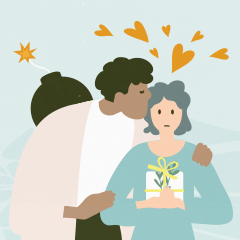
Gift giving is a common way to show affection and appreciation in relationships. It’s a thoughtful gesture that lets someone know they’re on your mind. However, for some, it can be used as a tool for control.
They may give you expensive gifts or plan extravagant surprises that feel more overwhelming than thoughtful. In some cases, they might use the excuse of spending a lot of money on you to make you feel guilty or obligated, pressuring you into doing what they want in return.
Rushing for a commitment
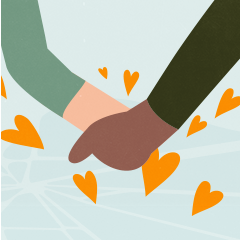
They may try to speed up the relationship to make you feel dependent on them, pushing you to commit before you’ve had time to truly understand the relationship.
Do they move fast – saying “I love you” early, making things official quickly, or talking about moving in together too soon?
If you met online, did they claim you’re “the one” and “soulmate” or say they felt an intense connection even before meeting?
Do they say things like “you’re the only one who understands me” or making extreme promises such as “I’ll change anything about myself to keep you.”?
Constant communication
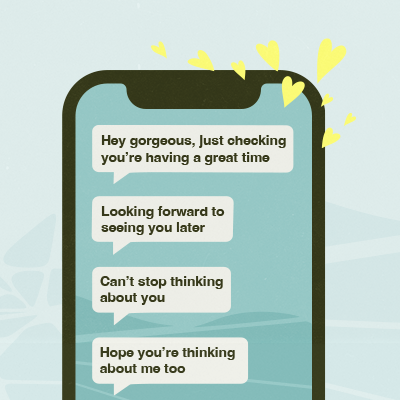
Communication is important in any relationship, but when it becomes overwhelming, it can be a red flag.
They might text, call, or message you non-stop, expecting an immediate response at all times. If you don’t reply quickly, they may get upset, angry, or act passive-aggressive, making you feel guilty or obligated to respond immediately.
This constant communication can make you feel like you're always on call, with little space to breathe or set healthy boundaries. It’s a tactic often used to control and monitor your time, creating dependency and making you feel responsible for their emotions.
They want you all to themselves
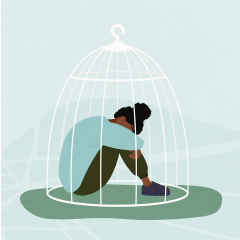
In a healthy relationship, it’s good to have time together. But it’s also important to maintain independence, have your own interests, and keep your connections with friends and family.
A person who engages in love bombing might act insecure about your friendships, question your time apart, or make you feel guilty. They may try to isolate you and control the activities you participate in.
This can be quite obvious, like when they stop you from doing certain things, visiting specific places, or spending time with others without them. At other times, it’s more subtle, such as when they act moody, upset, or sad whenever you try to do something without them.
Learn more about love bombing in the video below, where Damian Green, CEO of Stopping Family Violence, explains how it can be used to control and manipulate someone.
What can you do if you’re getting love bombed?
Love bombing is a form of coercive control. If you are seeing signs of coercive behaviour, seek support.
- Trust your gut feeling: Even if you can’t put a finger on it, the feeling that something is unhealthy in your relationship is valid.
- Reach out to a trusted person: Consider opening up about your situation with a friend or family member.
- Contact a support service: Help is always available, and a support service can serve as a confidential first step.
If you think you might be getting love bombed, you should know that:
- Controlling, manipulative behaviour like love bombing is not OK.
- Controlling behaviour is family and domestic violence.
- Getting love bombed is not your fault.
- No matter what – you are not alone.
What can you do if someone you know is getting love bombed?
Sometimes, when you’re in it, love bombing can be hard to spot. But from the outside, it might be easier to see the red flags.
If someone you know is in a new relationship that seems to be moving too quickly, you might worry they’re getting love bombed. It’s natural to want to share your concerns but being too direct or blunt can sometimes push them away.
Instead, encourage your friend to reflect on their feelings and trust their instincts. Here’s how you can talk to them:
- Start with curiosity, not judgment: ask questions such as “how are things going with your partner?”, “how do you feel about how fast things are moving?”, and “how do you feel when they say that?”
- Gently raise concerns: frame your concerns as observations such as “I’ve noticed your partner gets upset when you spend time with other people. Do you feel like that’s okay?”
- Encourage independence: help them reflect on their own boundaries such as “do you feel like you’re equals in this relationship?”
- Offer support without pushing: if they’re not ready to acknowledge the issue, don’t force it. Just let them know you’re there.
Help and support
If you, or someone you know, is in immediate danger, call the police now on 000.
If it’s not an emergency and you need support, you can call support helplines 24 hours a day, seven days a week. Use a friend’s phone if you think yours is being monitored.
- 1800RESPECT: a national sexual assault, domestic family violence counselling service. Phone: 1800 737 732.
- Women’s Domestic Violence Helpline: provides support for women, with or without children, who are experiencing family and domestic violence in Western Australia (including referrals to women’s refuges). Phone: 1800 007 339. *This helpline is operated by Department of Communities, and your call will be answered by a child protection worker. We are here to help.
- Men’s Domestic Violence Helpline: provides telephone information and referrals for men who are concerned about their violent and abusive behaviours, and for male victims of family and domestic violence in Western Australia. Phone: 1800 000 599. *This helpline is operated by Department of Communities, and your call will be answered by a child protection worker. We are here to help.
- Kids Helpline: provides free support and counselling (talking through problems) to people aged 5-25. Phone: 1800 551 800
Find more support here: