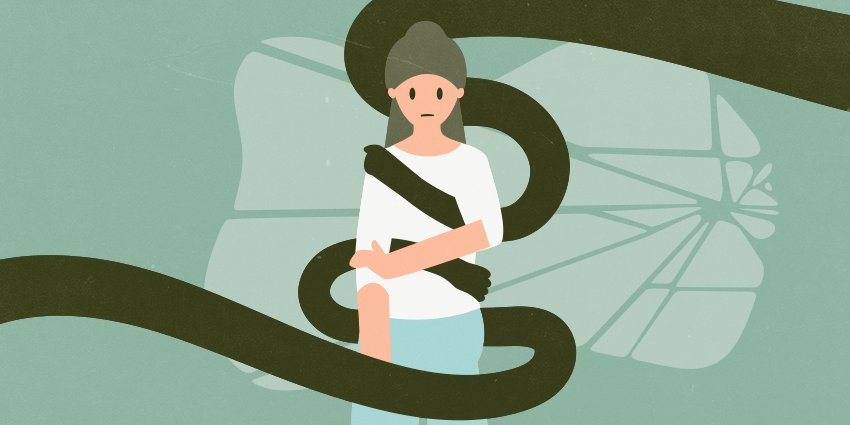
Financial abuse, also called economic abuse, is a form of coercive control where someone uses money, resources or access to finances in a pattern of repeated behaviours to control another person.
Examples of financial abuse
Financial abuse can look like a partner preventing you from using, accessing or keeping money – which may be your own earnings, or shared household funds. It can take many other forms, including:
 cutting you out of financial decision-making
 giving you a set allowance and closely tracking your spending. This is different to having a shared, agreed-upon budget where both partners have input on financial decisions
 preventing you from having a job or earning an income, making you financially dependent on them
 stopping you from opening or accessing a bank account, effectively taking control of your money and limiting your financial independence
 refusing to contribute to household or childcare expenses
 pushing you to take out loans or accounts you don’t want and creating debts in your name
 spending shared money without your knowledge or approval, for example on unnecessary purchases or gambling
 pressuring or deceiving you into selling your personal assets.
Financial abuse can happen whether you’re financially dependent on a partner or have your own income. Statistics from the ABS tell us that 16.3% of women and 7.8% of men have experienced economic abuse from a partner they live with since the age of 15.
It can also happen in the case of a former relationship, where one partner refuses to pay child support. And financial abuse isn’t limited to couples – it can happen in any close, family or carer relationship. Financial abuse against an older family member is a form of elder abuse.
What are the warning signs of financial abuse?
Sharing finances can be a normal and healthy part of relationships. Having one person be primarily responsible for financial matters can also be healthy, if it works for your relationship.
But if one person is controlling money to a point that limits your independence and decision-making, this can be financial abuse. If you’re experiencing financial abuse, you might feel:
- afraid to discuss money
- like you aren’t in control of your money
- trapped or vulnerable, as you can’t easily access money
- pressured to share your finances, like opening a joint bank account or shared credit card
- forced to be a guarantor for a loan or put assets in your name when you don’t want to, or don’t really understand the implications
- judged or closely monitored on how you spend your money
- pressured to stop working, or give up your independent assets
If you’re feeling a lot of pressure, judgement, fear or lack of control around money, these can be signs of financial abuse.
Even if someone is spending a lot of money on expensive gifts and financial support for you, this can be love bombing. Love bombing is another coercive control tactic that manipulates you into feeling dependent on someone. They might use the excuse of spending a lot of money on you to make you feel guilty or obligated, pressuring you into doing what they want in return.
How to help someone you think is experiencing financial abuse
Like other types of coercive control, financial abuse is insidious, escalating over time and difficult to see from the outside. As discussing money can be seen as taboo, or even impolite, this can stop people from seeking help and advice.
If you’re worried that someone in your life might be experiencing financial abuse, start by opening a judgement-free conversation. Ask them how they’re going with money, then listen and believe what they say if they express fear and doubt.
You can start to break down the taboo of discussing finances by being honest about your own situation. This can help people feel more comfortable with opening up.
If they’re ready to take the next step, you can let them know there are organisations designed to offer confidential help and support. We’ve listed a few in the following section.
Help and support
If you, or someone you know, are in immediate danger, call the police now on 000.
If it’s not an emergency and you or someone you know needs support, you can get help through these services and helplines.
- 1800RESPECT: a national sexual assault, domestic family violence counselling service. Phone: 1800 737 732.
- Women’s Domestic Violence Helpline: free call 1800 007 339 for support for women, with or without children, who are experiencing family and domestic violence in Western Australia, including referrals to women’s refuges.*
- Men’s Domestic Violence Helpline: for information and referrals for men who are concerned about their violent and abusive behaviours, and support for male victims of family and domestic violence in Western Australia, free call 1800 000 599.*
- Men’s Referral Service: is the national counselling and referral service for men who use violence and abuse. Call a counsellor on 1300 766 491, 24 hours a day, 7 days a week if you’re seeking support to change your behaviours.
*This helpline is operated by Department of Communities, and your call will be answered by a child protection worker. We are here to help.
Contact your bank to find out what supports they have available for financial abuse.
The following also provide support for financial abuse:
- Your Toolkit helps women and their children facing financial or other domestic abuse become empowered through increased skills and knowledge, supporting them on their journey to an independent, confident and safe life.
- FCAWA supports all financial counsellors and financial capability workers in WA ensuring best practice by providing access to professional development, information, resources, and relevant casework support.
Find more: