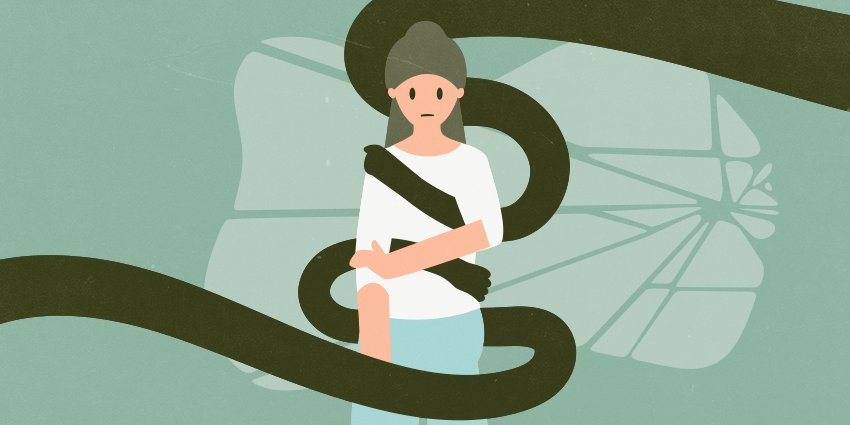
Emotional abuse is a pattern of manipulation and control where someone repeatedly undermines your worth and wellbeing through harmful words or actions. It’s a form of coercive control, which is family and domestic violence, and causes emotional and psychological harm.
Examples of emotional abuse
Perpetrators can use emotional abuse in any kind of close relationship, including romantic, carer and family relationships – and it’s never ok.
When a perpetrator uses emotional and mental abuse, their actions can take a long-lasting toll on your wellbeing. It can also go hand in hand with other kinds of coercive control, like financial abuse and isolation.
Examples of someone using emotional abuse can include:
- withholding affection, giving the silent treatment or ignoring you to pressure or punish you
- harassing you with excessive communication and demanding immediate responses
- shaming, humiliating and criticising you to make you doubt yourself and your experiences
- gaslighting: denying, changing or manipulating the truth to make you second-guess your reality
- love bombing: using extravagant gifts, compliments and affection to manipulate you
What are the warning signs of emotional abuse?
It can be hard to know if you’re in a relationship with someone who is emotionally abusive. A psychologically abusive partner might make you feel trapped, insecure, and unsure of your own experience.
Here are some signs of someone using emotional abuse:
- Your partner often makes you feel silly, stupid or guilty
- Your partner is jealous of your other close relationships
- You feel like you need to get your partner’s permission to do things – anything from where you go, to who you meet, to what you wear
- Your partner threatens you to get what they want. They might threaten to hurt you, themselves, or someone you care about
- Your partner constantly accuses you of things you didn’t do
- Your partner calls you names, belittles or shames you
What are the effects of emotional abuse?
When a perpetrator uses emotional abuse, it can have powerful negative impacts on your wellbeing, mental health and sense of self, including:
- anxiety and depression
- suicidal thoughts
- insomnia
- low self-esteem
- isolation
- eating disorders
- substance abuse
How to help someone you think is experiencing emotional abuse
It can be hard to tell if you or someone you know is being emotional abused by their partner. If you’re being emotionally abused by your partner, you might second-guess your judgement.
No one behaves perfectly in a relationship all the time, but emotional abuse is a repeated pattern of behaviour by a perpetrator that causes emotional harm.
Signs a person may be experiencing emotional abuse from their partner can include:
- They seem worried and change their behaviour around their partner
- They are always joined by their partner, who does most of the talking
- They need to be back home by a certain time and become stressed about this
- They describe a partner as controlling or angry
- Their partner belittles them in front of you
- They become non-committal to making plans, often cancelling plans last-minute
- They stop seeing or speaking to you, friends, or family
- Their mood and behaviour may shift quickly while they’re with you. For example, they may seem happy and relaxed one moment, then become anxious, upset, low, or distracted the next
- They may also show signs that their mental and emotional wellbeing is being affected, including symptoms of anxiety or depression
If you want to help someone experiencing emotional abuse, the best thing you can do is be there for them, listen to them, and believe them.
Help and support
If you, or someone you know, is in immediate danger, call the police now on 000.
If it’s not an emergency and you need support, you can call these numbers 24 hours a day, seven days a week.
If you are assisting someone who does not speak English, first call the Translating and Interpreting Service (TIS) on 13 14 50. They can connect you with the service of your choice and interpret for you.
- Women’s Domestic Violence Helpline: provides support for all Western Australians including women, with or without children, who are experiencing family and domestic violence in Western Australia (including referrals to women’s refuges). Phone: 1800 007 339. *This helpline is operated by Department of Communities, and your call will be answered by a child protection worker. We are here to help.
- Men’s Domestic Violence Helpline: provides information and referrals for men who are concerned about their violent and abusive behaviours, and for male victims of family and domestic violence in Western Australia. Phone: 1800 000 599. *This helpline is operated by Department of Communities, and your call will be answered by a child protection worker. We are here to help.
- 1800RESPECT: a national telephone and online counselling and referral service. Phone: 1800 737 732.
- Kids Helpline: provides 24/7 support for kids needing to talk to someone about what’s going on in their life. Phone: 1800 55 1800. Online chat is available 24/7.
- Concern for a child's wellbeing: If you are concerned about a child's wellbeing, please contact the Department of Communities Child Protection Central Intake Team on 1800 273 889. If you are calling outside of business hours, Crisis Care is available on 1800 199 008 and provides Western Australia’s after-hours response to reported concerns for a child’s safety and wellbeing and information and referrals for people experiencing crisis. For more information about child protection.
- MensLine Australia: 24/7 support for men and boys dealing with family and relationship difficulties. Support for men who are concerned that their behaviour is hurting the people they care about. Phone: 1300 78 99 78.
- Sexual Assault Resource Centre: provides a range of free services to people affected by sexual violence. Phone: (08) 6458 1828 or free call 1800 199 888.