To find services or supports you are comfortable with, please visit the helplines and support services page - use a friend’s phone if you think yours is being monitored.
Family and domestic violence is often a pattern of different abusive behaviours that a person uses over time to control and harm you, and it often includes coercive control.
Family and domestic violence can include physical violence, sexual violence, financial abuse, stalking and harassment, isolation, emotional and psychological abuse, spiritual abuse, and honour-based violence.
Who does family and domestic violence affect?
FDV can happen to anyone, and it is never your fault. It can occur in:
- past or current intimate relationships, regardless of gender or sexuality
- relationships involving carers of people with medical needs, disabilities, or the elderly
- relationships with relatives, carers or guardians
Family and domestic violence is most often used by men against women. Statistics tell us that 1 in 4 women and 1 in 14 men have experienced violence by an intimate partner since the age of 15.
Coercive control is family and domestic violence
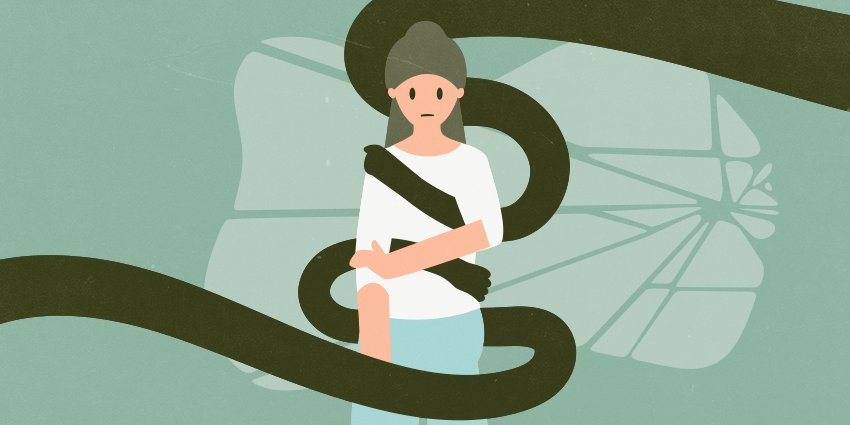
Coercive control happens when a perpetrator uses patterns of abusive behaviours to control another person and exert power over them, which creates fear, impacts the person's self-esteem or confidence, and denies their liberty and autonomy.
What are the types of family and domestic violence?
Family and domestic violence doesn't have to be physical. Learn more about the different types of family and domestic violence below.
Emotional/psychological abuse
Emotional abuse is any behaviour that makes you feel worthless and put down, such as:
- Mind games
- Manipulation
- Insults
- Threats
- Verbal putdowns used to humiliate, degrade, or embarrass
- Gaslighting, for example, denying, changing, or manipulating the truth to make you doubt your memories, perceptions, and experiences
- Love bombing, where someone tries to influence and manipulate you by using over-the-top displays of attention and affection. Love bombing can happen at any stage of a relationship, though it commonly occurs in the early stages
Physical violence
Physical violence is any violent behaviour or threats of violence. It can be directed at you, your children, other family, friends, pets, or property. It might be:
- Pushing
- Slapping
- Punching
- Choking
- Kicking
- Harming or threatening to harm pets or possessions
- Physical threats
- Using weapons
- Any other behaviour that is intended to cause harm
Sexual abuse and violence
Sexual violence is about power and control, and it can happen to anybody. It involves any type of sexual contact, activity, act, or behaviour that is committed against your will, and without consent. Sexual violence can include:
- Sharing, or threatening to share, intimate photos or videos
- Expecting you to have sex as a way to ‘make up’, or show you forgive your partner
- Using false information to ‘trick’ you into having sex, or to participate in sexual acts or behaviours
- Comments or behaviours that intend to make you feel guilty for saying no to sex
- Holding demands or expectations about when sex should happen, or how often it should happen
If you ‘appear’ to comply with any form of sexual activity because you are pressured, coerced, or fearful, this is not considered to be providing consent. These behaviours are criminal offences.
Social isolation
Social isolation or social violence is keeping you away from friends, family, work and/or other social opportunities. This could also include:
- Excessive questioning, including about your whereabouts, who you are seeing and speaking to, or what you are doing
- Monitoring internet use and social communications
- Being aggressive towards men who are viewed as ‘competition’ and other acts of jealousy
- Isolating you from your friends, family, work and/or other social opportunities
- Preventing contact with people who speak the same language and share culture
- Spreading lies through support networks to discredit you
Financial abuse
Financial abuse is behaviour limiting your access to money. This might look like:
- Controlling the money and decisions around its use
- Denying you access to money, including your own
- Demanding that the family lives on inadequate resources
- Incurring debts in your name
- Making significant financial decisions without consulting you
- Selling your possessions
- Stealing money
Technology-facilitated abuse
Technology-facilitated abuse is when someone monitors what you do online. This may include:
- Using technology (such as mobile devices) to monitor, stalk and track movements
- Sending abusive text messages/emails or harassing with phone calls
- Sharing or threatening to share intimate images without consent
- Pretending to be you, when engaging with other people or posting online
- Contacting you, whilst pretending to be someone else (for example, setting up a fake social media profile, or dating profile, that is under another person's name)
Learn more about protecting your online safety.
Stalking
Stalking and harassment is when someone tries to scare and control you through unwanted contact and monitoring where you are. This can look like:
- Keeping track of your location through apps or devices
- Following you between locations and activities
- Sending unwanted gifts, like flowers or jewellery
- Going through your rubbish to find information on you
- Showing up unannounced at your work, school or home
- Excessive messaging and calling
- Leaving notes for you to find
Religious and spiritual abuse
Spiritual abuse involves keeping you away from places of worship or forcing you to participate in spiritual or religious practice that you do not want to be involved with. It may also include:
- Ridiculing or putting down your beliefs and culture
- Preventing you from belonging to or taking part in a group or ceremony that is important to your spiritual beliefs, or practising your religion
- Manipulating religious teachings or cultural traditions to excuse the violence
Help and support
No matter what your situation is, help is available. A comprehensive list of support services and emergency contacts for those experiencing family and domestic violence is available. These include emergency assistance, counselling, legal support, and accommodation services.
In an emergency call 000.
If it’s not an emergency and you need support, you can call support helplines 24 hours a day, seven days a week. Use a friend’s phone if you think yours is being monitored.
- 1800RESPECT: a national sexual assault, domestic family violence counselling service. Phone: 1800 737 732.
- Women’s Domestic Violence Helpline: provides support for women, with or without children, who are experiencing family and domestic violence in Western Australia (including referrals to women’s refuges). Phone: 1800 007 339. *This helpline is operated by Department of Communities, and your call will be answered by a child protection worker. We are here to help.
- Men’s Domestic Violence Helpline: provides telephone information and referrals for men who are concerned about their violent and abusive behaviours, and for male victims of family and domestic violence in Western Australia. Phone: 1800 000 599. *This helpline is operated by Department of Communities, and your call will be answered by a child protection worker. We are here to help.
- Kids Helpline: provides free support and counselling (talking through problems) to people aged 5-25. Phone: 1800 551 800
- Concern for a child's wellbeing: If you are concerned about a child's wellbeing, please contact the Department of Communities Child Protection Central Intake Team on 1800 273 889. If you are calling outside of business hours, Crisis Care is available on 1800 199 008 and provides Western Australia’s after-hours response to reported concerns for a child’s safety and wellbeing and information and referrals for people experiencing crisis. Find more information about child protection.
- Crisis Care: provides Western Australia’s after-hours response to reported concerns for a child’s safety and wellbeing and information and referrals for people experiencing crisis. Phone: 1800 199 008.
- Sexual Assault Resource Centre: provides a range of free services to people affected by sexual violence. Phone: (08) 6458 1828 or free call 1800 199 888.
- MensLine Australia: 24/7 support for men and boys dealing with family and relationship difficulties. Support for men who are concerned that their behaviour is hurting the people they care about. Phone: 1300 78 99 78.
Find more support here:
Family and domestic violence helplines and support services
Prioritising your safety
If you are experiencing family and domestic violence or suspect you might be, there is support available. Find information on how to be safe online, make a safety plan and stay safe if you want to leave a situation where a person is being violent or abusive toward you.
Stopping family and domestic violence is everyone’s responsibility
Family and domestic violence affects everyone - women, children, men, families, and the community. It’s a serious problem that we all need to help stop.
Are you worried about a mate’s behaviour? If you have concerns someone you know may be using coercive control, find out how you can safely start a conversation.
Everyone has a role to play in ending family and domestic violence. By learning more about the issue, supporting those affected, promoting respectful relationships and standing up against violence, we can make our community safer for everyone.