What is coercive control?
Coercive control is when someone uses a pattern of abusive behaviours to take away your freedom and independence, and can sometimes make you feel afraid. People who use coercive control use many different abusive behaviours to maintain power and control.
Many abusers don’t use physical violence to hurt their partner. Using coercive control to scare, intimidate or isolate can have serious effects on mental and physical health, employment, relationships, financial security and sense of autonomy. It can make you feel trapped, powerless and alone.
Anyone can experience coercive control, but it is mostly used by men against women.


What are the signs of coercive control?
Coercive control is different in every relationship and no two people’s experiences are the same. Here are examples of coercive control and some of the common red flags to look out for, but you may experience others:
- Emotional abuse
- Isolation
- Monitoring and tracking
- Financial control
- Controlling decisions and limiting freedom
- Sexual violence
- Cultural and spiritual abuse
- Children and parenting related behaviours
People who use coercive control can be good at hiding it from others. The signs of coercive control can be subtle and hard to spot, but the following are some examples.

Emotional abuse
- Constantly criticising you, shaming and humiliating you to make you doubt yourself and experiences.
- Using tactics like withholding affection, silent treatment or ‘stone walling’, or ignoring you to pressure or punish you.
- Harassing or threatening you with constant communication, such as excessive phone calls or text messages, and demanding immediate responses.
- Gaslighting: denying, changing, or manipulating the truth to make you doubt your memories, perceptions, and experiences.
- Love bombing: using extravagant gifts, excessive compliments and affection to manipulate and trap someone.

Isolation
- Stopping you from seeing your friends and family.
- Controlling who you see and where you go.
- Making jealous accusations when you communicate or spend time with other people.
- Preventing you from participating in your community and building connections.
- Controlling your access to your phone or internet usage.

Monitoring and tracking
- Stalking you by physically following you, or monitoring your devices without your knowledge to track your location (for example, using apps to access your location, or attaching a tracking device to your car).
- Monitoring your communication with other people by going through your phone, emails, or forcing you to have conversations on speaker phone.
- Setting up hidden cameras and listening devices in your home or car.
- Checking your emails, texts, or social media to monitor your activities, relationships and whereabouts.

Financial control
- Giving you an allowance and strictly monitoring what you spend as a form of coercion. This is different to having a shared and mutually agreed upon budget, where you have a say in what you do or don’t spend.
- Not allowing you to have a bank account, and controlling your access to money and financial independence.
- Telling you what you can and cannot buy.
- Taking out loans, maxing out credit cards, or taking other measures that damage your credit history, or allow the perpetrator to steal from you.
- Stopping you from working and earning your own income so you are financially dependent.
- Pressuring you to sell your independent assets or persuading you to do this under false pretences.
Financial abuse or control can present as a ‘good financial decision’ at first. For example, a perpetrator might encourage you to sell your car, or even sell your property, under the premise that you live together and only need one vehicle / don’t need an investment property.
Once you have sold the car, they restrict your access to the shared vehicle, or once you have sold your property, they restrict your ability to leave by making you believe you have nowhere to go.

Controlling decisions and limiting freedom
- Criticising or controlling your physical appearance, including what you wear, eat, drink, and how much you exercise.
- Denying your access to basic needs including clothing, food, sleep, bathroom use, or medical care.
- Forcing you to take care of domestic duties, such as cooking, cleaning, and taking care of children and family members.
- Stopping you from expressing your gender or sexuality.
- Creating rules that you must follow and threatening punishment if you break them.

Sexual violence
- Forcing you or pressuring you to have sex or do sexual things.
- Setting rules or demands about when and what types of sexual activities you must perform.
- Taking photos or videos of someone naked or during sex, with or without consent, to threaten or humiliate them.
- Withholding sex or using sex as a weapon.
There are times when a victim-survivor may appear to ‘comply’ with sexual acts or behaviours because of fear, or other forms of emotional and psychological control or pressure. This is not considered as providing consent. Any time a victim-survivor cannot exercise their own free will, the acts are considered sexual assault or rape.

Cultural and spiritual abuse
- Stopping you from following your religion or cultural practices.
- Belittling your spiritual or cultural beliefs or practices.
- Not allowing you to speak your cultural language.
- Preventing you from connecting with your spiritual or cultural community.
- Pressuring or forcing you to conform by saying you are ‘Caucasian’ or ‘Australian’, instead of acknowledging your cultural or heritage identity such as Aboriginal, or Italian-Australian (for example).
- Stopping you from allowing your children to recognise, acknowledge or identify with your own culture or family heritage.

Children and parenting related behaviours
- Manipulating co-parenting arrangements or support payments after ending a relationship.
- Turning your children against you.
- Threatening to contact, or contacting, social services with false allegations that you have neglected, abused or threatened the safety of your children.
- Threatening your child to control or intimidate you.
- Abusing you in front of your child, so they witness and experience the abuse.
- Continued criticism of your parenting choices and capabilities.
- Accusations that you are a bad parent based on unreasonable expectations. For example, saying you are not being a parent to your child, because you place your child in childcare or babysitting arrangements whilst you are at work.
What to do if you think you might be experiencing coercive control
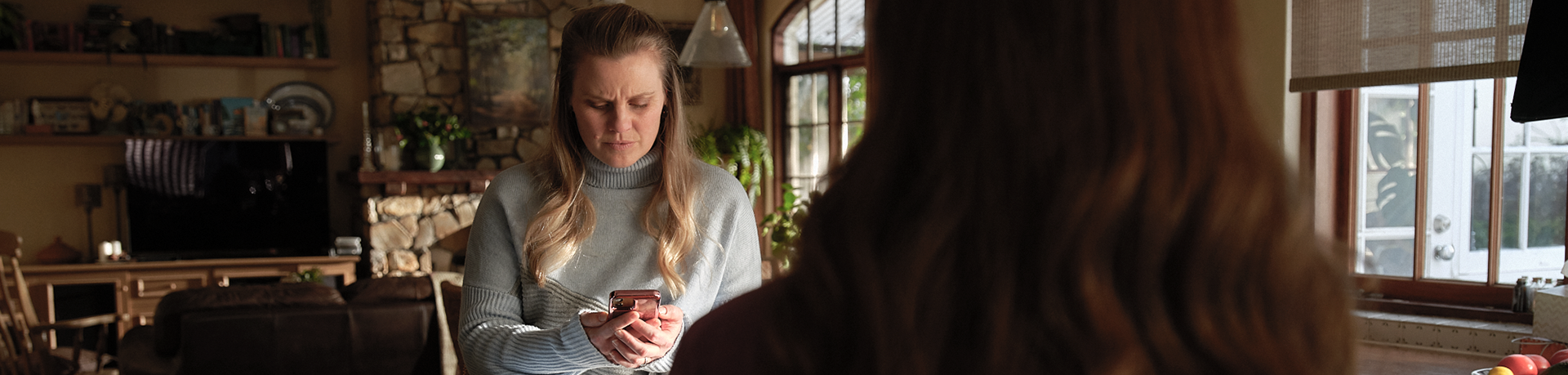
If you think you might be experiencing coercive control, you should know that:
- The controlling behaviour is not OK.
- Controlling behaviour is family and domestic violence.
- It is not your fault.
- You are not alone.
Coercive control is family and domestic violence. If you are recognising the signs of coercive behaviour, you can seek support. Contacting a support service for advice is a good first step. No matter what your situation is, help is available.
A self-assessment toolkit is available to help identify whether coercive control might be present in the relationship:
You can also visit our dedicated support page for people experiencing family and domestic violence.
Family and domestic violence impacts people from all walks of life, and in different situations.. You can explore support and information for your situation:
- I'm a child or young person experiencing family and domestic violence
- I'm Aboriginal and experiencing family violence
- I'm from another culture, migrant or refugee background and experiencing family violence
- I'm LGBTIQA+ and experiencing family and domestic violence
- I'm a person with disability experiencing family and domestic violence
- I'm worried about a child or young person
- I'm an older person experiencing family and domestic violence
- I'm a man experiencing family and domestic violence
What to do if you think someone is experiencing coercive control
If you think someone you know is experiencing coercive control, the best thing you can do is be there for them, listen and believe them. Find out more about how to support someone experiencing family and domestic violence.
It can be difficult to know if someone is experiencing or using coercive control. The pattern of coercive behaviour can be hard to recognise and you may not feel sure.
Signs a person may be experiencing coercive control can include:
- They seem anxious around their partner and change their behaviour around them.
- They are often accompanied by their partner, who does most of the talking.
- They need to be back home by a certain time and become stressed about this.
- They describe a partner as controlling or prone to anger.
- Their partner puts them down in front of you.
- They start to become non-committal in respect to making plans, and often cancel plans at the last minute.
- They stop seeing or speaking to you, friends, or family.
- Their moods and presentation may change frequently whilst they are socialising with you; one minute they are happy and relaxed, then the next minute they are agitated, stressed, down or distracted.
- The person may show signs that their overall mental health and emotional wellbeing is being impacted; this could look like symptoms of depression and anxiety.
Download the fact sheet on how to help someone experiencing coercive control:
Fact Sheet: Coercive control - How to help someone
What to do if you are worried about a mate's behaviour
Talking about family and domestic violence is an important way to help, especially if you’re worried about how someone is treating their partner or family. Standing up against family and domestic violence is a step in the right direction towards ending the cycle of abuse.
A chat you have with a mate or family member if you are worried about how they’re treating someone could be the chat that encourages that person to talk to a professional and take steps toward changing their behaviour. That’s why instead of calling someone out, let’s try to involve others and call men in to be part of the solution.
Here are some ways to begin the conversation with someone behaving abusively:
- Choose a safe location: for example, somewhere private where you won’t be interrupted or overheard.
- Pick a low-pressure time: try to find a calm and safe moment for your discussion.
- Keep your tone open: ask questions and show you want to hear their point of view.
- Give clear examples: this will help them to understand your concerns.
- Listen without judgement: you can remain firm on your concerns while hearing them out.
- Offer support options: let them know you’re here for them. You can refer them to confidential support services like Men’s Domestic Violence Helpline, Mensline and the Men’s Referral Service.
Your actions as a friend could help them to take a step in the right direction, like talking to a professional or changing their behaviour.
Always prioritise the safety of yourself and others when you witness violence and intervene safely.
- In an emergency, call the police at 000.
- You can witness by staying nearby at a safe distance, so the aggressor knows they are being observed.
- Seek assistance from those around you.
What to do if you are worried about your own behaviour

If you think your behaviour might be making someone feel unsafe, controlled, or isolated, it is important to acknowledge it and seek support:
- Be honest with yourself.
- Take responsibility for your actions.
- Know that help is available to help you change your behaviour.
All relationships have ups and downs with arguments from time to time. But there is no excuse for using violence or control.
The Men’s Domestic Violence Helpline provides information to men who are worried about their behaviour. Phone: 1800 000 599.
Find out more about what to do if you're worried about your own behaviour.
Help and support
If you, or someone you know, is in immediate danger, call the police now on 000.
If it’s not an emergency and you need support, you can call these numbers 24 hours a day, seven days a week.
- 1800RESPECT: a national sexual assault, domestic family violence counselling service. Phone: 1800 737 732.
- Women’s Domestic Violence Helpline: provides support for women, with or without children, who are experiencing family and domestic violence in Western Australia (including referrals to women’s refuges). Phone: 1800 007 339. *This helpline is operated by Department of Communities, and your call will be answered by a child protection worker. We are here to help with your enquiry.
- Men’s Domestic Violence Helpline: provides telephone information and referrals for men who are concerned about their violent and abusive behaviours, and for male victims of family and domestic violence in Western Australia. Phone: 1800 000 599. *This helpline is operated by Department of Communities, and your call will be answered by a child protection worker. We are here to help with your enquiry.
- Kids Helpline: provides free support and counselling (talking through problems) to people aged 5-25. Phone: 1800 551 800.
- Concern for a child's wellbeing: If you are concerned about a child's wellbeing, please contact the Department of Communities Child Protection Central Intake Team on 1800 273 889. If you are calling outside of business hours, Crisis Care is available on 1800 199 008 and provides Western Australia’s after-hours response to reported concerns for a child’s safety and wellbeing and information and referrals for people experiencing crisis. For more information about child protection, please visit child protection.
Find more support services here:
Family and domestic violence helplines and support services
Raise awareness about coercive control and stand up against violence
We all have a role to play in preventing family and domestic violence. Raising awareness in our communities or on social media can help others spot the signs.
Find out how to help raise awareness about coercive control in family and domestic violence. You can also find out how to stand up against family and domestic violence and promote respect.
Check out the ‘Understanding coercive control’ vodcast and hear from Damian Green, CEO of Stopping Family Violence, as he explains what coercive control can look like. Watch more episodes here.